Nice

Living Architecture on the Mediterranean Edge

A Corten Envelope in Dialogue with the Landscape
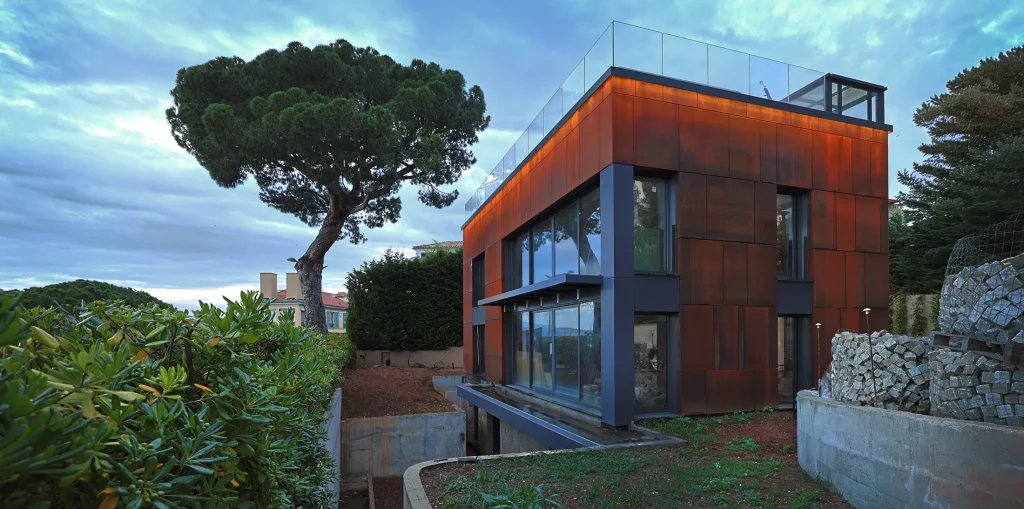
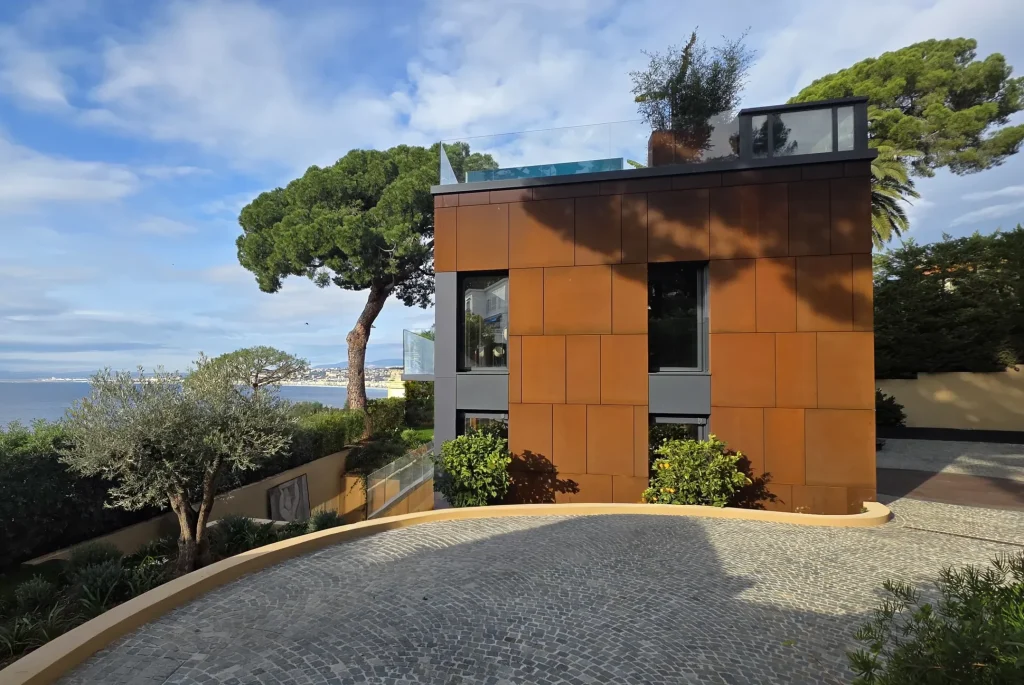
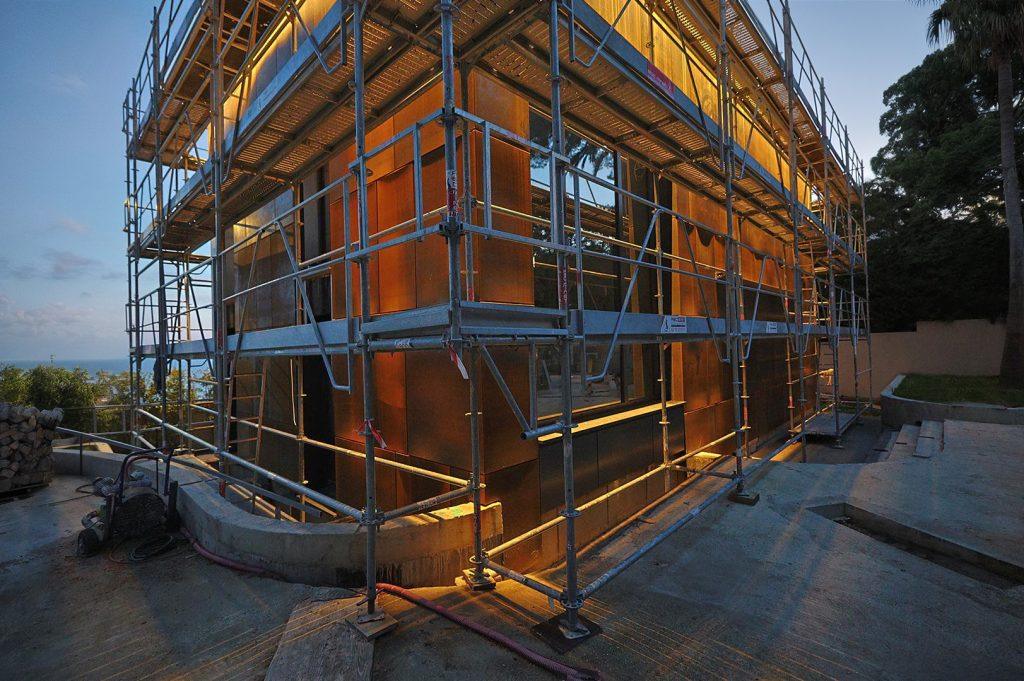
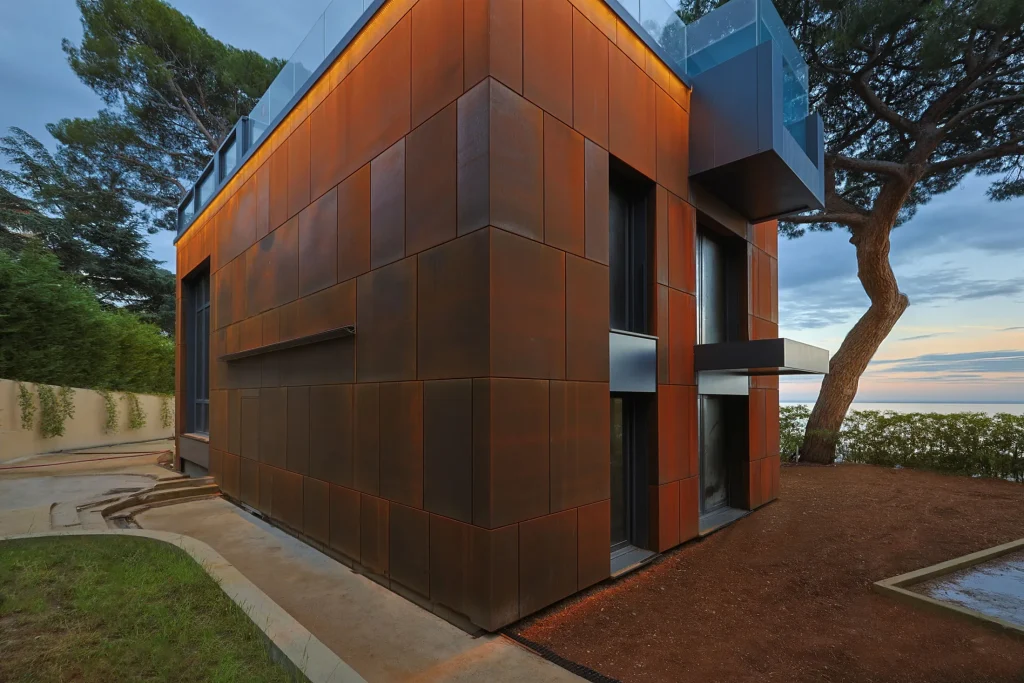
Located on the slopes of Mont Boron along Boulevard Carnot in Nice, the villa overlooks the Mediterranean with sweeping views toward the port lighthouse and the coastline beyond. Its architecture is defined by a corten steel envelope that wraps the house in a warm, mineral skin. Unlike static materials, corten evolves over time, changing with the Riviera’s shifting light, rain, and sea air. The building constantly transforms with its environment.

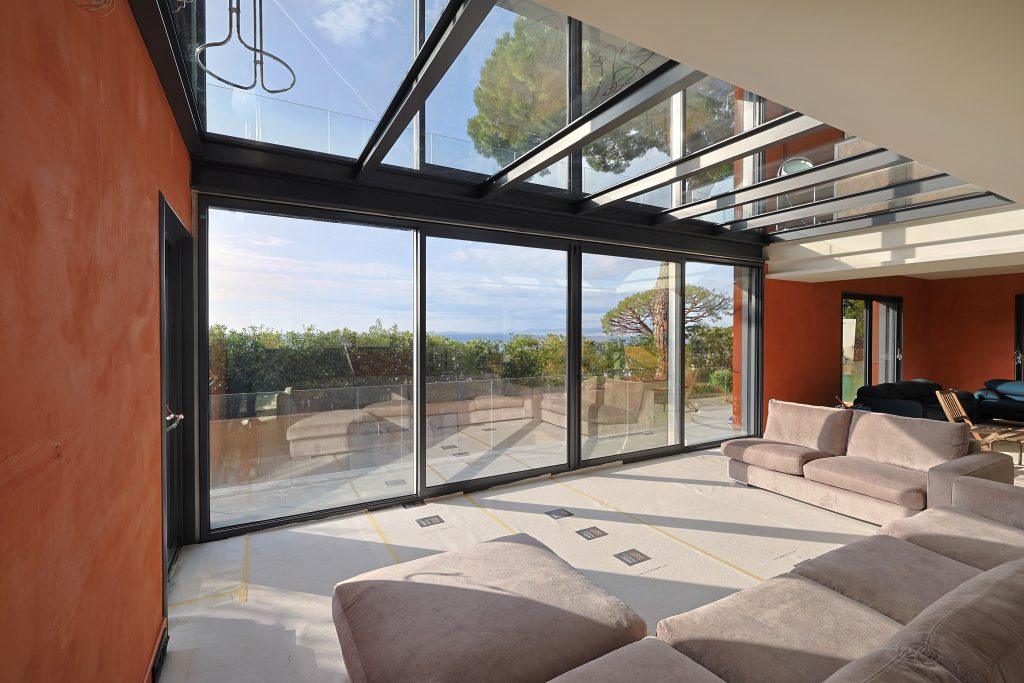
The metallic shell contrasts with large glazed openings that frame the sea and landscape. This dialogue between weight and transparency shapes the architectural identity of the house.

Transparency and Vertical Connection
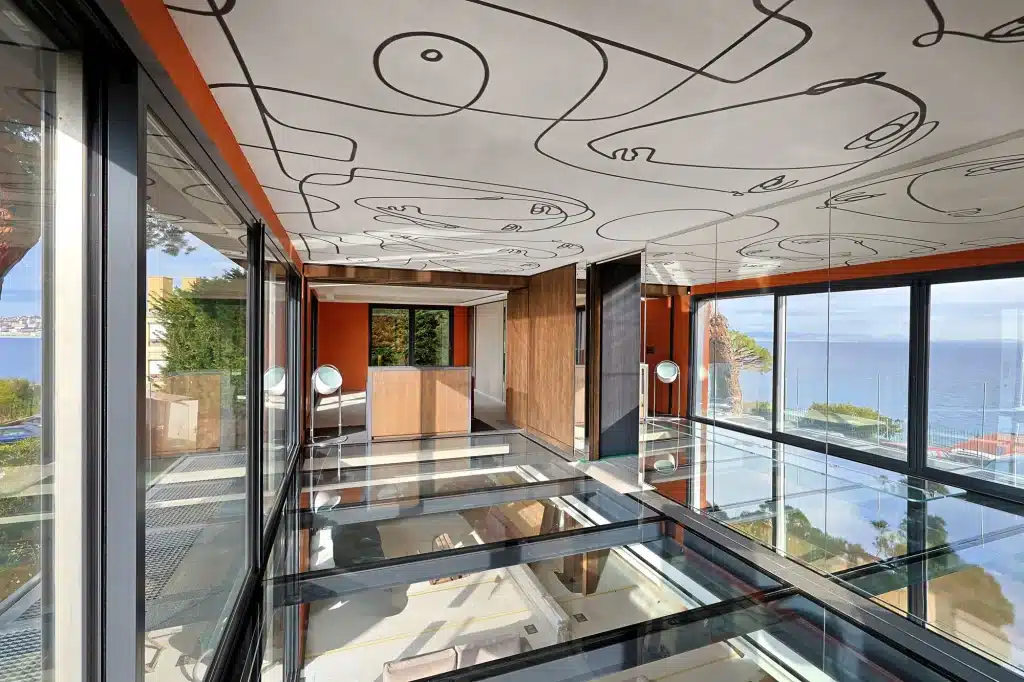
During construction, an unexpected moment reshaped the design. While the upper floor was still unfinished, a temporary platform revealed an extraordinary perspective across the landscape. Rather than losing this view, the project evolved to include a glass floor suspended between the living room and the main bedroom.

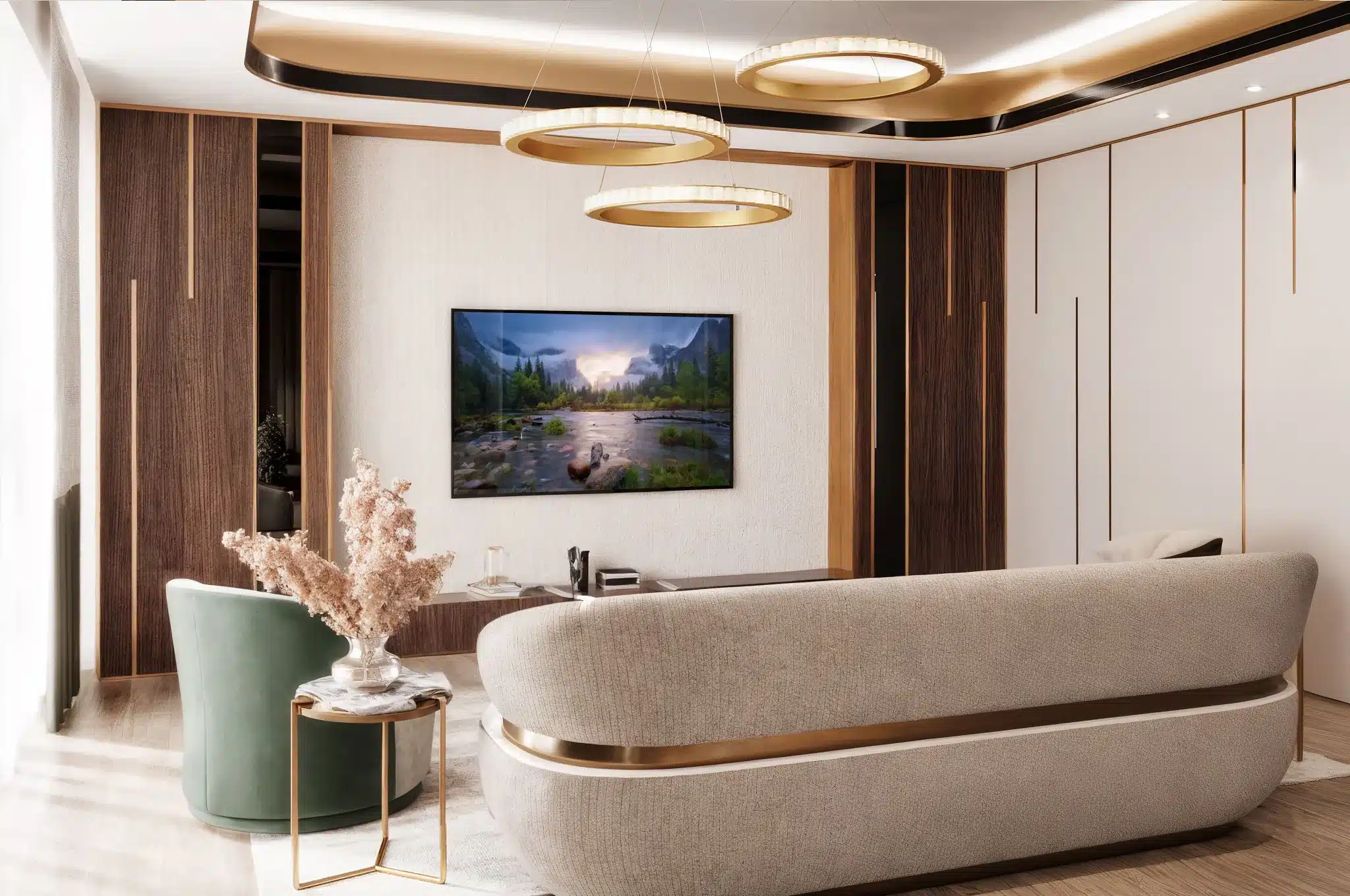
This transparent surface preserves the original double-height space while establishing a strong visual link between levels. Mirrors and a ceiling fresco extend the visual perspective of the space, amplifying the surrounding panorama and creating the sensation of being immersed within the landscape itself.

Spaces Oriented Toward the Horizon
The organization of the villa follows a vertical sequence shaped by the Mediterranean panorama. The main living spaces, including the living room and dining area, occupy the principal level and open widely toward the sea. Above, the master suite and its adjoining office are positioned on the upper floor, where the glass walkway captures an even broader perspective of the coastline.

Below, the garden level contains three guest bedrooms opening onto terraces and landscaped areas, while the basement integrates a cinema room, gym, spa, and technical facilities.

Despite the extensive openness toward the sea, privacy is carefully orchestrated throughout the house. Sliding screens, adjustable shutters, and integrated blinds allow spaces to shift easily between openness and discretion, ensuring both panoramic views and complete intimacy when required

The Roof Terrace as a Fifth Façade

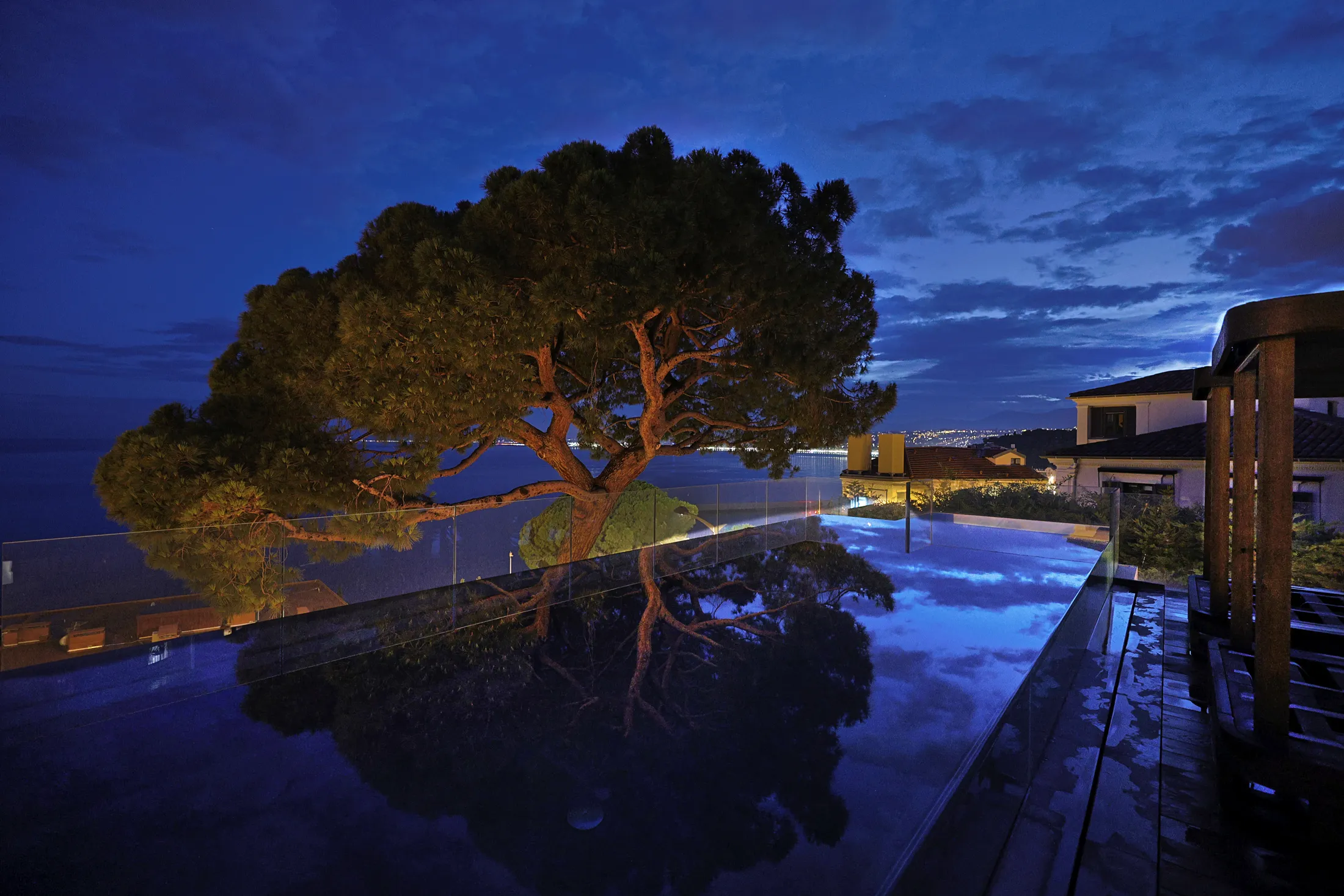
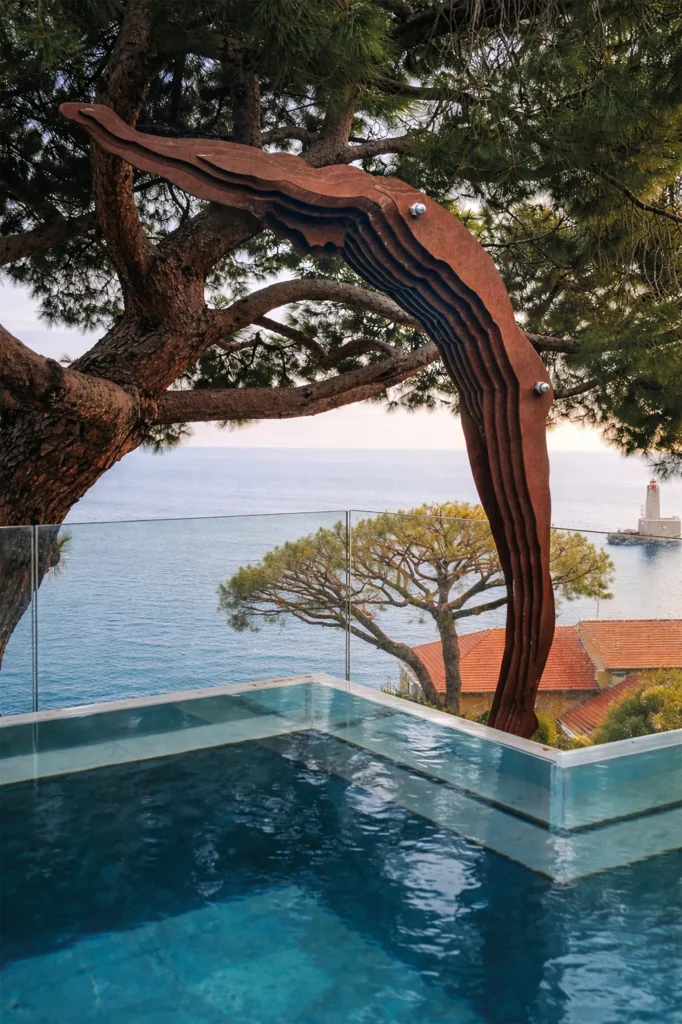
To preserve the limited green areas of the plot, the swimming pool was positioned on the roof terrace. This decision transforms the roof into an architectural landscape. The glass-sided pool allows water to remain visible from outside while maintaining generous interior ceiling heights below.

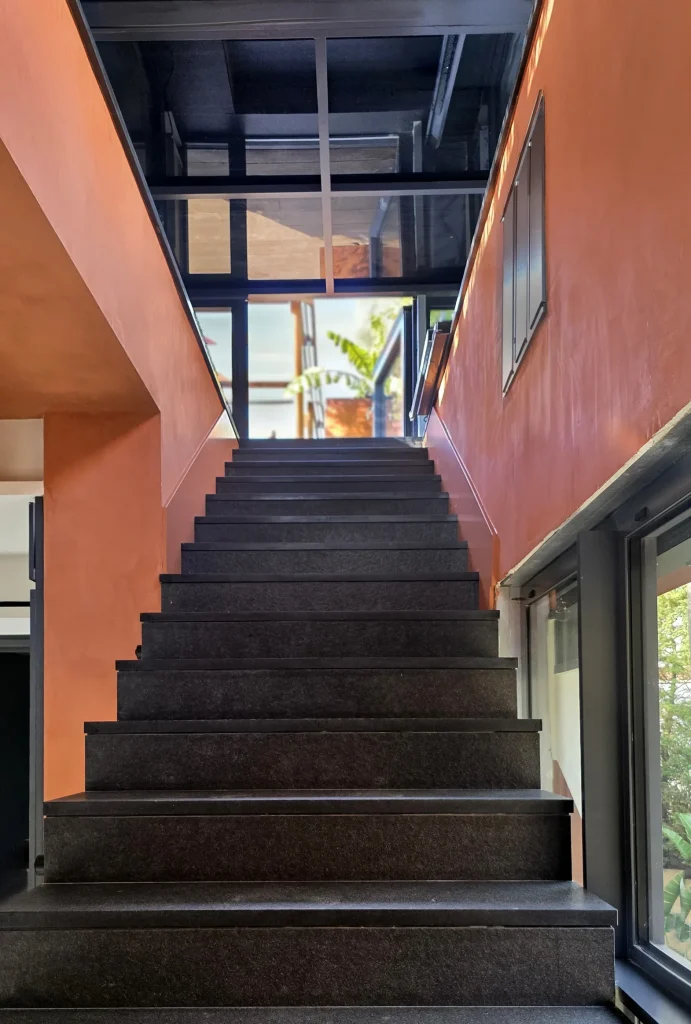
Access to the roof terrace is integrated through a motorized mirrored glass skylight that opens above the interior staircase. When closed, the reflective surface blends into the architecture, preserving visual continuity while discreetly connecting the living space to the rooftop pool.

Pergolas, planters, and seating areas structure the rooftop terrace and create visual separation from neighboring properties.

At the edge of the pool, a slender corten steel diver sculpture stands as a symbolic gesture. Its form echoes the material of the façade and expresses the daring idea of diving into a glass pool suspended above the Mediterranean.
A Dialogue with Nature and Memory
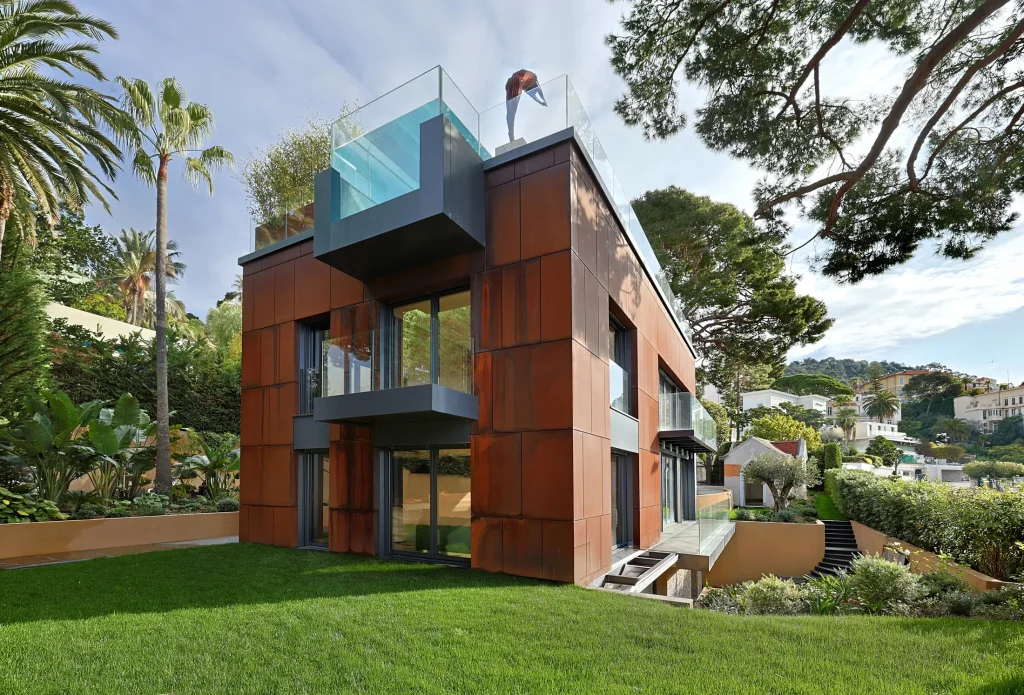
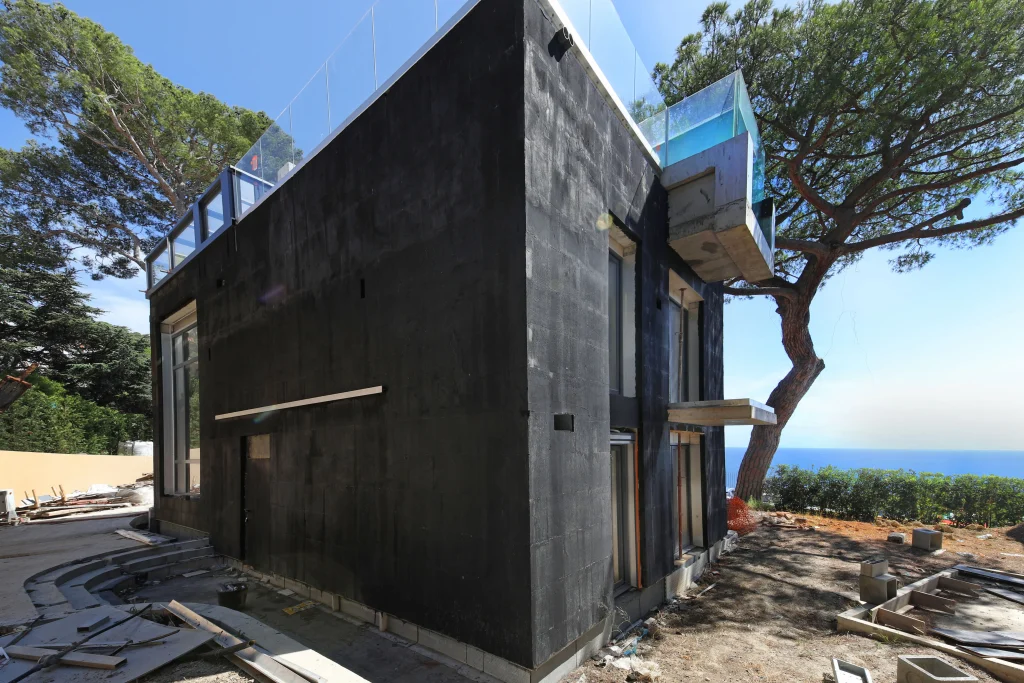
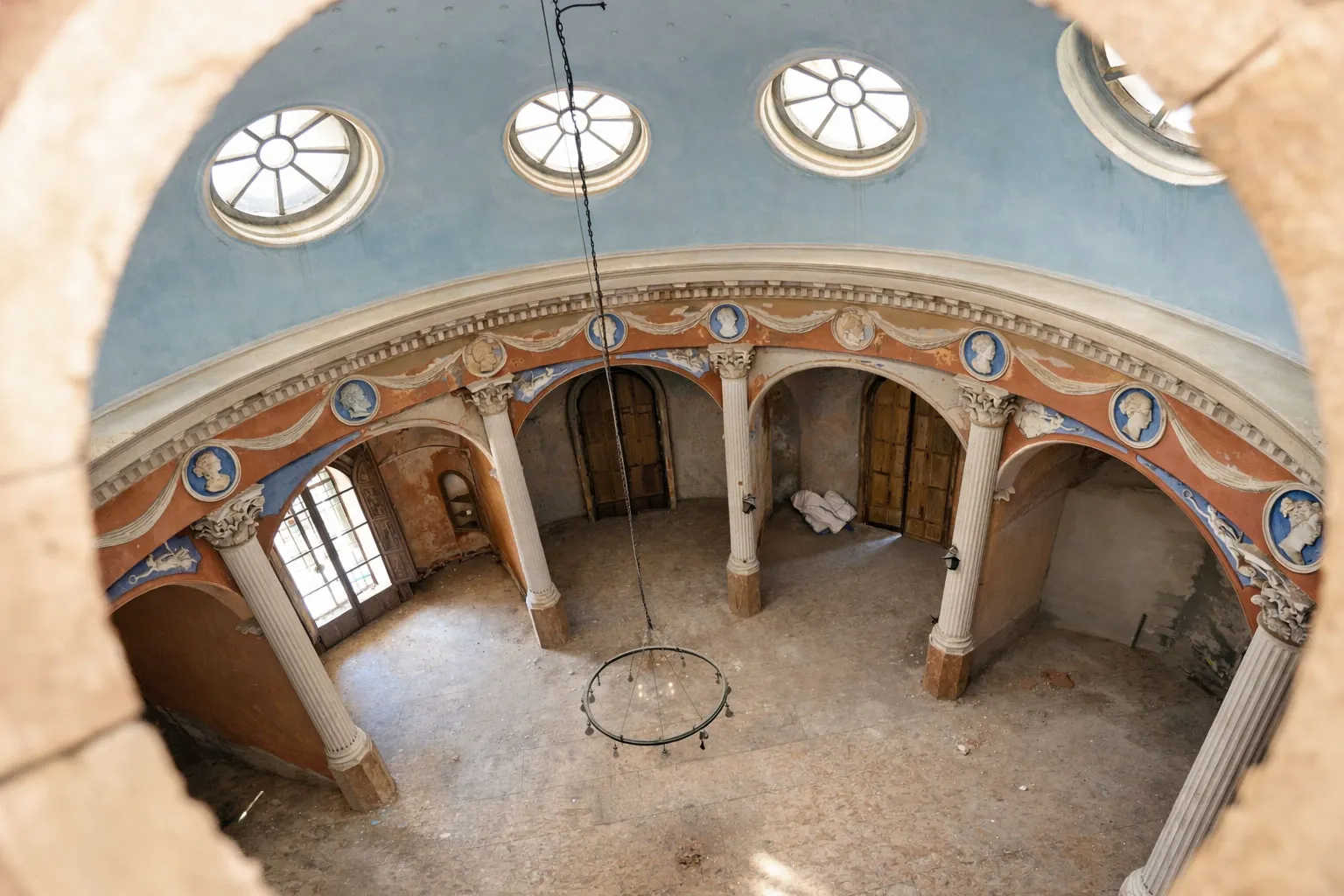
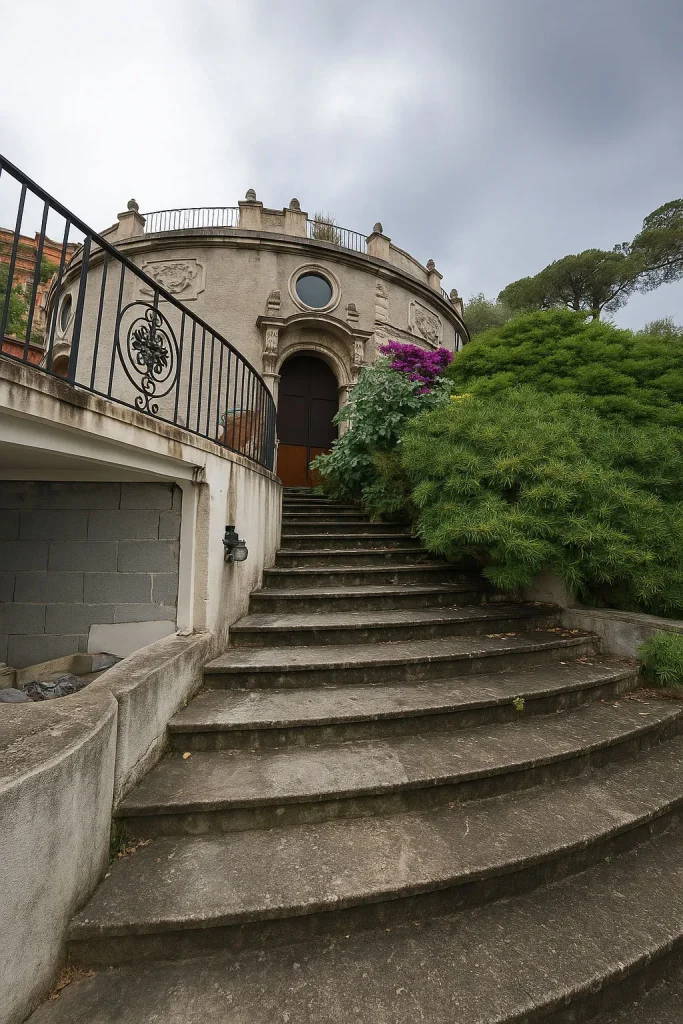
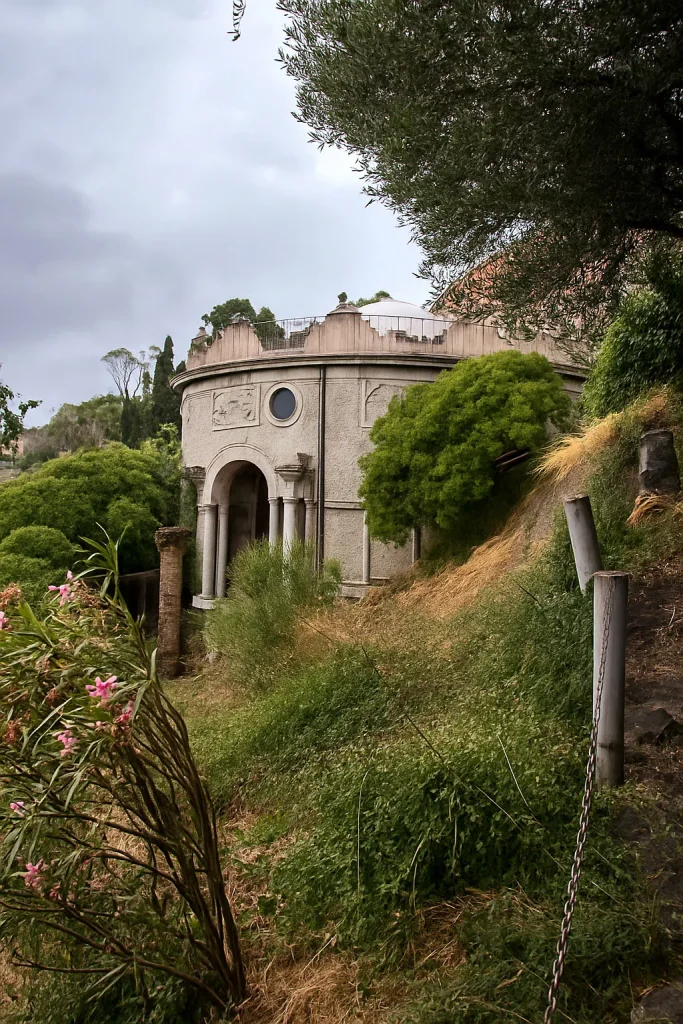
Two century-old pine trees and a small historic chapel were carefully preserved during the demolition and reconstruction of the site. These elements create a powerful dialogue between contemporary architecture and the memory of the landscape.
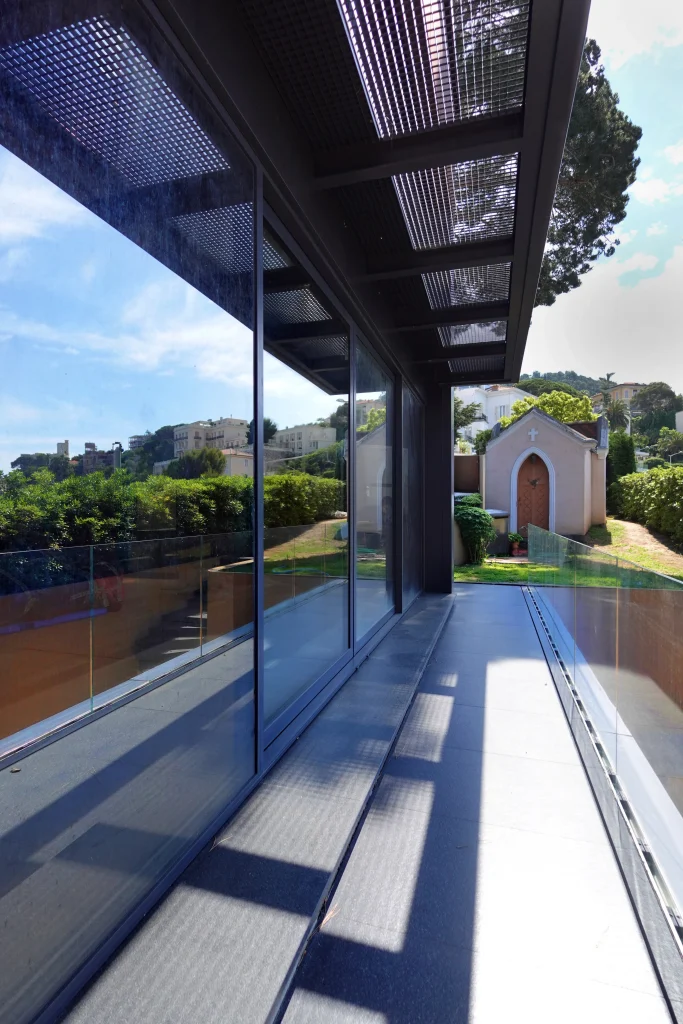
Terraced gardens weave around the house at multiple levels, softening the corten façade while filtering views toward the road and reinforcing the visual connection with the sea. The presence of these historic elements anchors the project within the site’s history while framing the contemporary architecture.

Through its evolving materials, adaptable spaces, and continuous dialogue with its surroundings, the project becomes a living architecture. The house changes with light, weather, and time, evolving alongside those who inhabit it.

Auron

The Monkeys Cabana

Auron, France | Luxury Mountain Chalet

Project Overview

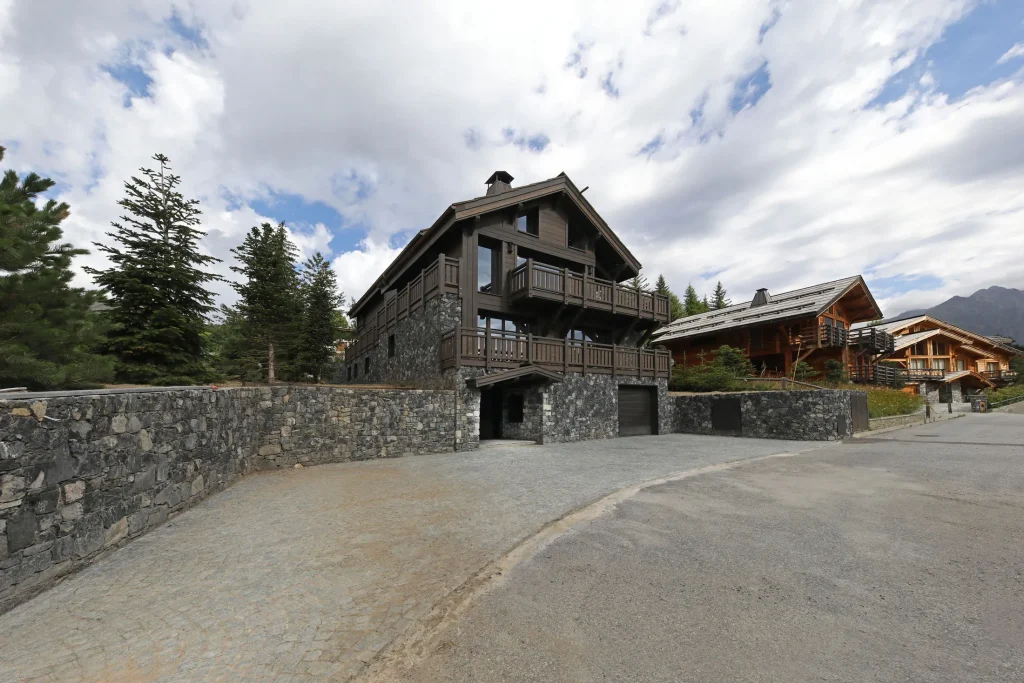
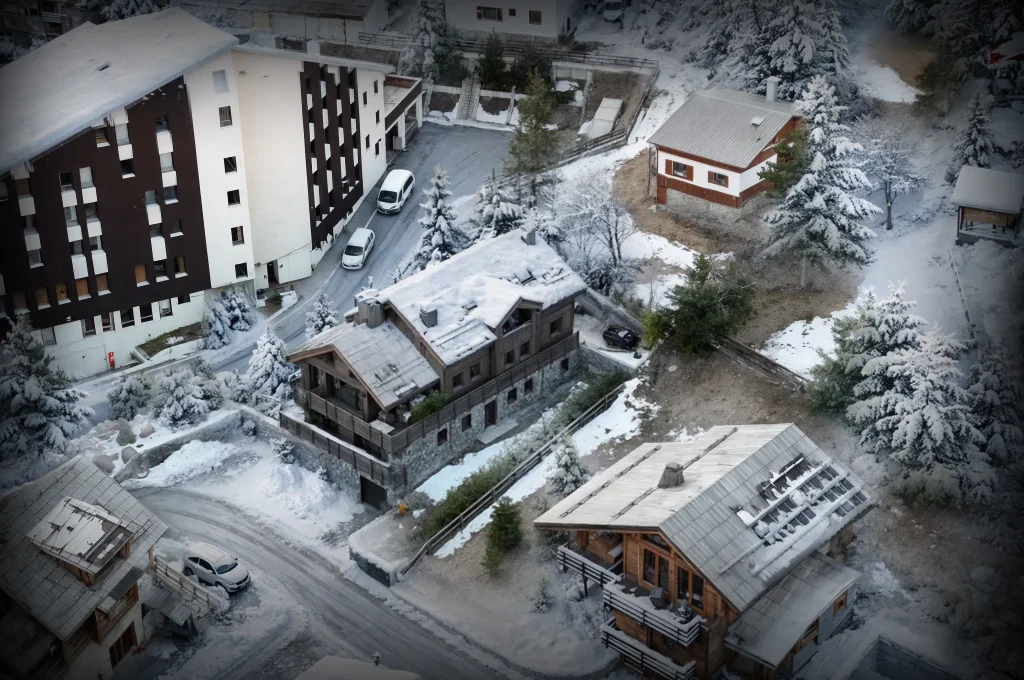
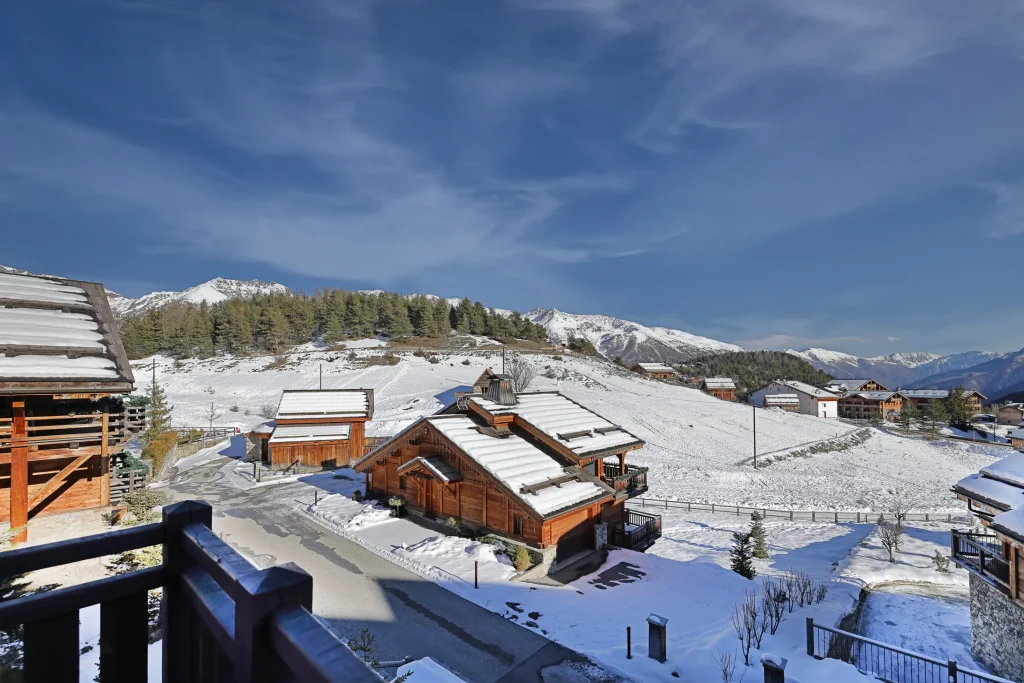
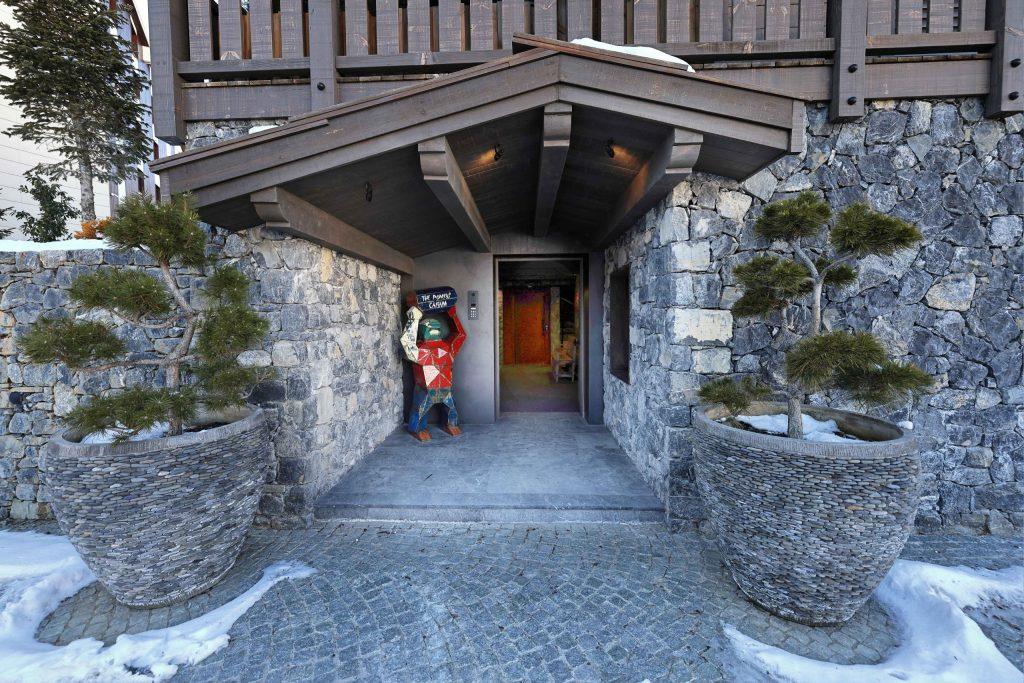
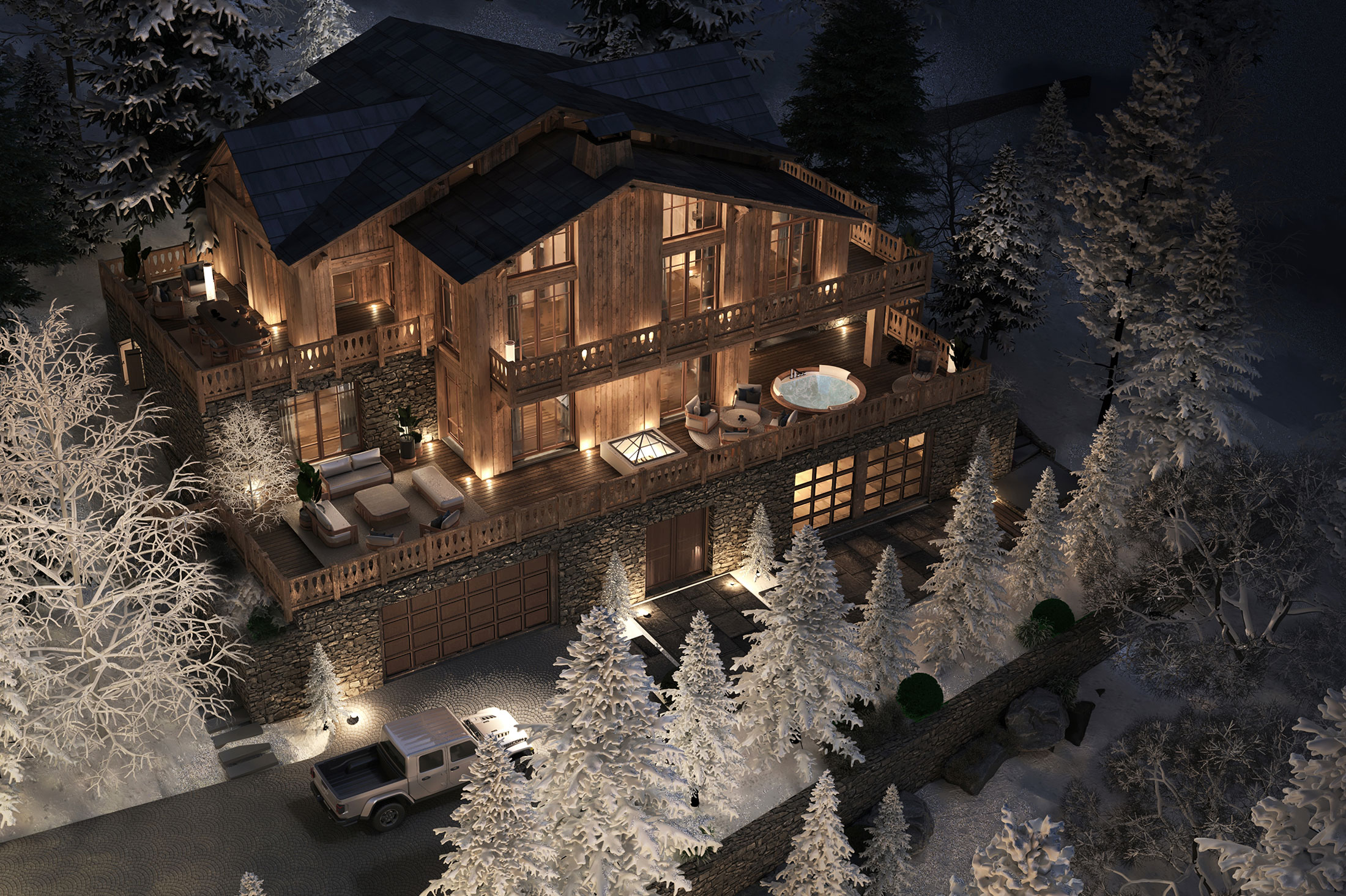
Located at 1,600 meters in the alpine resort of Auron in the French Alps, The Monkeys Cabana is a private luxury chalet in Auron designed by Joe Aoun. Its contemporary alpine architecture is paired with a carefully curated interior inspired by early 20th-century references.

Architecture & Site Strategy

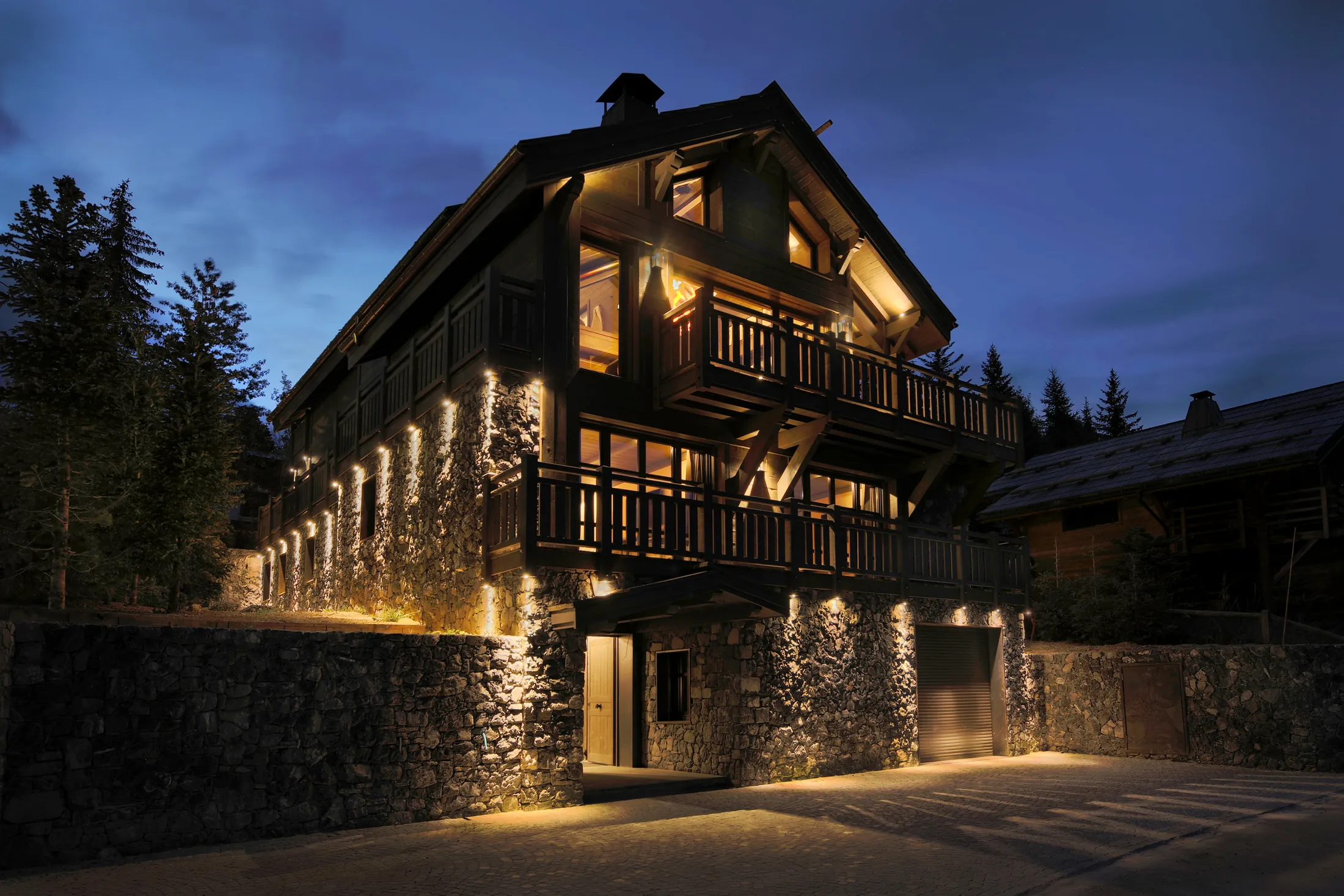
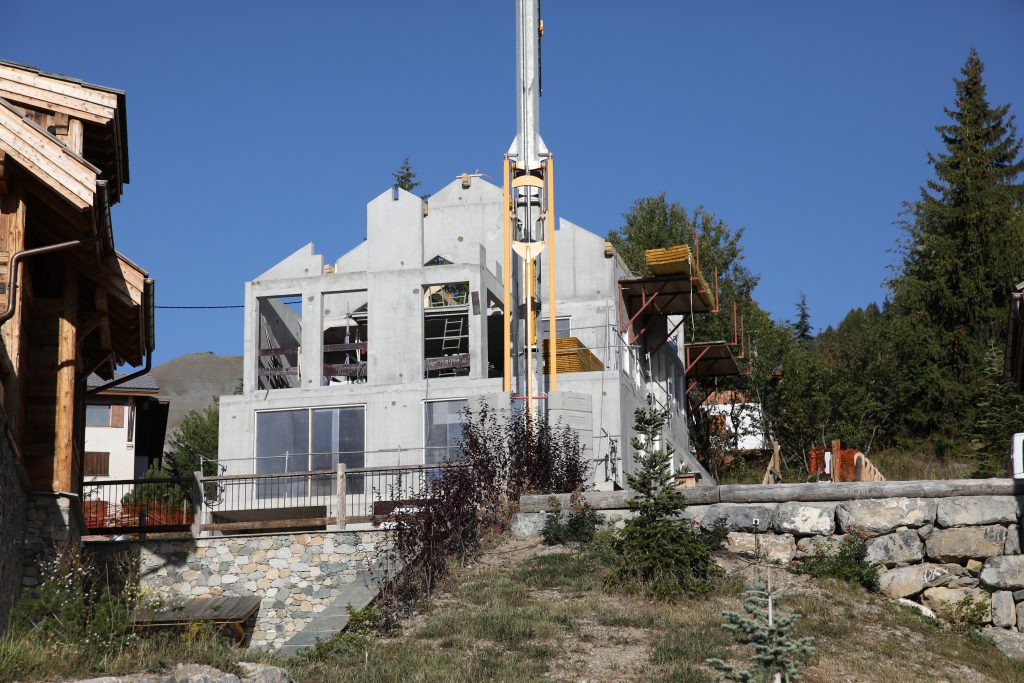
Built on the final plot of its development and surrounded by existing constructions, the chalet elevates its main living spaces above visual constraints, opening views toward the Mercantour National Park, Isola 2000, and the Italian Alps.

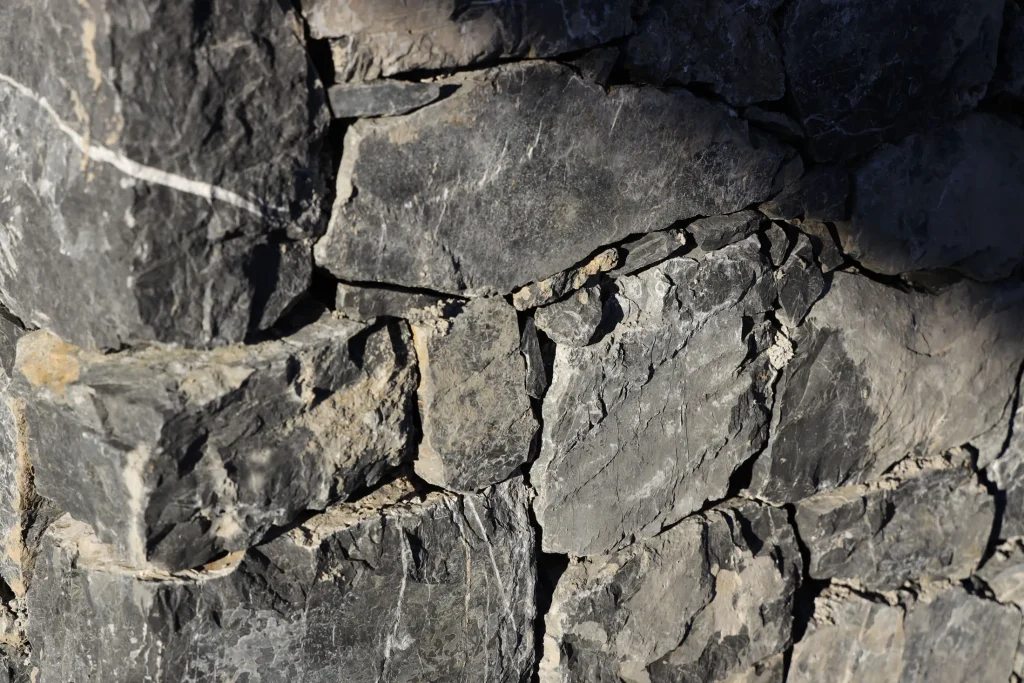
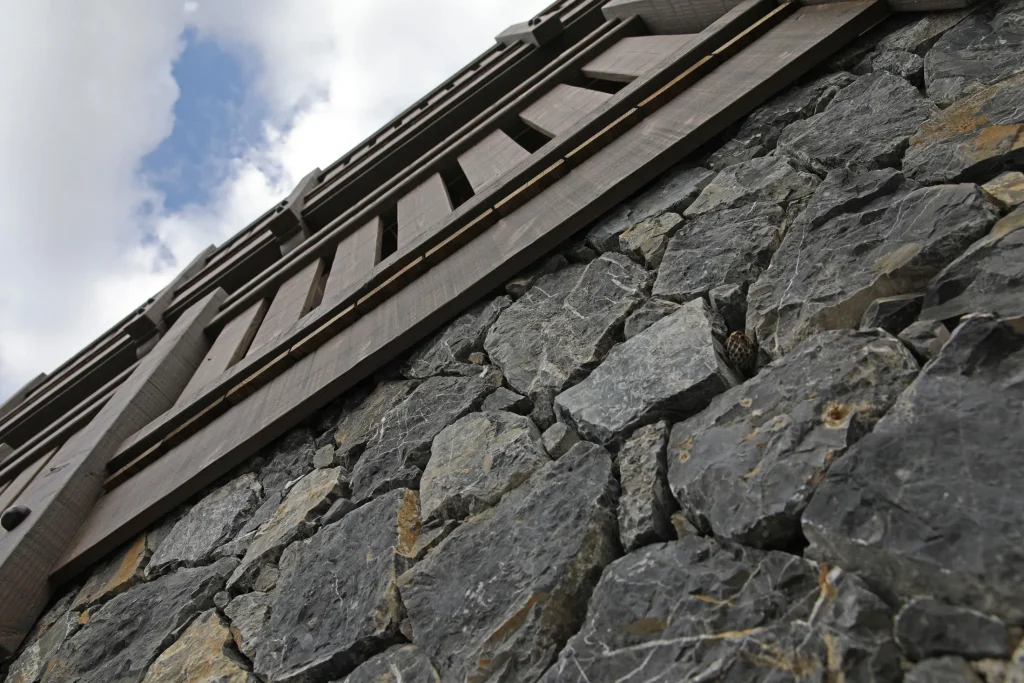
A stone base grounds the lower levels, while Jura larch wood defines the upper floors, reducing perceived height and reinforcing a contemporary alpine identity.

Interior Curation & Heritage Pieces

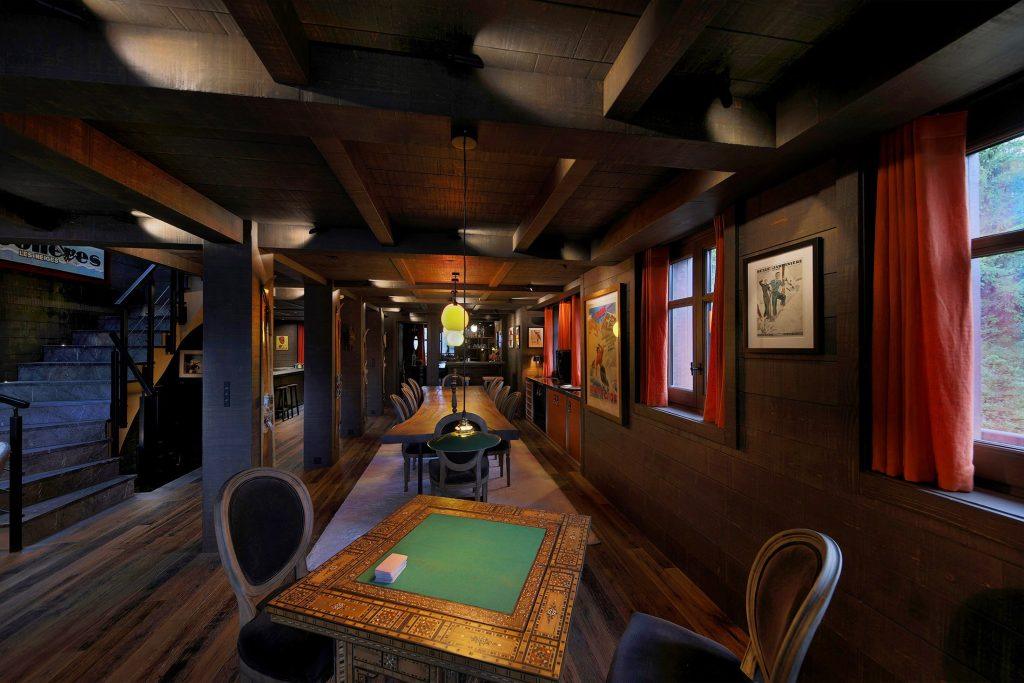
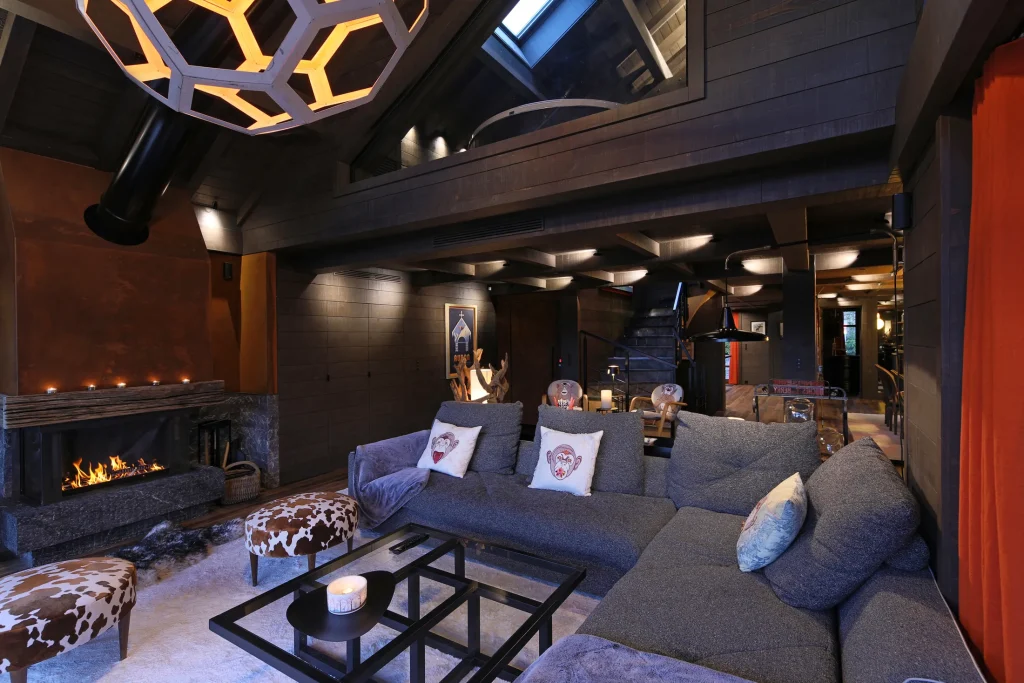
The interior is conceived as a collected space rather than a decorated one. Early 20th-century furniture and objects sourced from Paris and Beirut flea markets shape the identity of the chalet and introduce depth, history, and character.

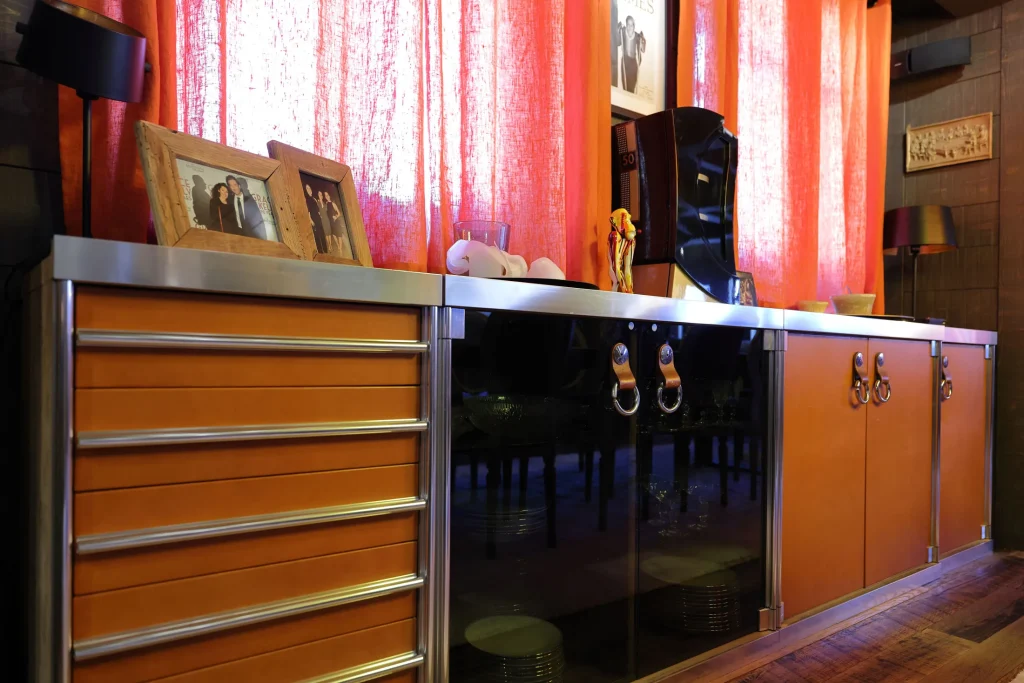
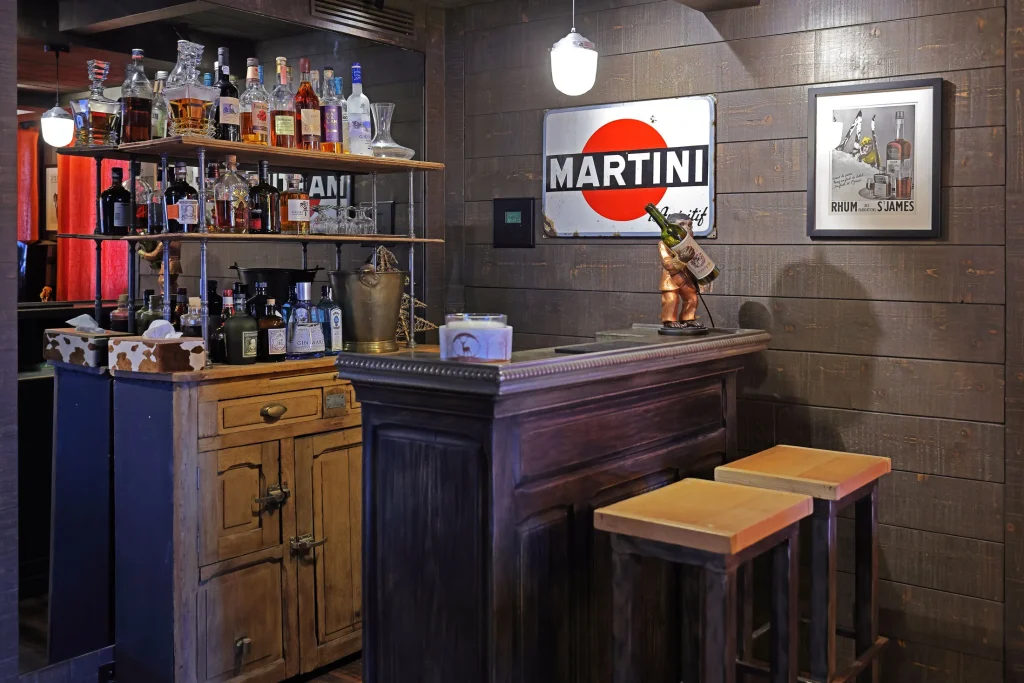
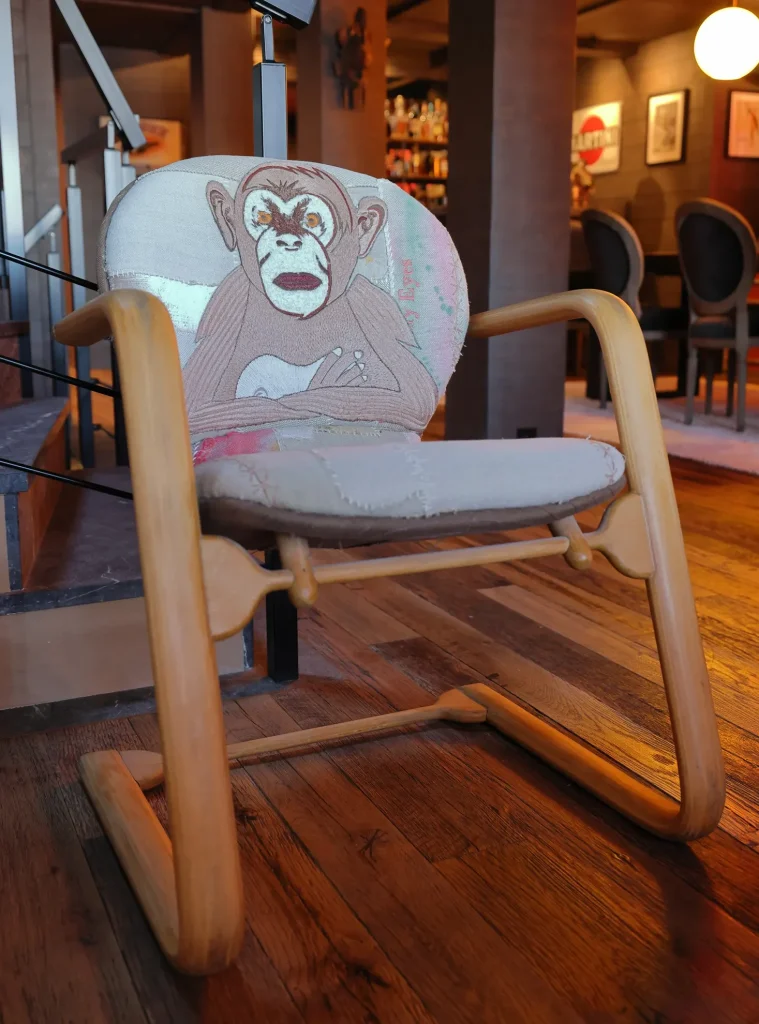
Key elements include a restored Hermès boutique cabinet, vintage game tables, reworked armchairs, and a 1930s bar with a mirrored back, each selected for its authenticity and integration within the architecture. These pieces inform the interior palette, influencing accent tones, textures, and spatial rhythm throughout the chalet.

Materials & Atmosphere

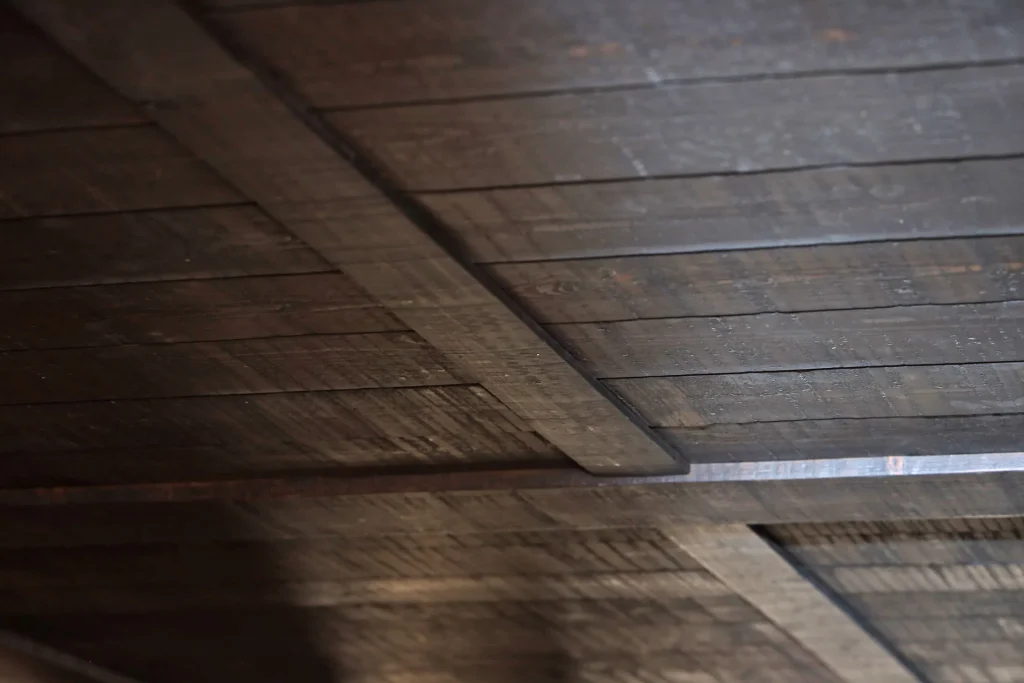
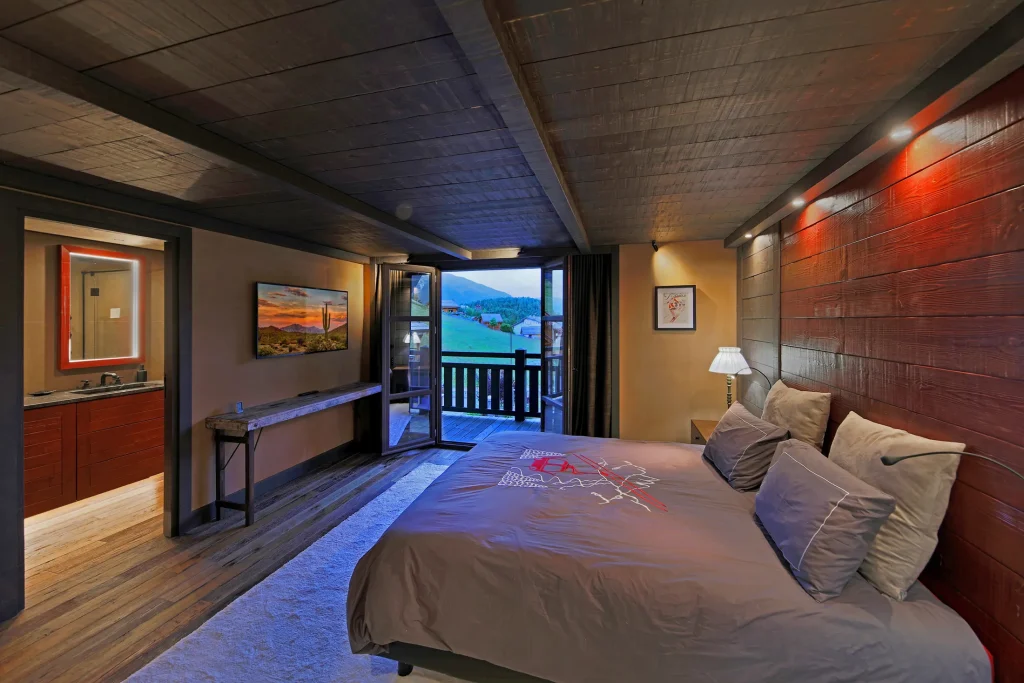
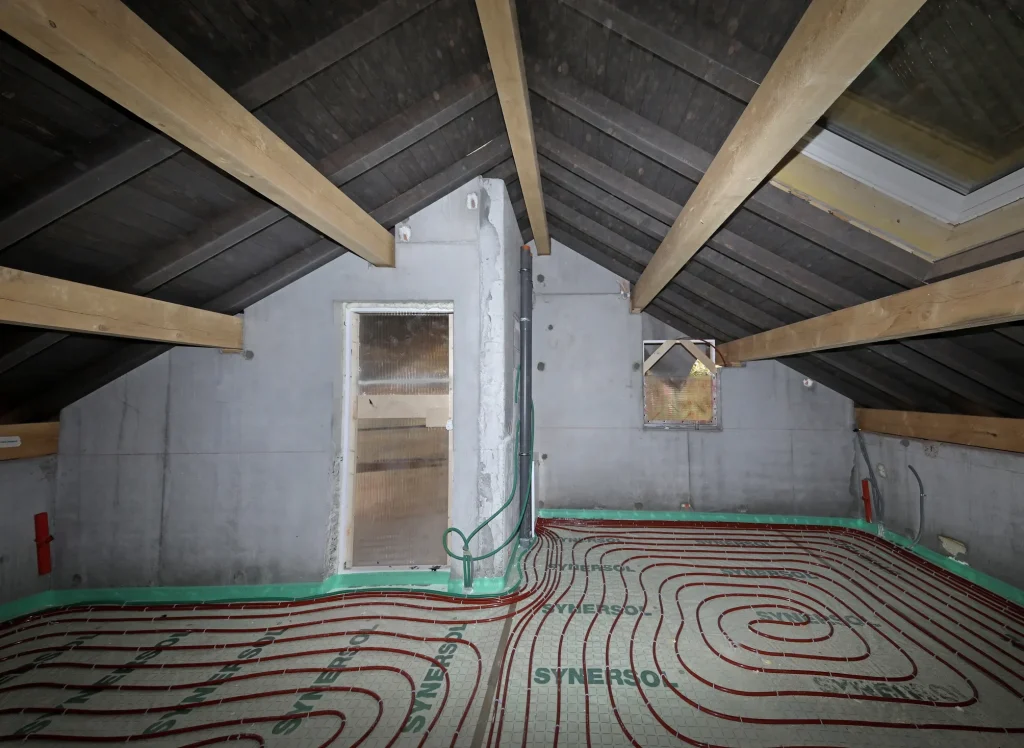
Material continuity reinforces the dialogue between old and new. Reclaimed Belgian wood flooring was adapted to modern insulation and underfloor heating, while local stone extends from the exterior into staircases and interior walls. Tinted larch wood appears on ceilings, built-ins, and headboards, establishing a warm and cohesive alpine atmosphere.

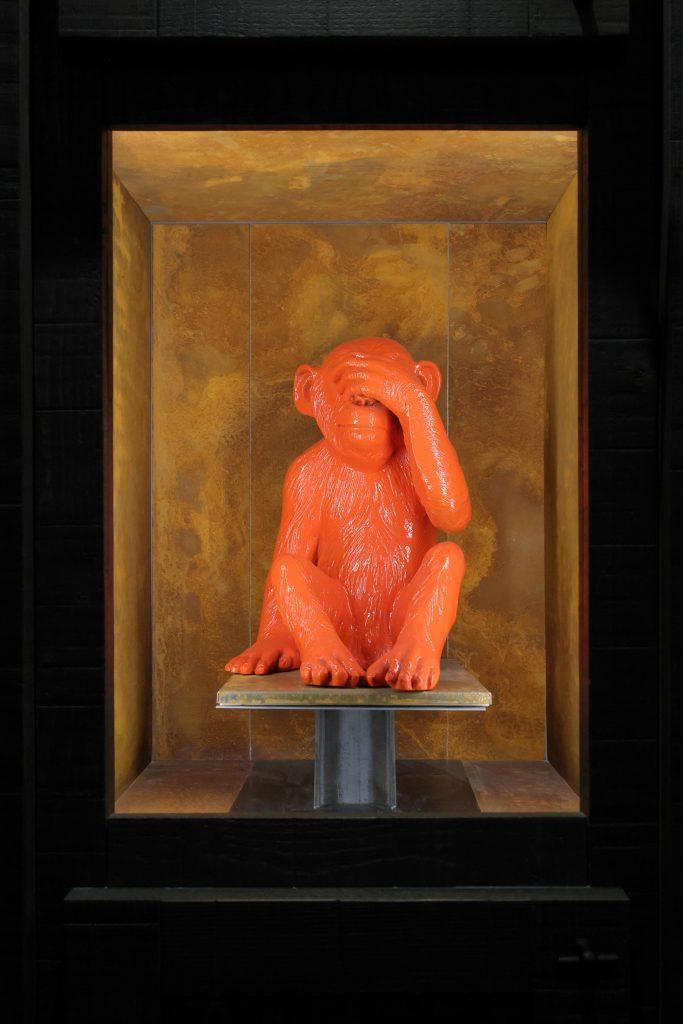
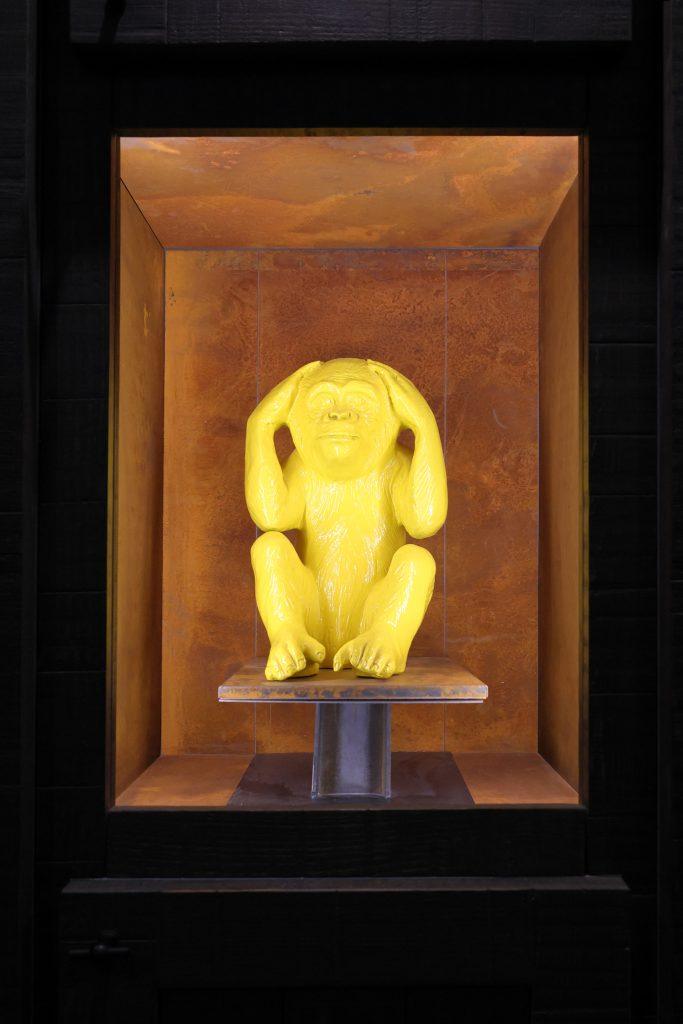
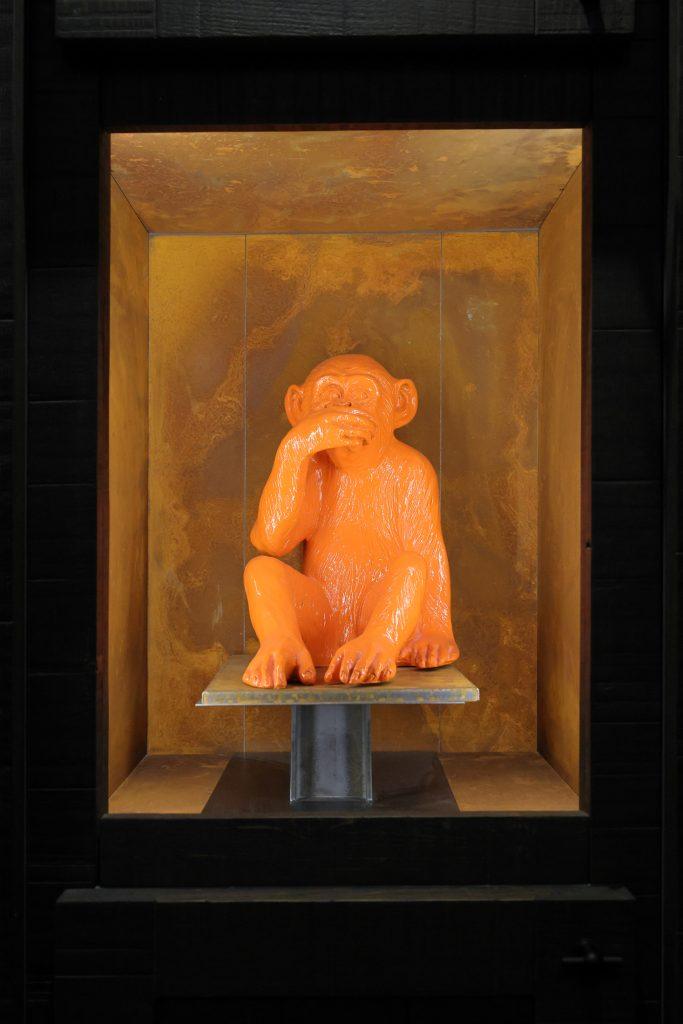
A subtle monkey motif runs throughout the interiors, offering a narrative thread without overt repetition. This playful presence gives the chalet its name, “The Monkeys Cabana,” introducing a light and unexpected identity within an otherwise refined alpine setting.

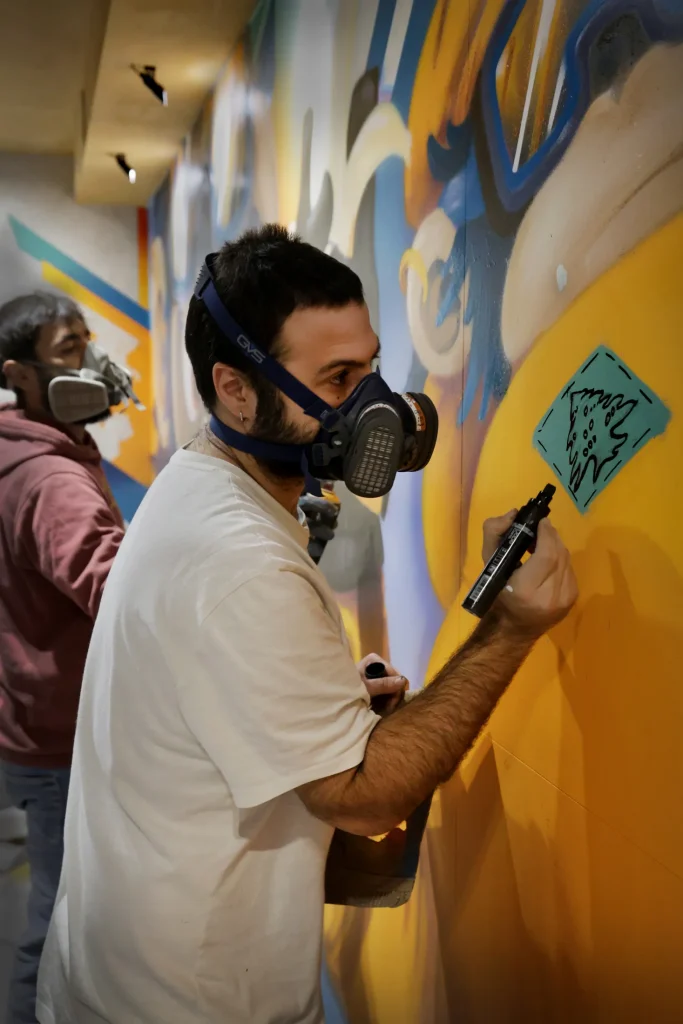
In the pool area, this narrative becomes more expressive through a large-scale mural created by two Lebanese artists. Extending from the walls to the ceiling, the artwork reinterprets the monkey theme with a bold, contemporary gesture, adding depth and contrast to the otherwise restrained material palette.

Living & Wellness Spaces

The main living level is designed around evening life after skiing. Dining, kitchen, and lounge areas are open and connected, encouraging shared moments.

The entry level introduces a more functional sequence, integrating ski storage, changing areas, and an indoor pool. Designed for direct return from the slopes, this level combines practicality with a strong architectural presence, shaped by material continuity and controlled lighting.

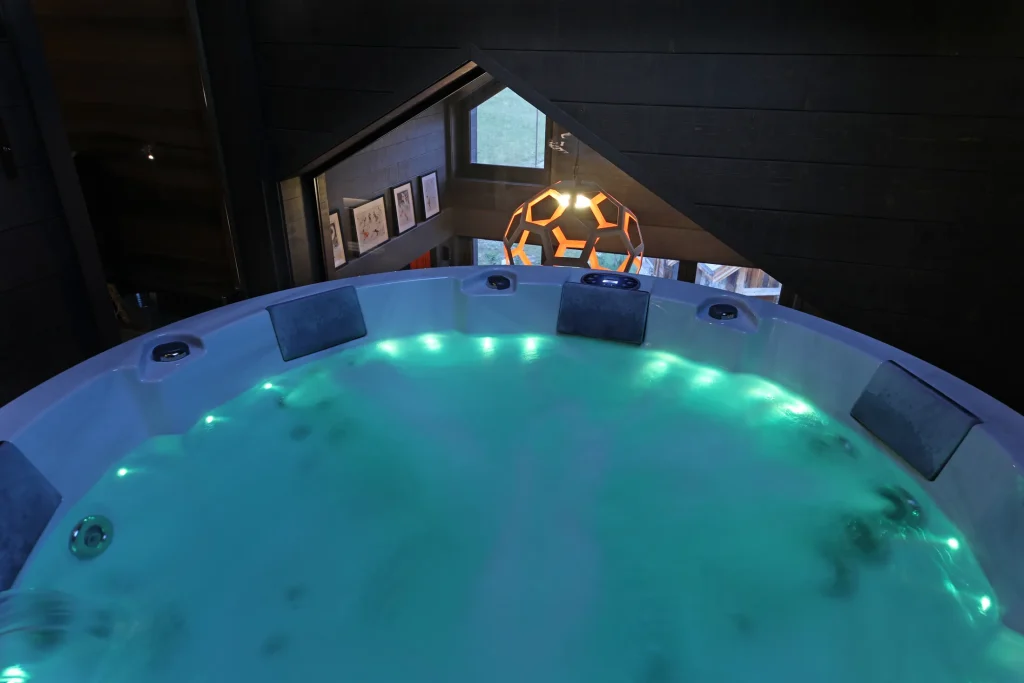
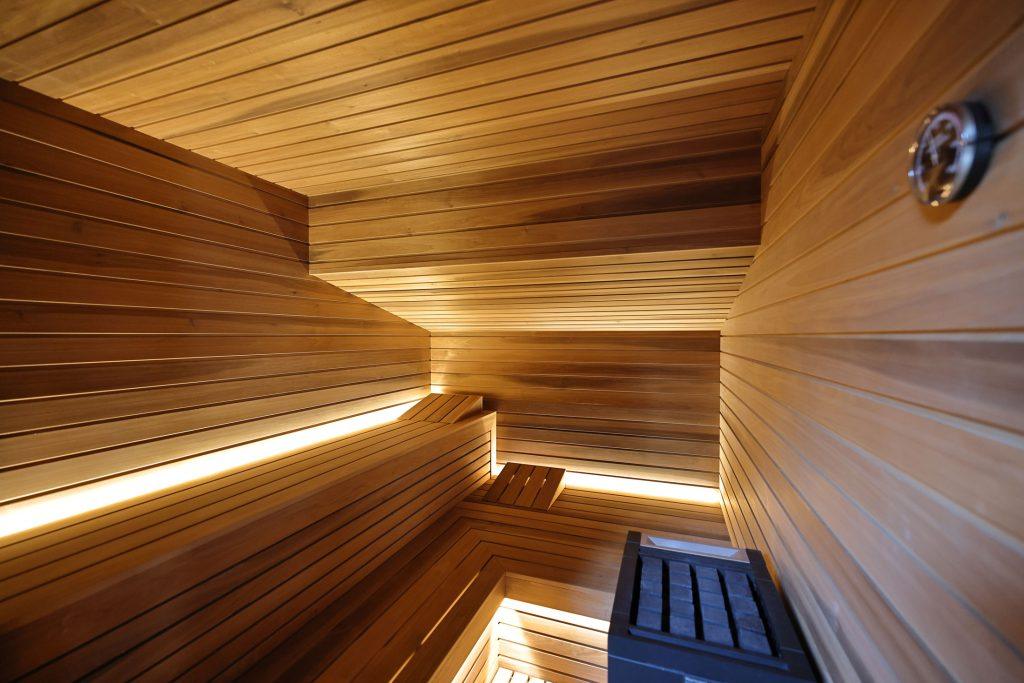
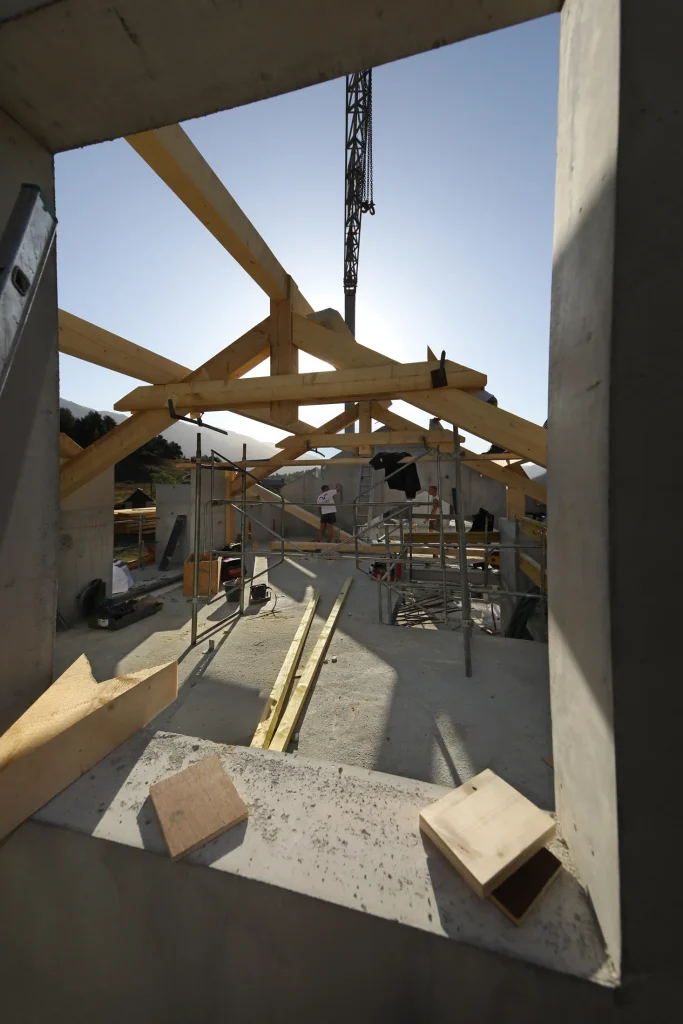
The top floor is dedicated to the master suite and a spa set beneath the exposed roof structure. A sauna and jacuzzi are integrated into this level, with roof windows and visual connections to the double-height living space below.

The Monkeys Cabana reflects JA Architecture’s approach to luxury interiors: a balance of heritage pieces, material integrity, and a curated narrative that extends beyond architecture.
Saint Jean Cap Ferrat

Curved Architecture Shaped by Topography

Architecture Shaped by the Land

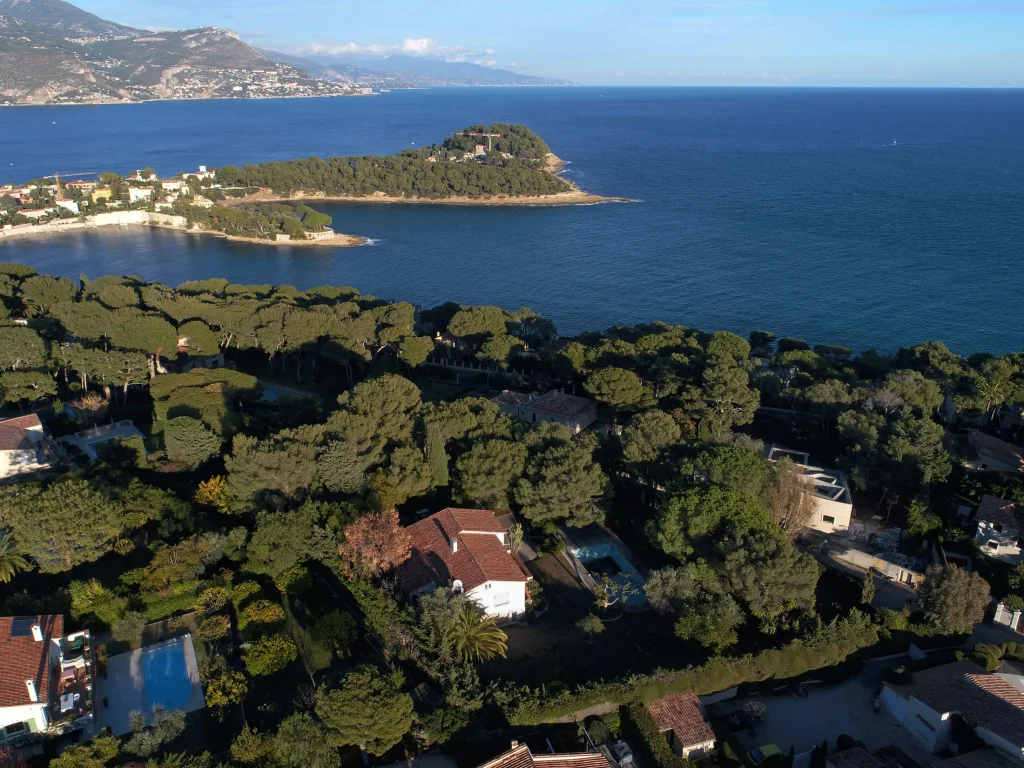
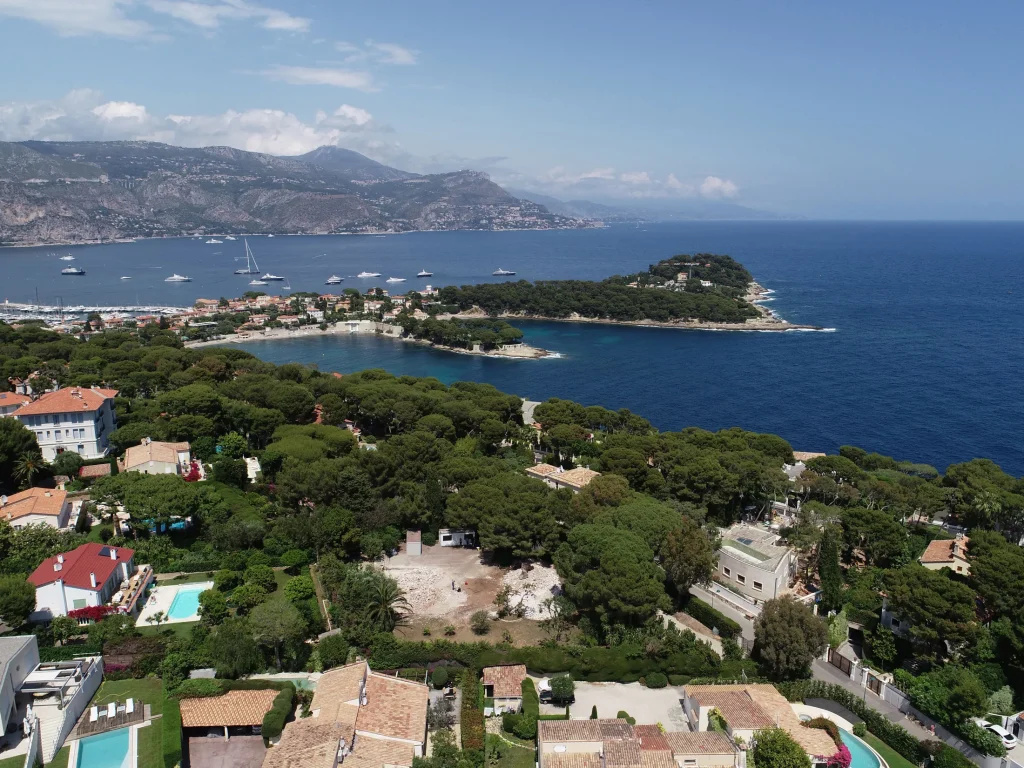
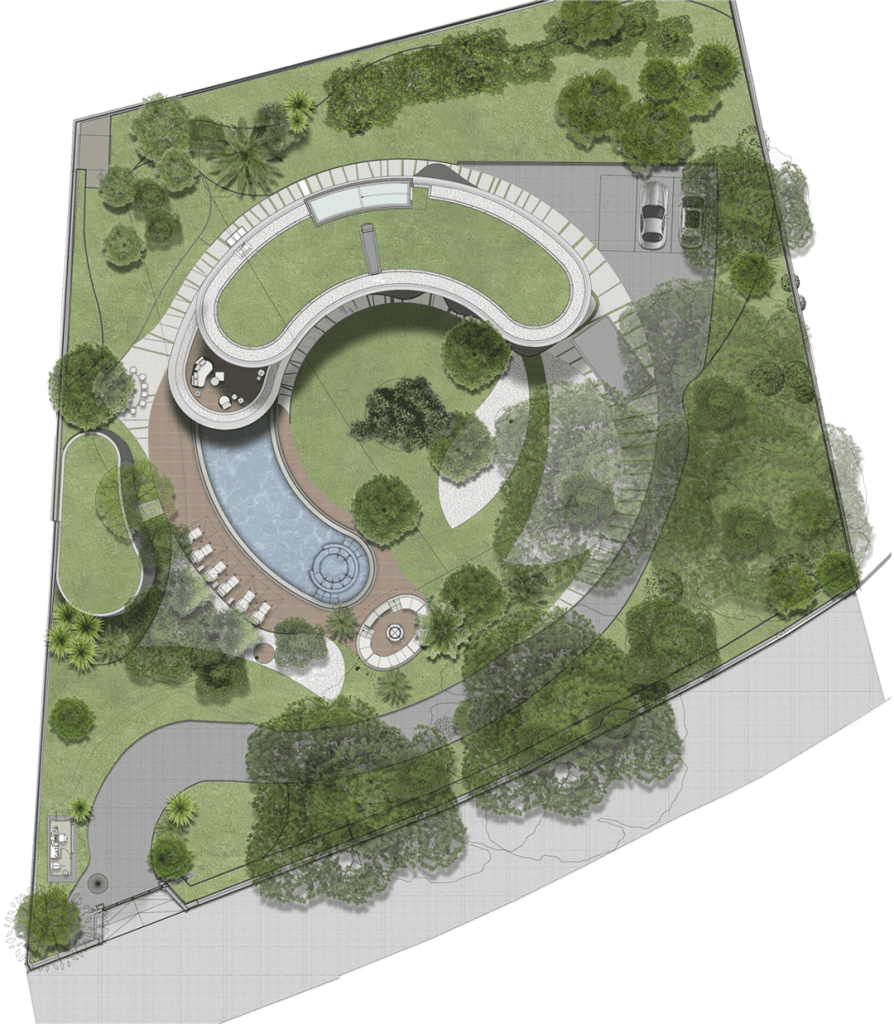
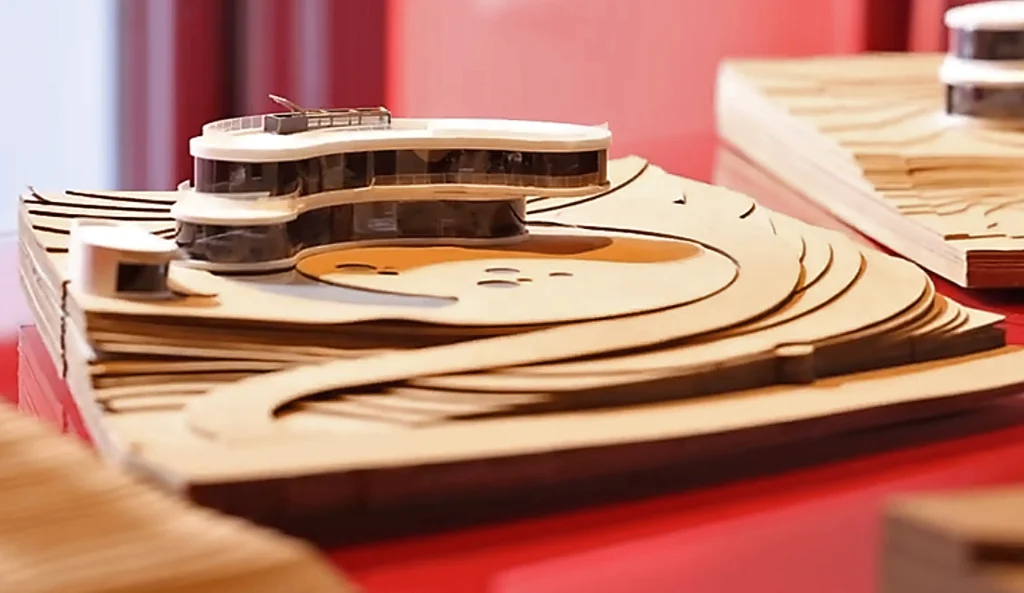
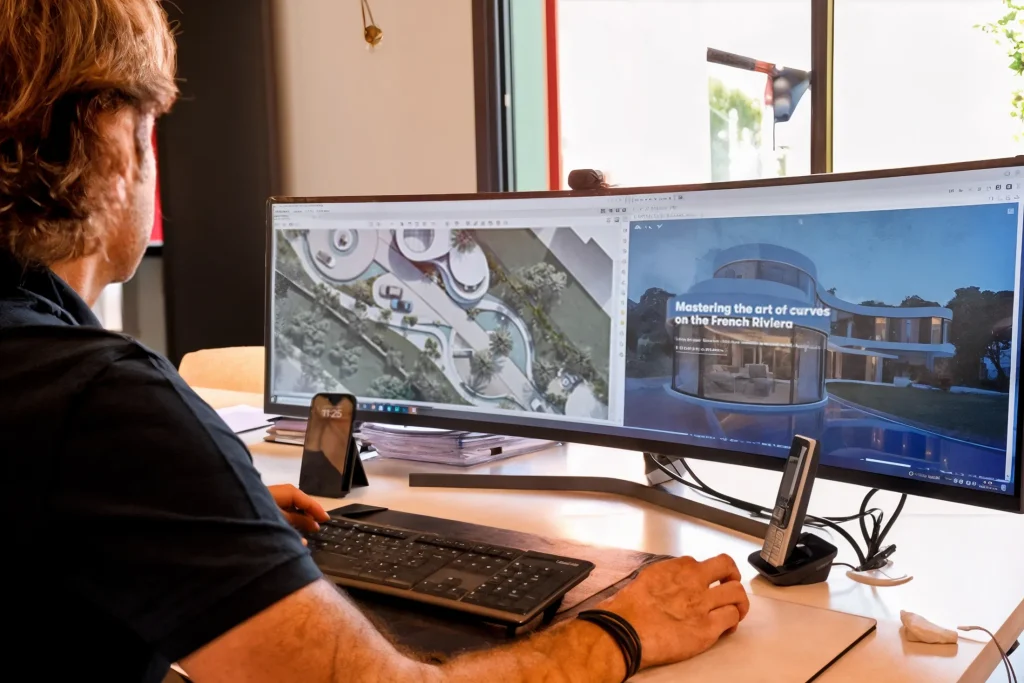
Lanis stands on a steep plot in Saint-Jean-Cap-Ferrat, replacing a former mid-century house with a design generated directly from the land. Developed with complete creative freedom, the project follows the site’s contour lines, the coastal road alignment, and the compact mineral ground as its primary drivers.

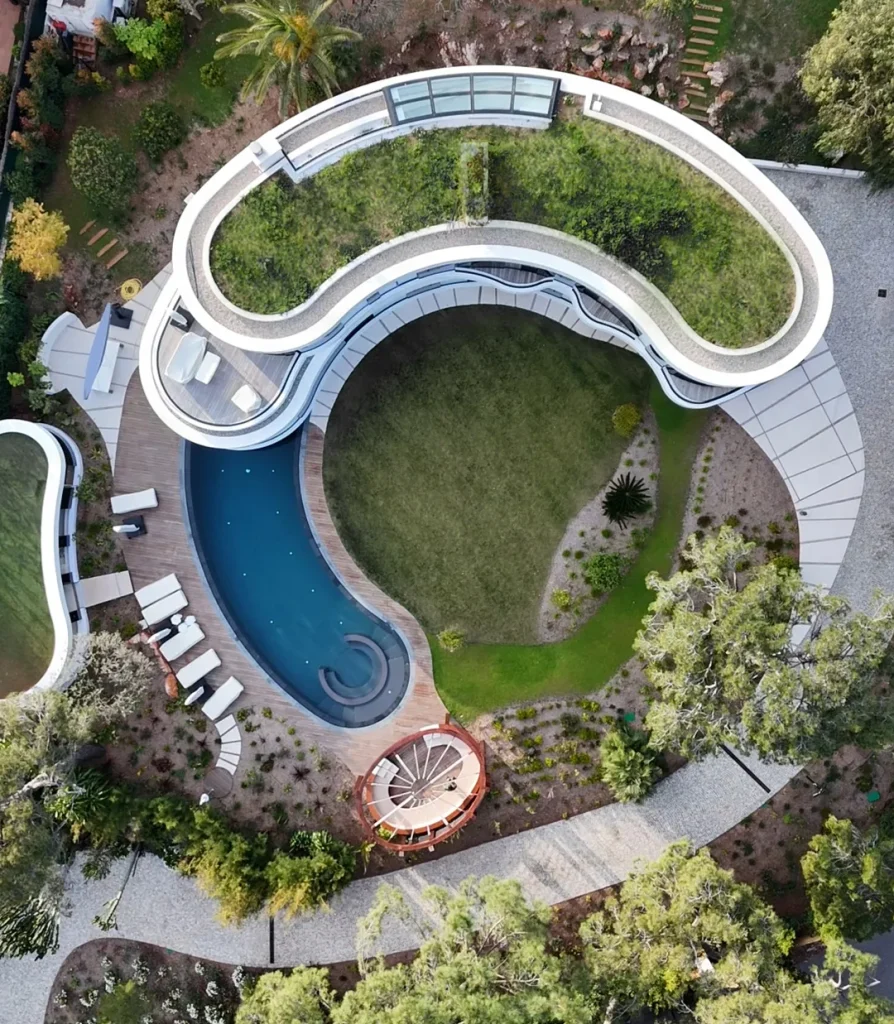
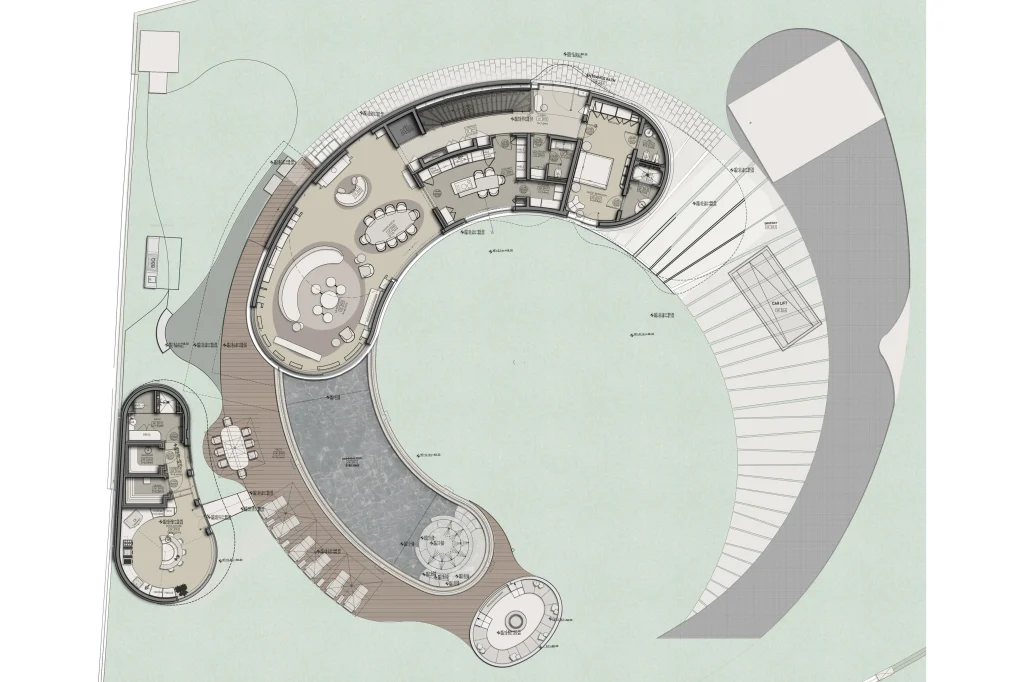
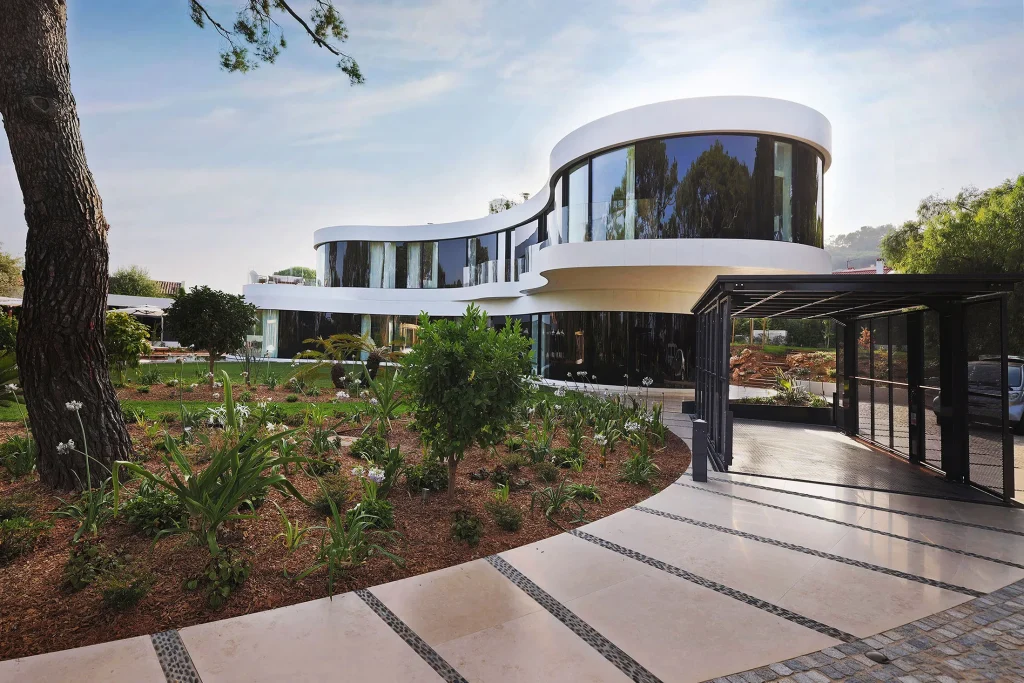
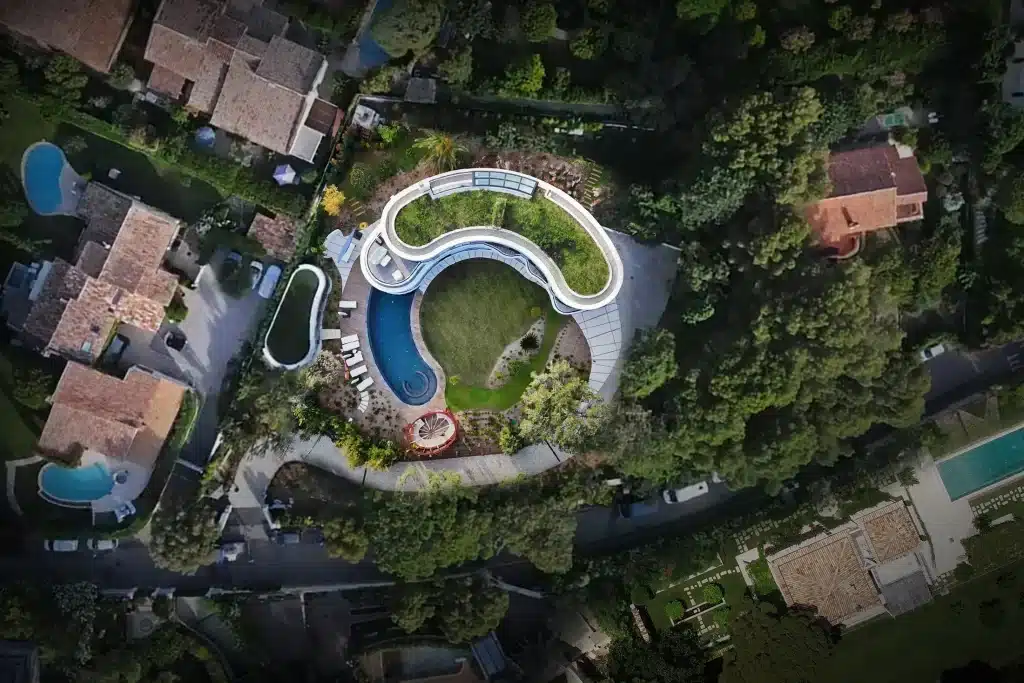
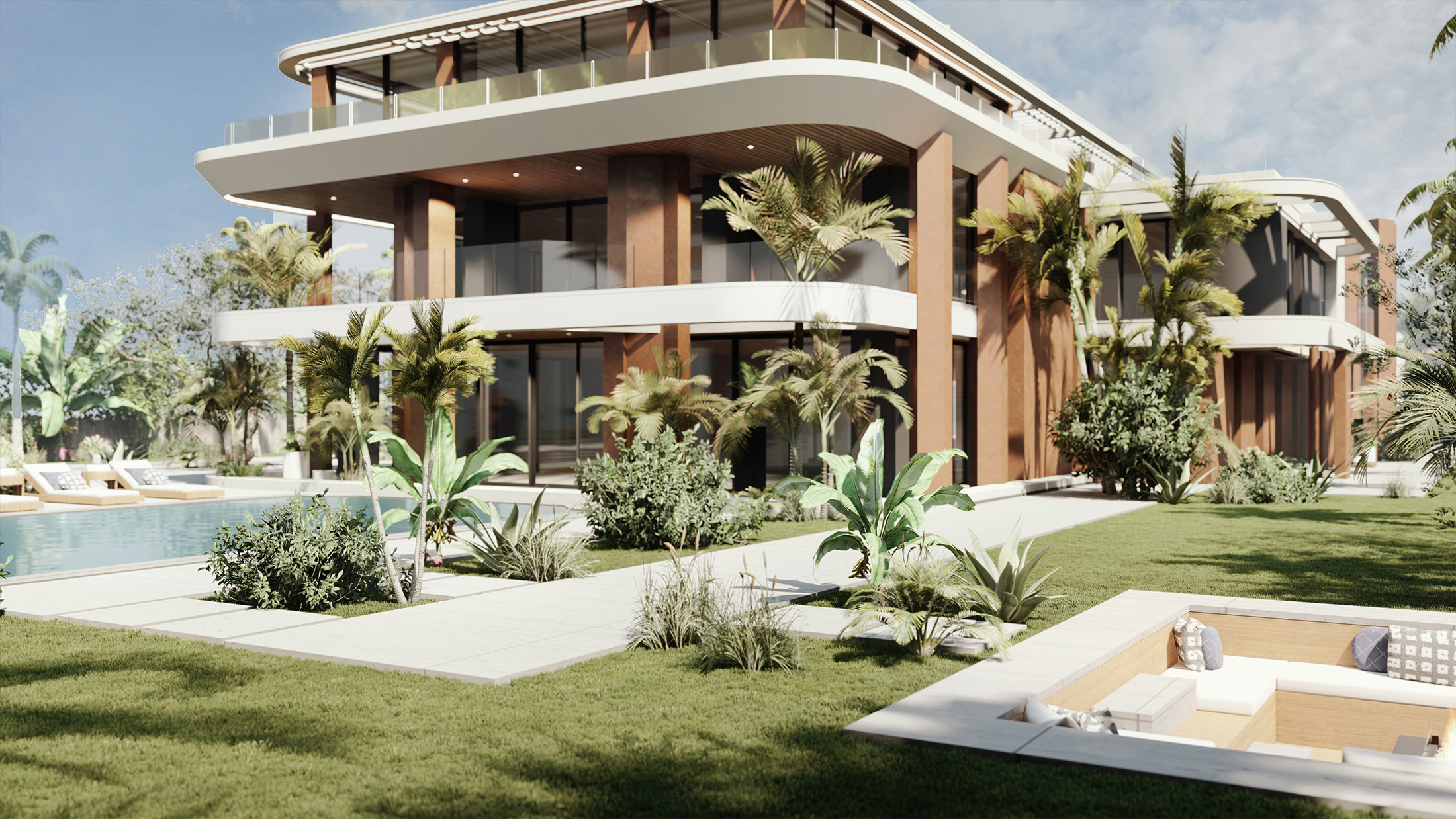
A single continuous curve begins at street level and extends through the plan toward the pool terrace, where the architecture reaches its full expression. This luxury villa in Saint-Jean-Cap-Ferrat is defined by topography rather than frontage. Its geometry feels anchored, as if drawn directly from the terrain.

A Continuous Curved Plan

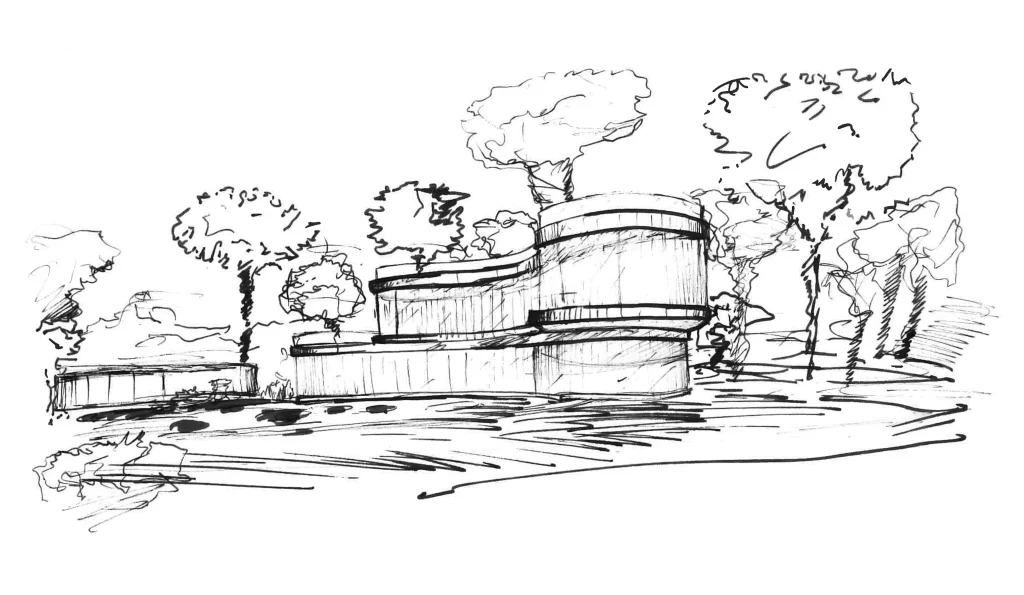
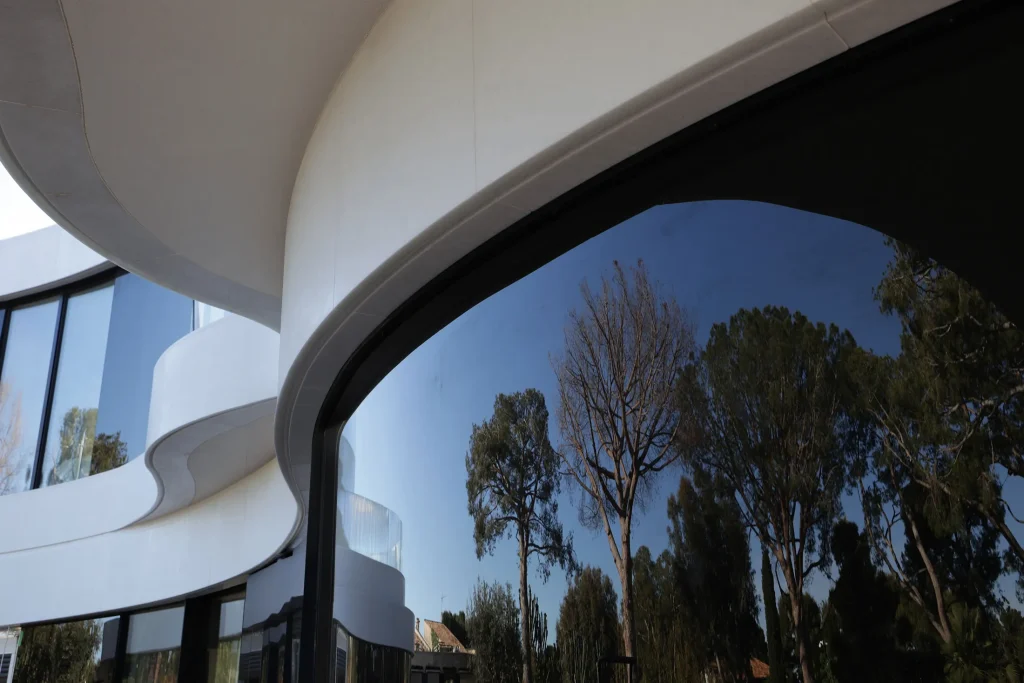
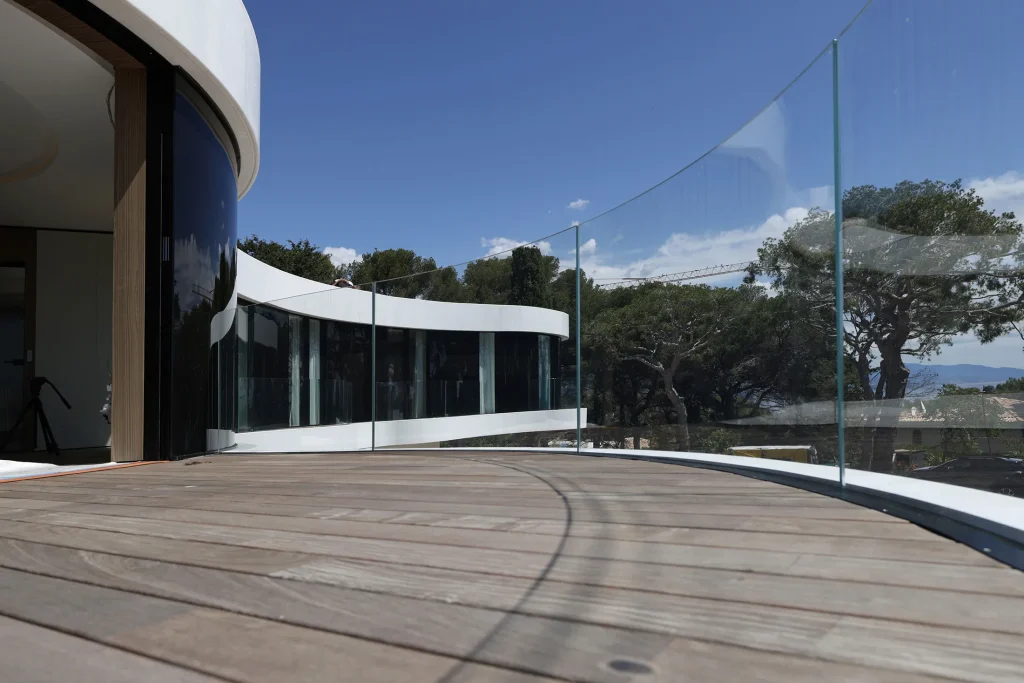
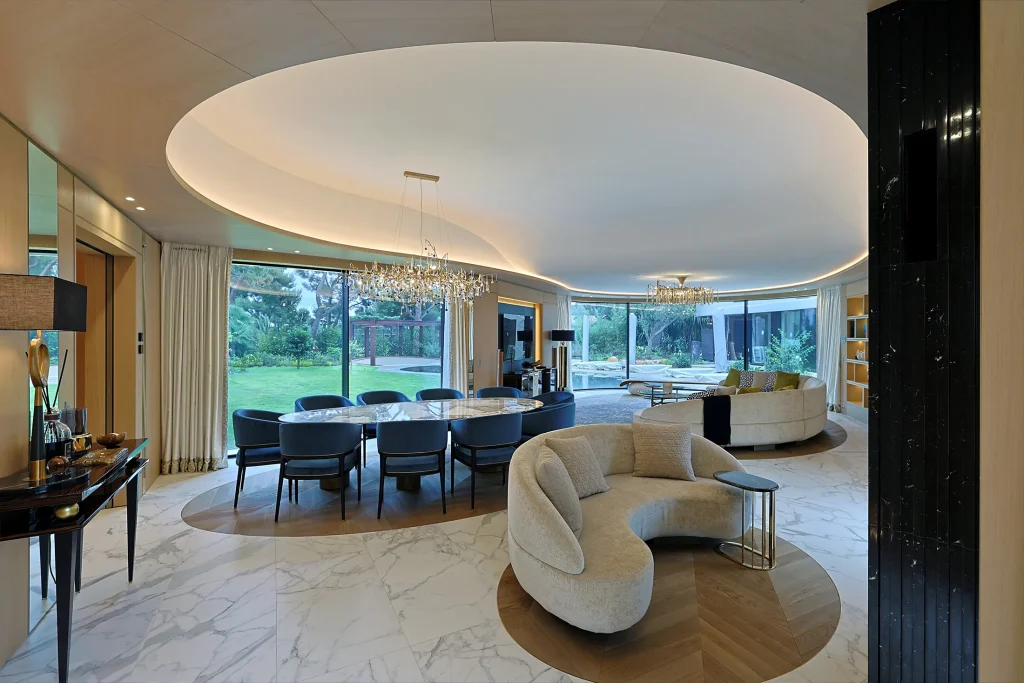
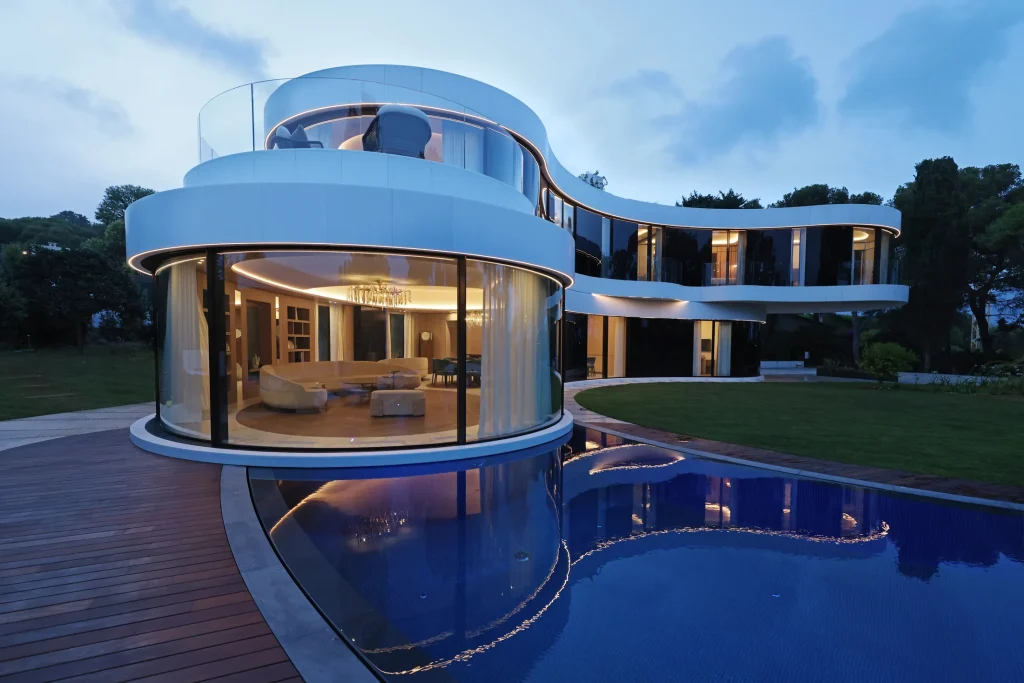
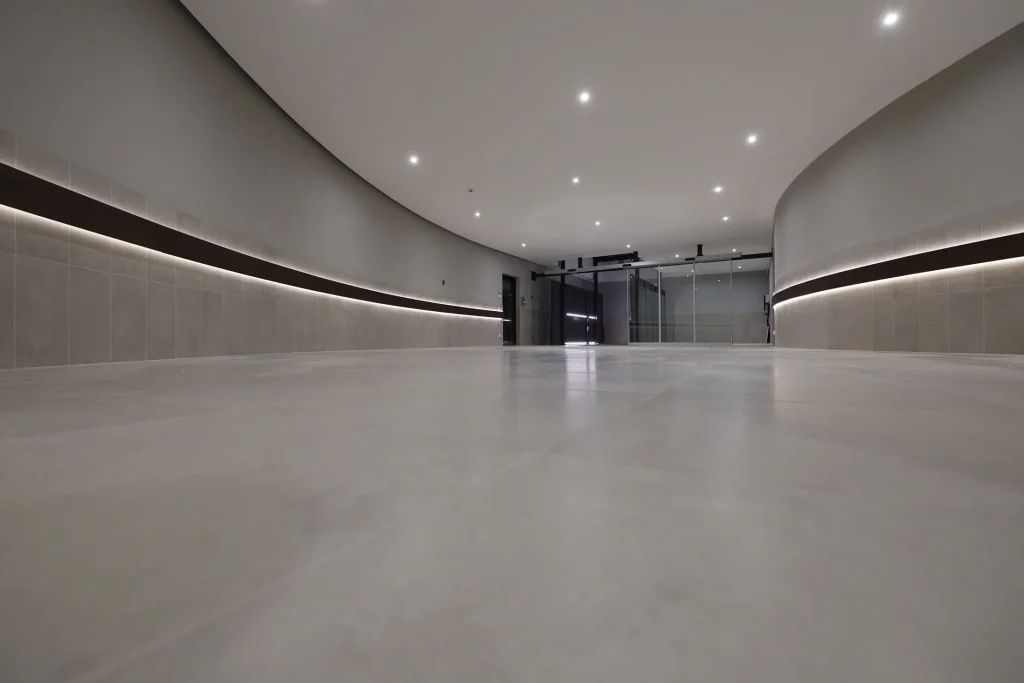
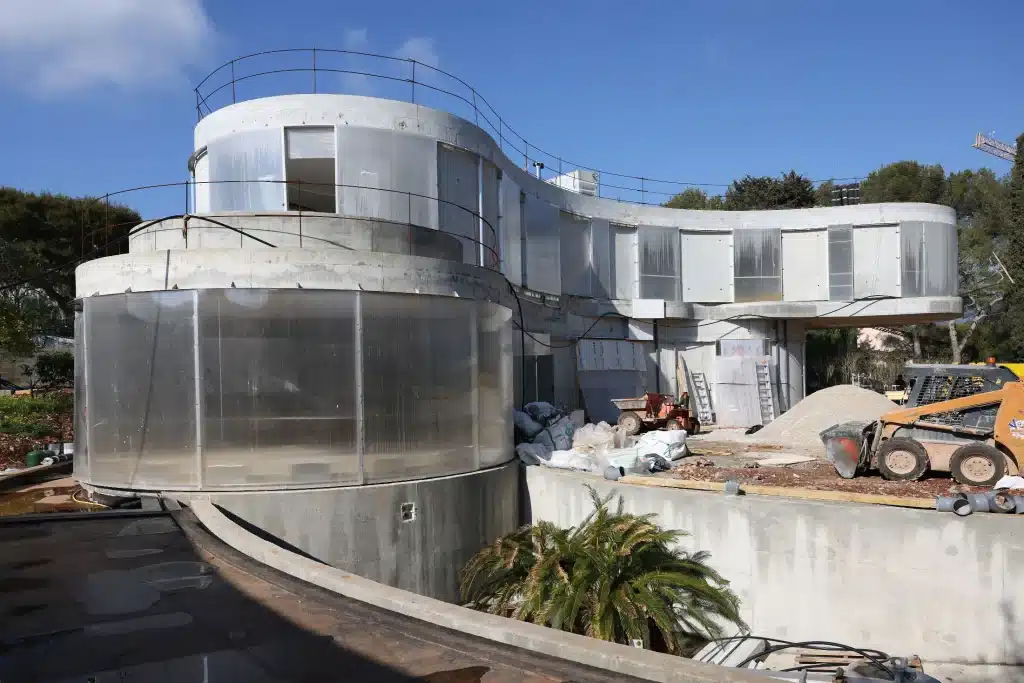
The curve defines both form and experience. Circulation flows without abrupt angles, ceilings rise in gentle arcs, and curved glazing opens wide views toward the garden and the Mediterranean horizon. A subtle horizontal shift between two identical volumes creates a sheltered entrance below and a terrace above, establishing depth through proportion rather than ornament.

This logic extends beyond the exterior form, shaping interior walls, ceilings, and spatial transitions with the same continuity. Movement through the house remains fluid and intuitive, connecting arrival, living areas, and private spaces in a continuous sequence. Within the landscape of high-end residential architecture in France, the geometry remains calm, controlled, and livable, an inhabitable architecture shaped by movement and use.

Glass Façade and Material Continuity

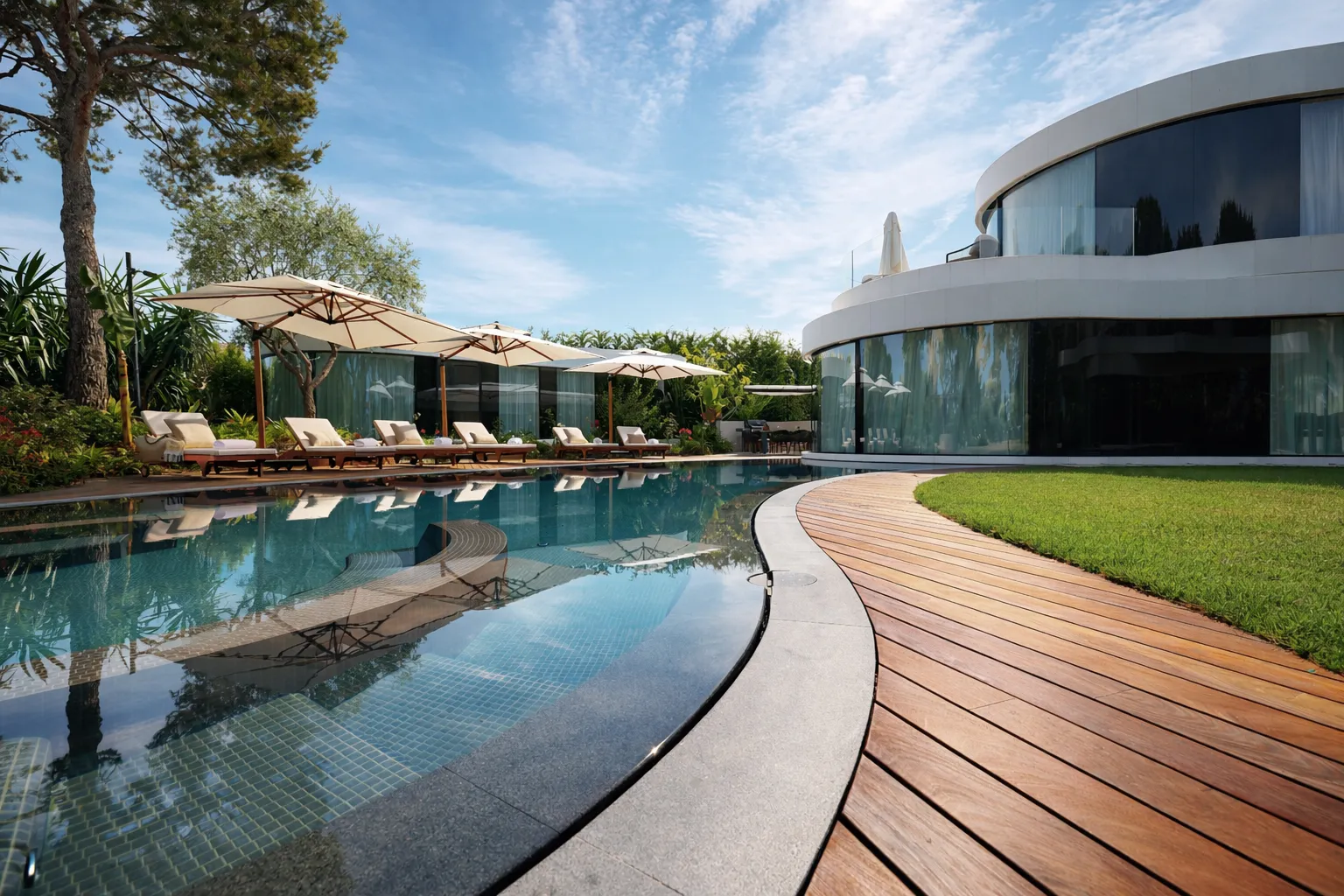
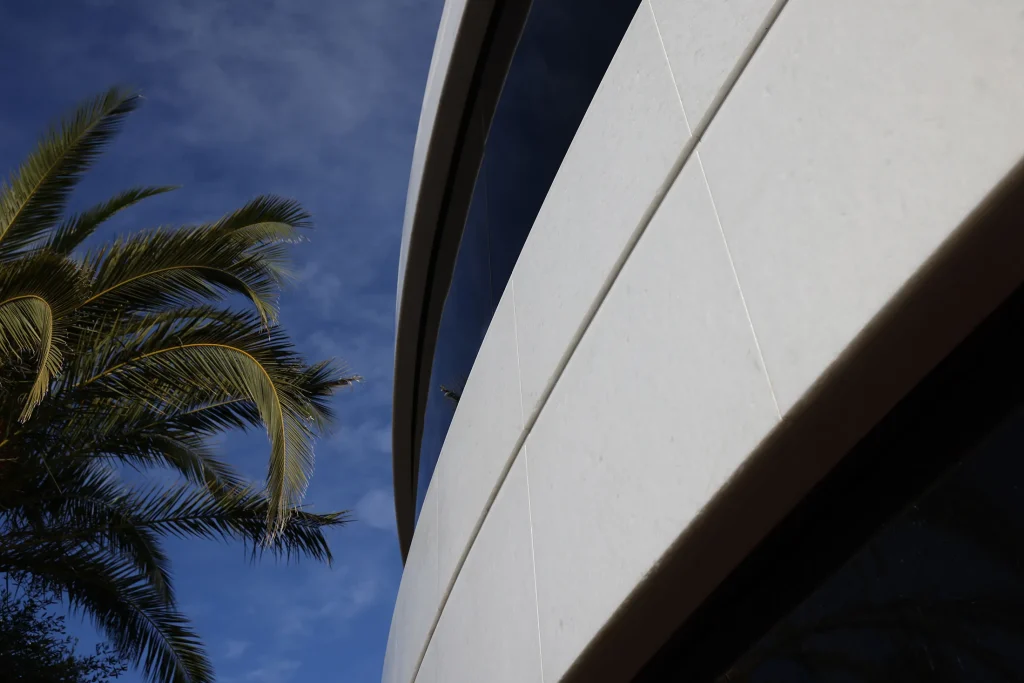
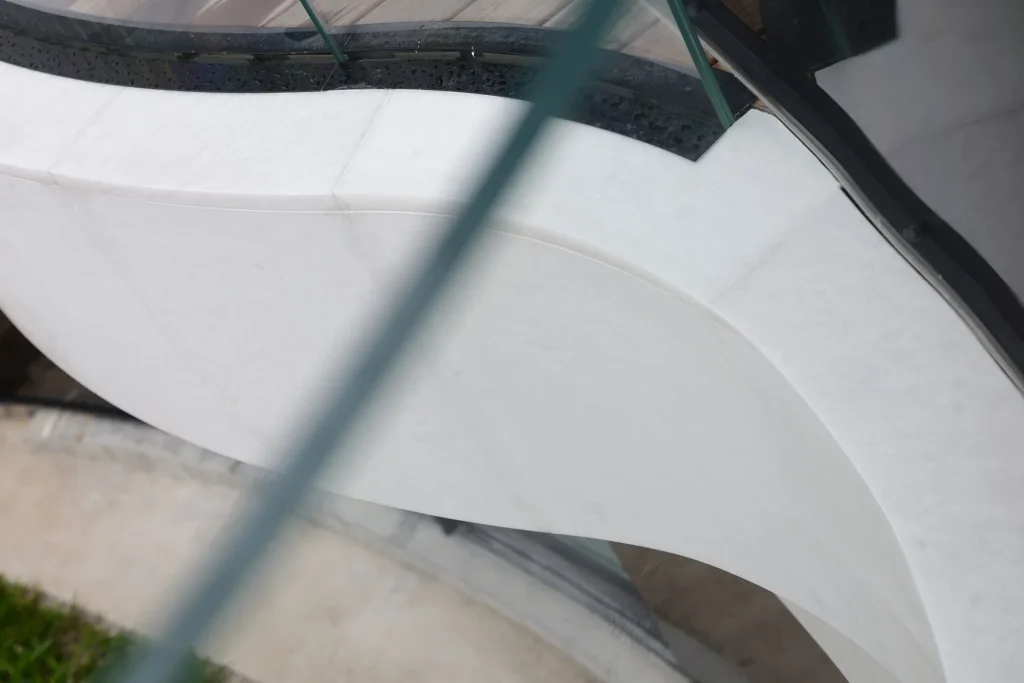
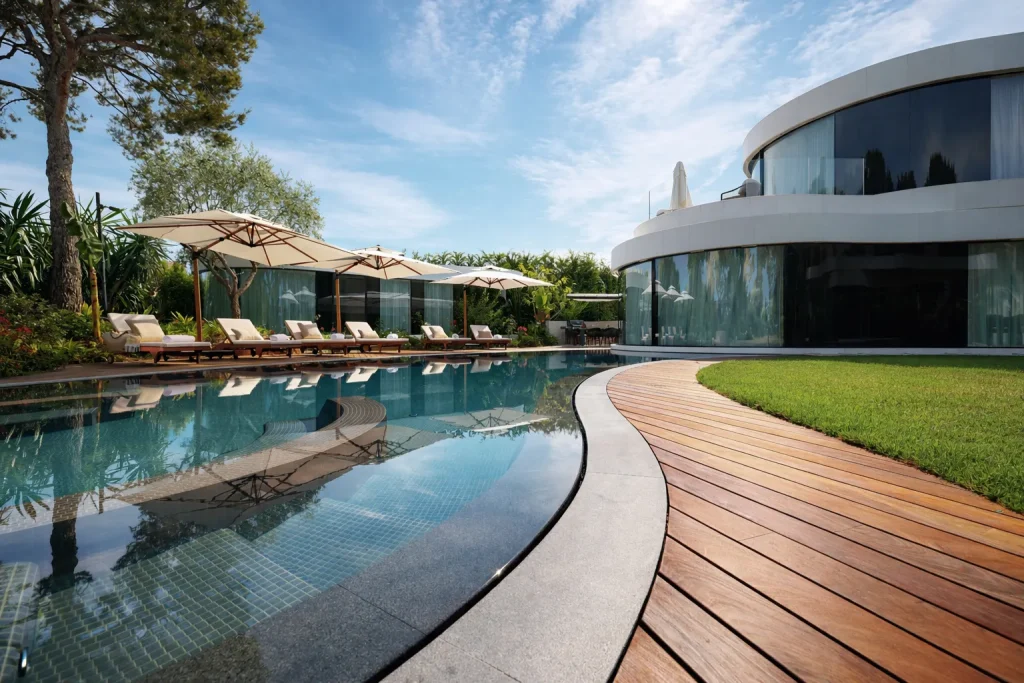
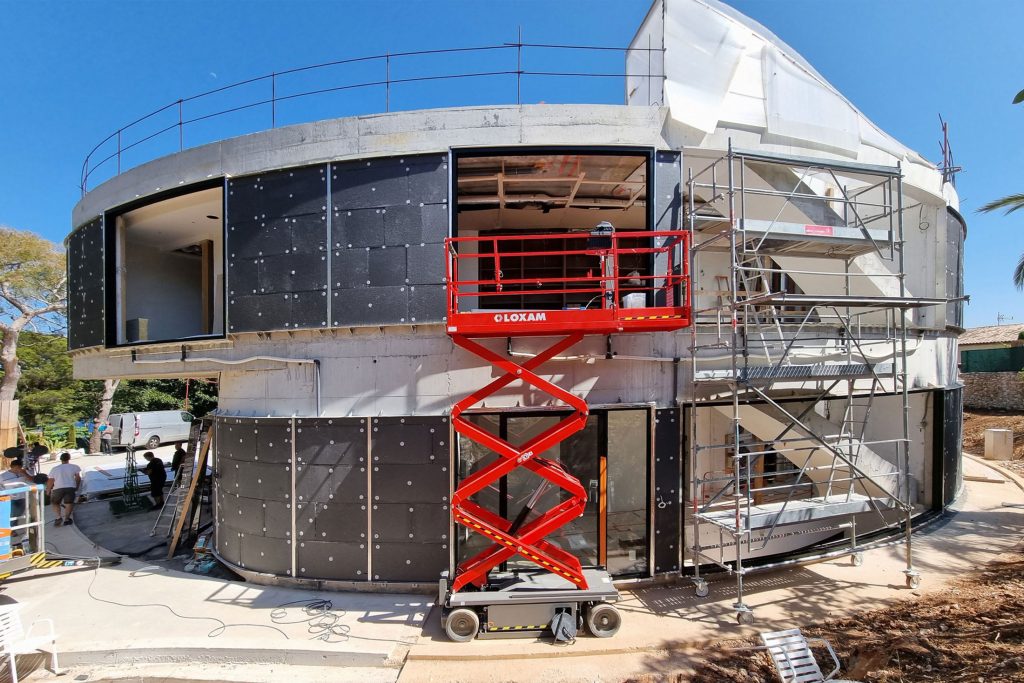
Material selection reinforces this clarity. The façade is predominantly glazed, allowing the architecture to remain visually light while expressing the fluid geometry of the volumes. Horizontal bands clad in white marble frame the glass envelope, precisely cut to follow each curve and installed as a ventilated system. Light moves across these surfaces throughout the day, revealing the building’s changing character.

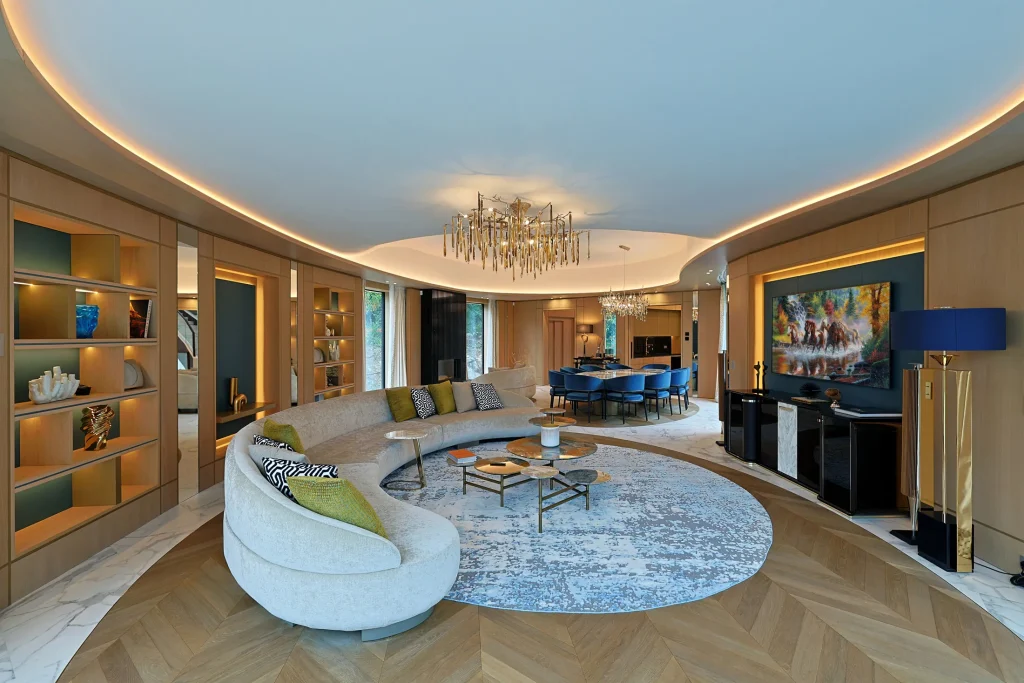
Inside, oak parquet and marble flooring meet along clean lines, while timber-lined ceilings soften the mineral structure. Fully curved sliding and operable glazing dissolve the boundary between interior and exterior, allowing terraces and living spaces to function as one cohesive environment shaped by Mediterranean light.

Living and Exterior Sequence

The villa is organized as a continuous sequence of living spaces oriented toward the landscape. Reception areas extend toward the pool terrace, reinforcing the direct relationship between interior and exterior.

At the end of the architectural curve, the pool becomes a central element of the composition, extending the geometry into the open horizon. A dedicated poolhouse complements the main volume, integrating spa functions including sauna, hammam, and massage areas. This secondary structure expands the living experience, allowing wellness and outdoor life to unfold as a natural extension of the architecture.

Excavation and Integrated Access

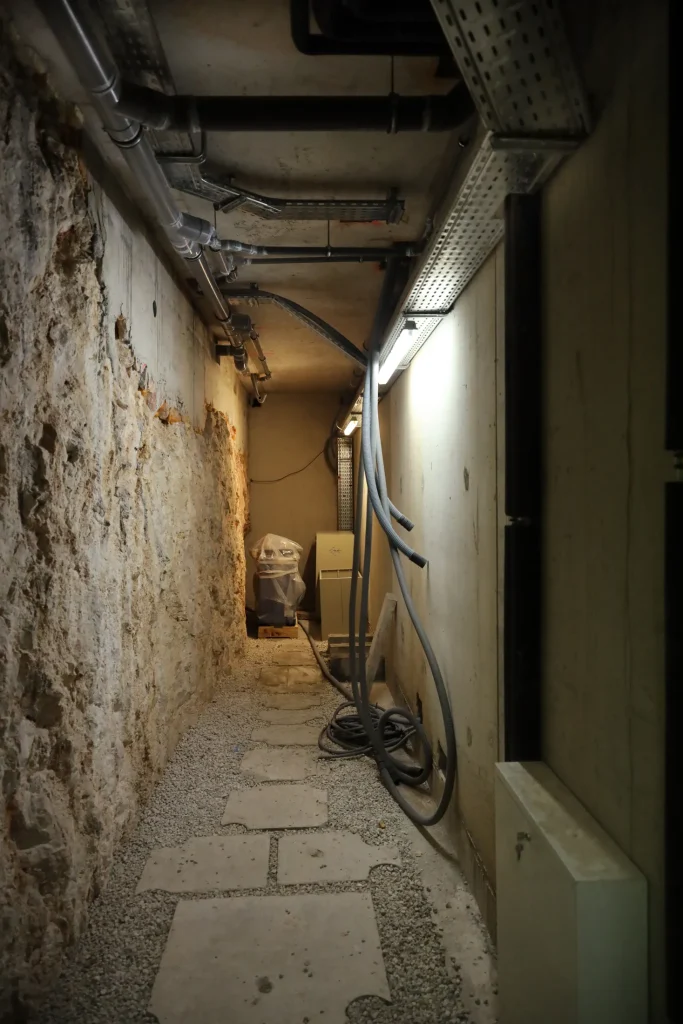
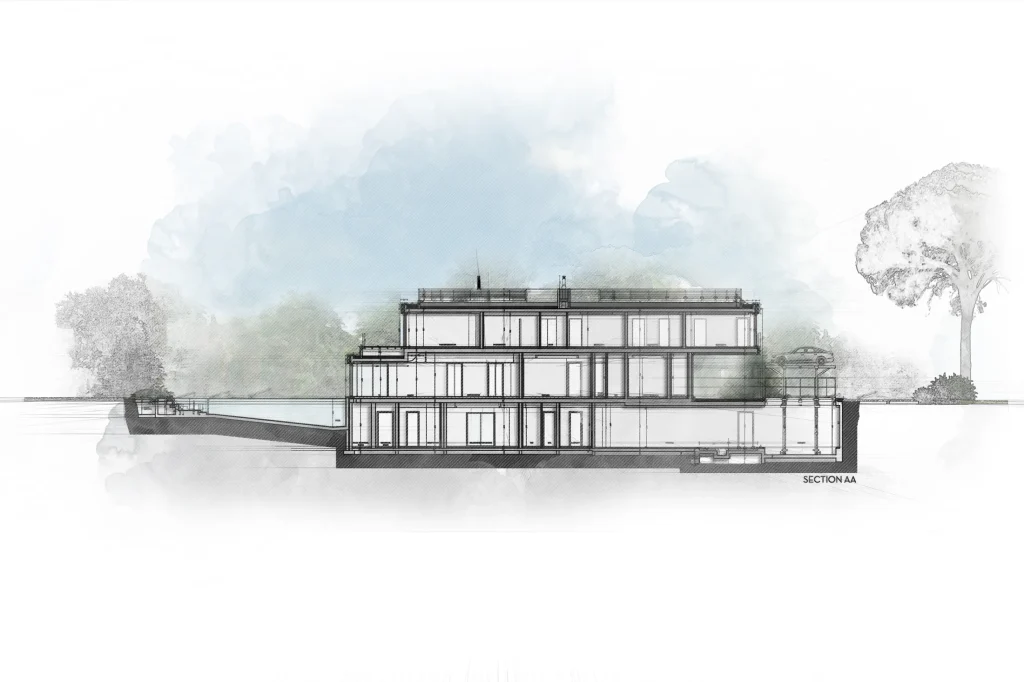
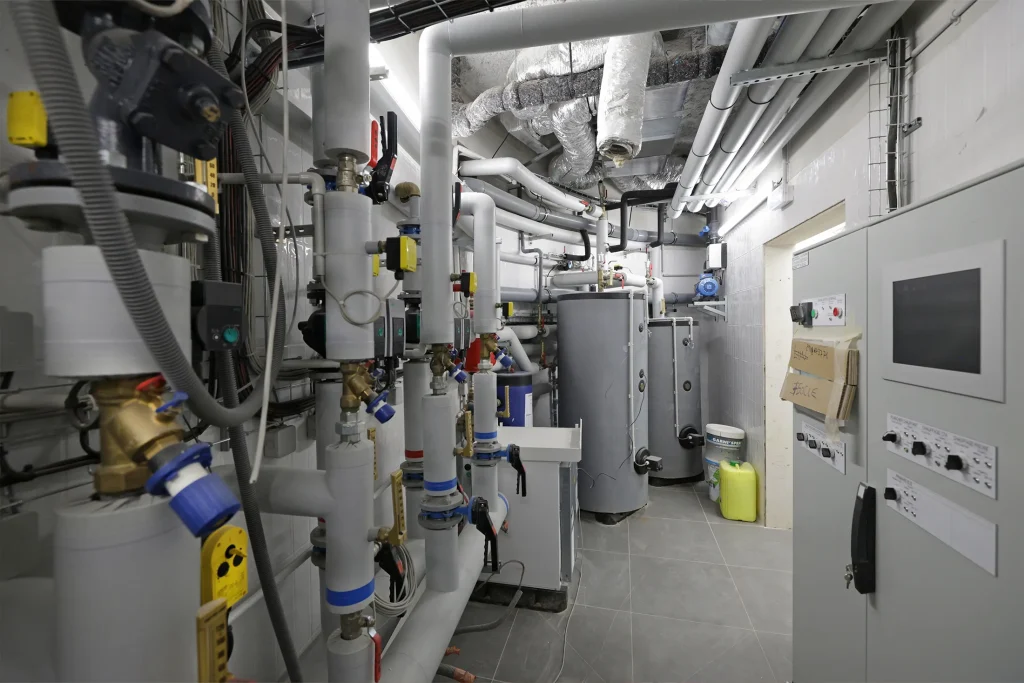
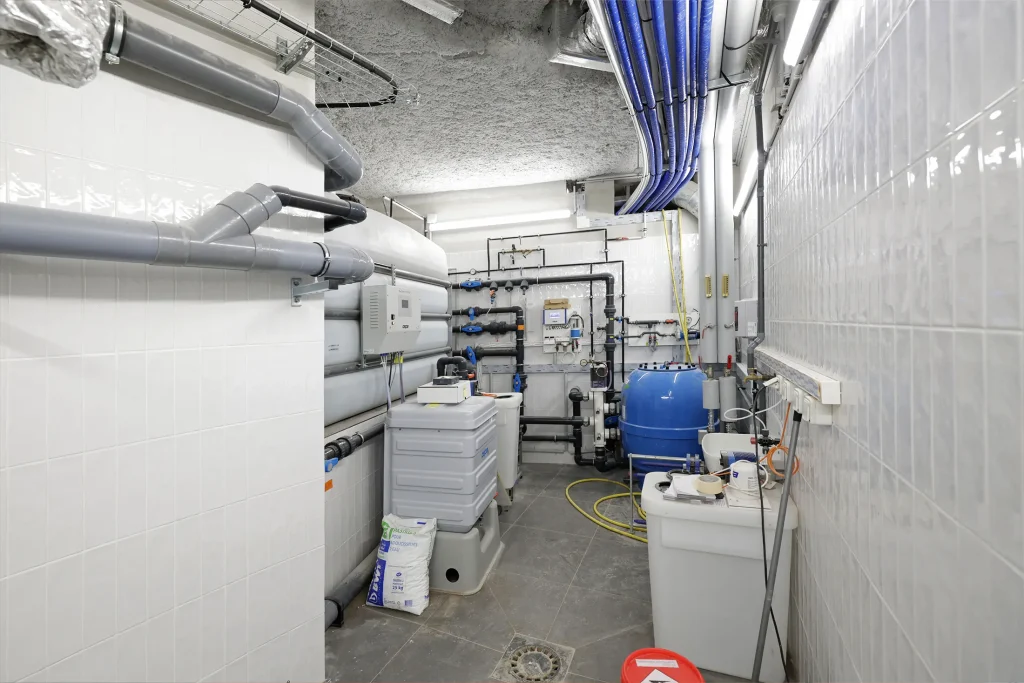
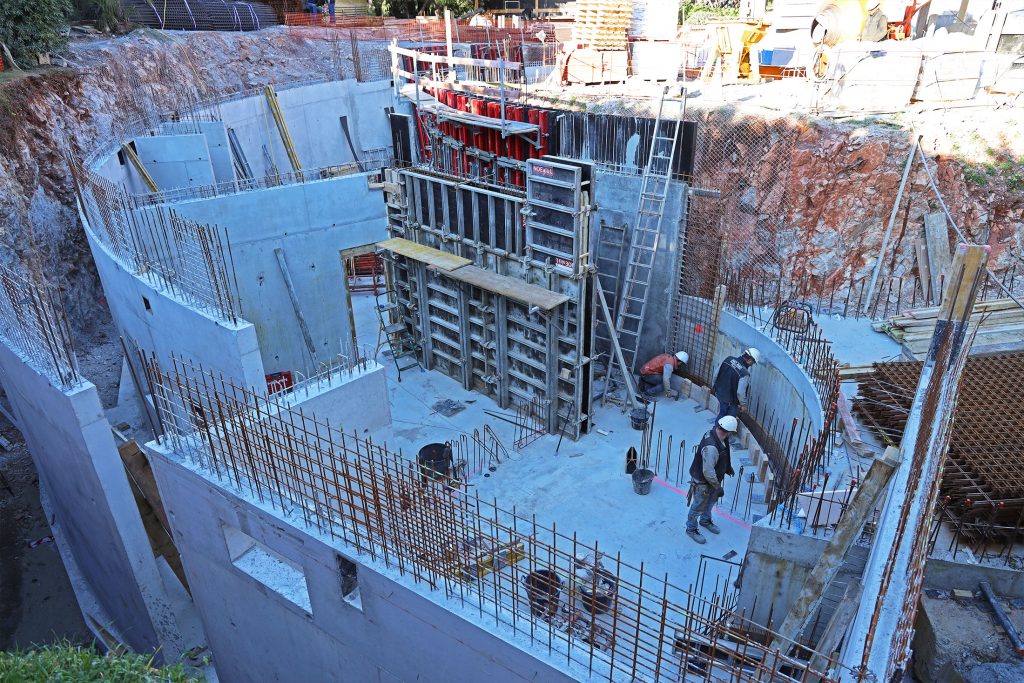
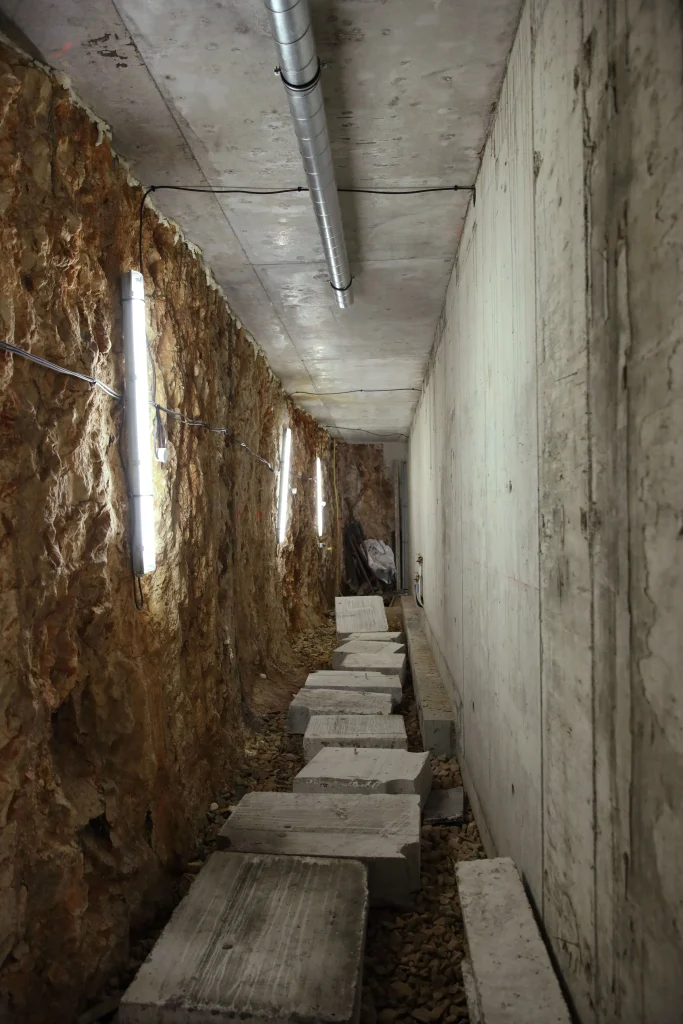
Behind this fluidity lies rigorous construction. Excavation into the dense Cap-Ferrat rock allowed the creation of a peripheral technical void around the basement, ensuring durability over time and protection from humidity.

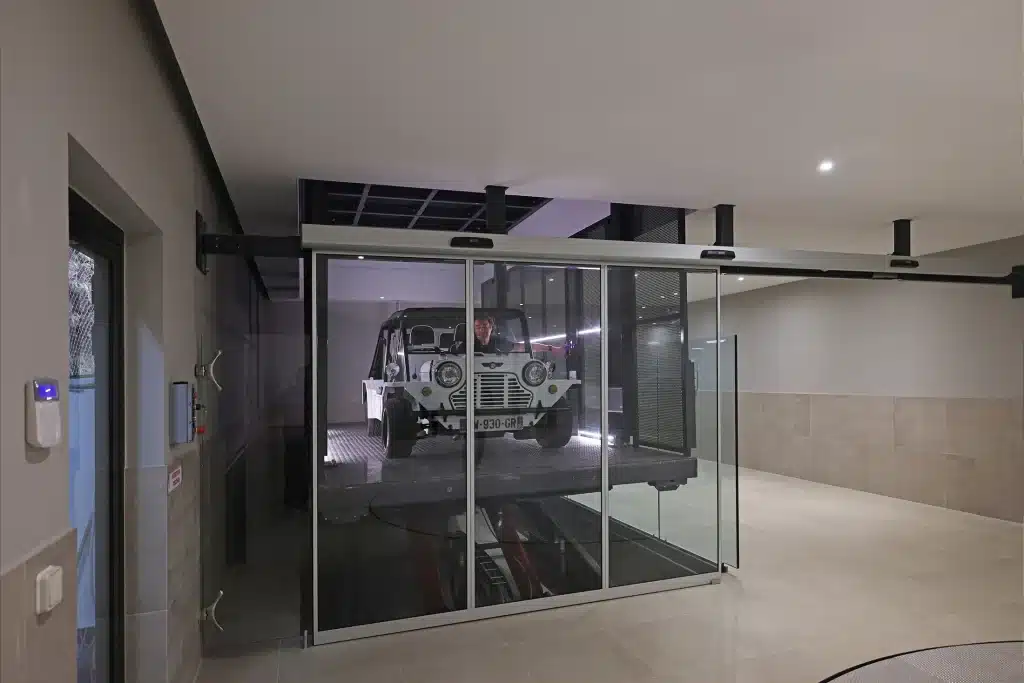
Vehicular access is resolved discreetly through a concealed lift at street level, finished with the same material as the roadway to remain invisible when closed. Below, a rotating platform allows vehicles to maneuver efficiently within the constrained site, preserving both landscape continuity and spatial coherence.

Lanis expresses a disciplined architectural approach where curve, material, and light remain in balance, a contemporary coastal residence shaped by its site and designed for a precise and continuous living experience.

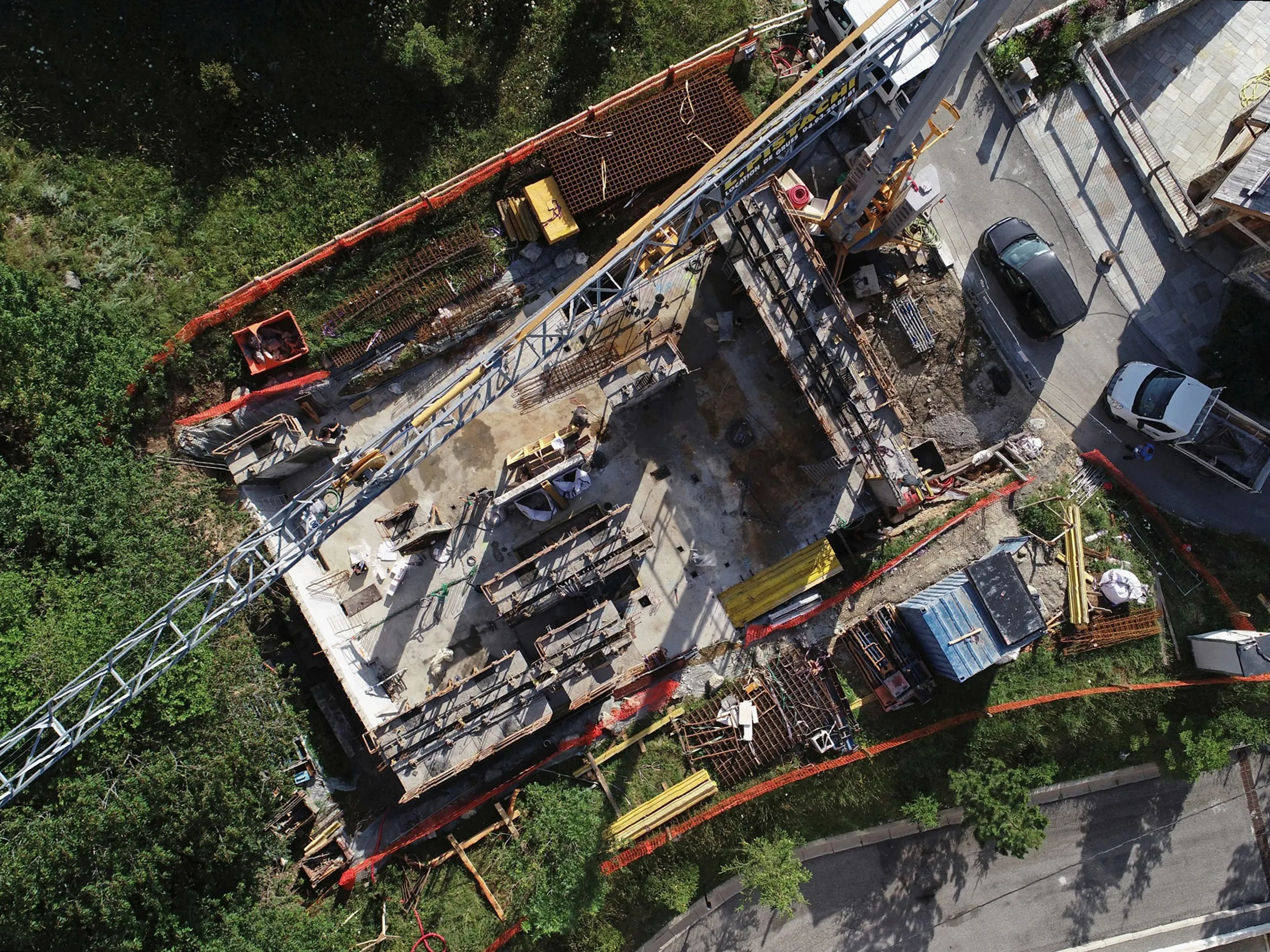
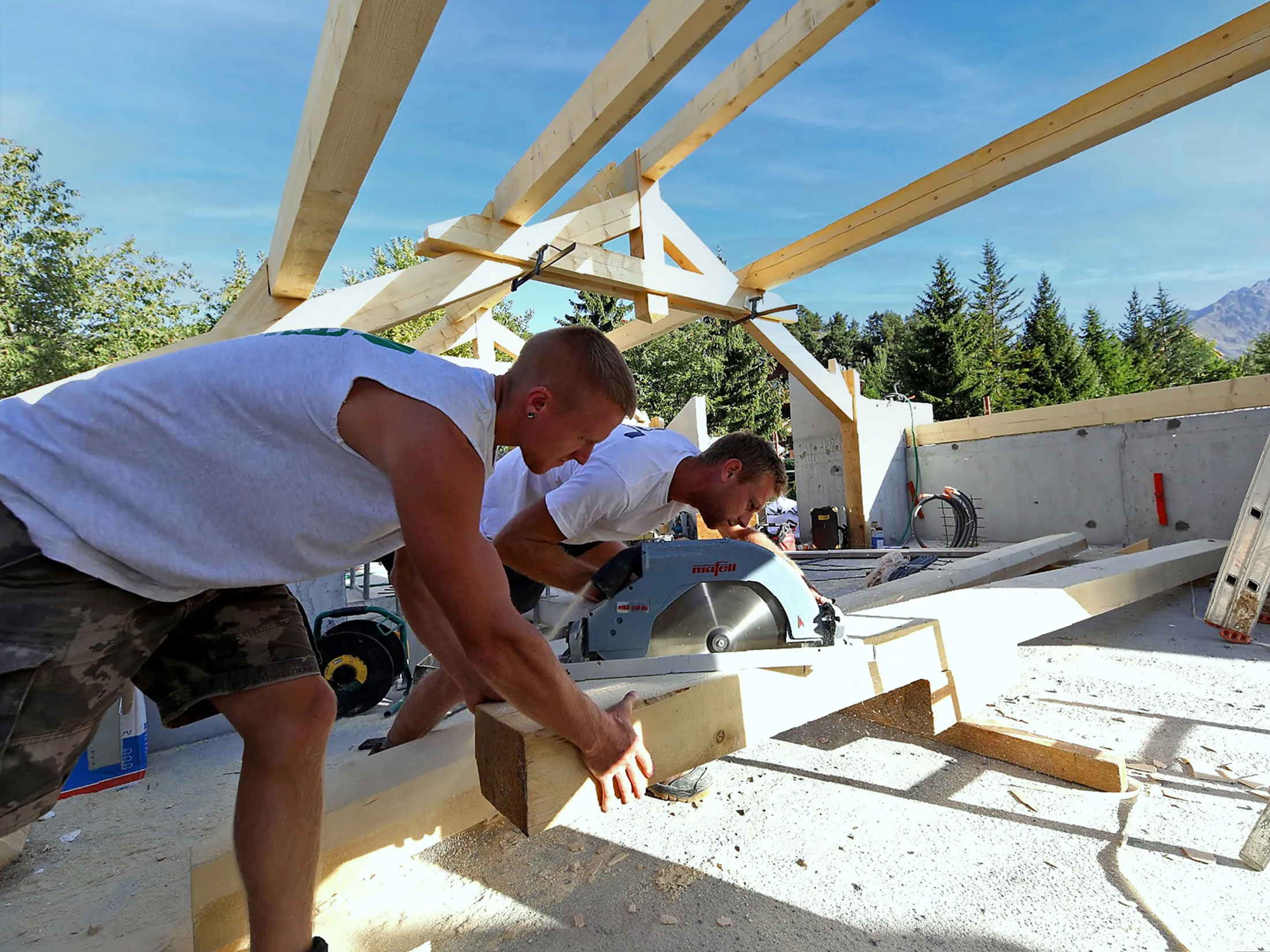
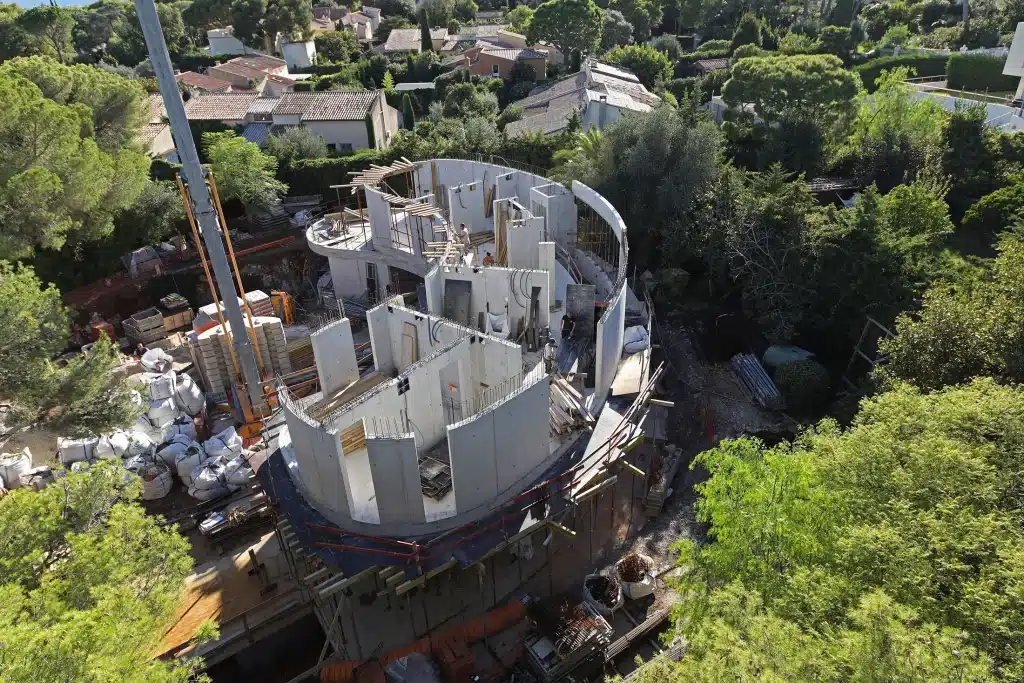
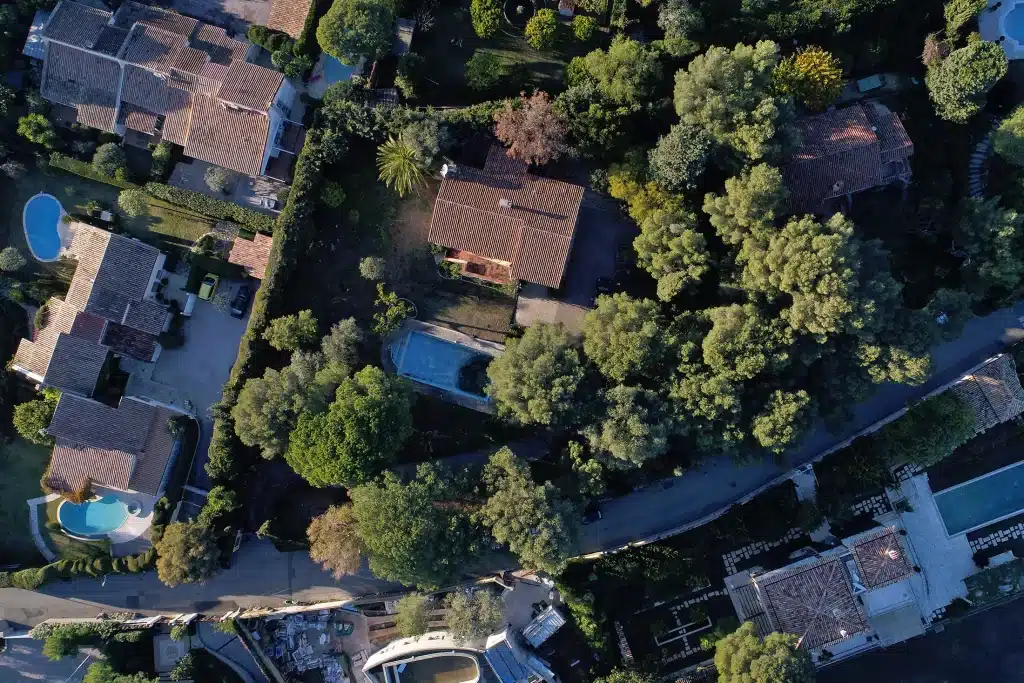
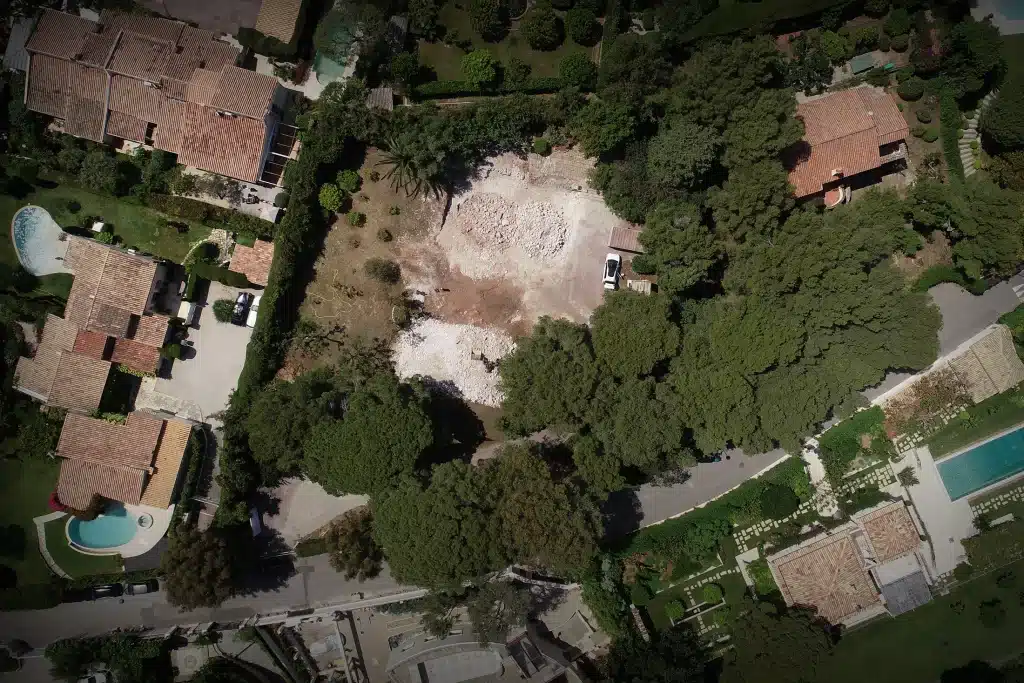
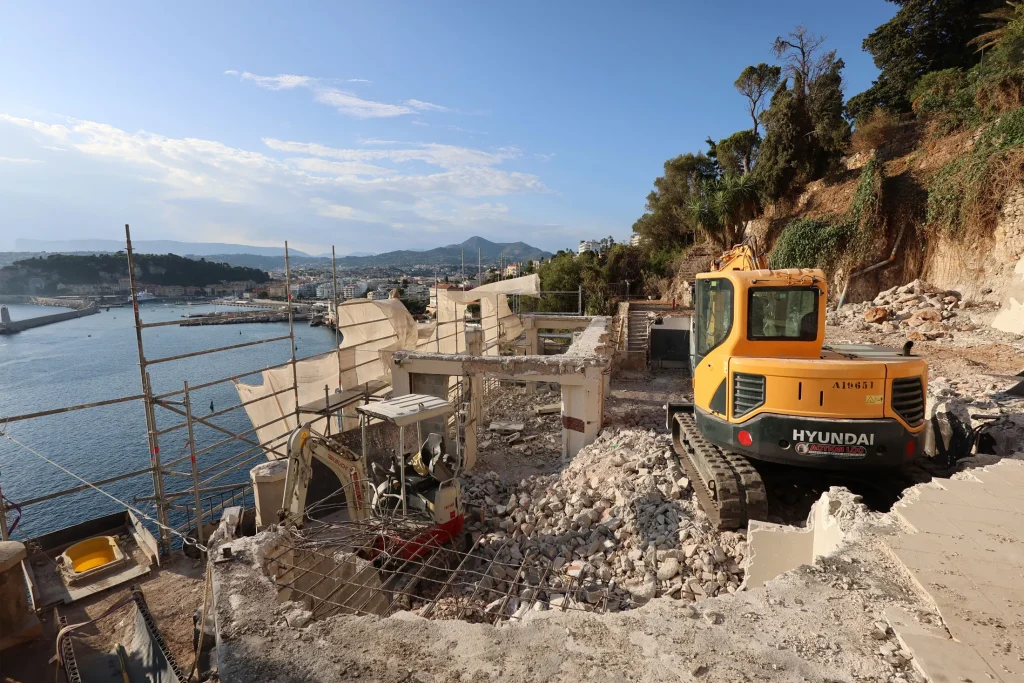
Check the progress below:

Lanis onsite
Lanis onsite