Saint Jean Cap Ferrat

Curved Architecture Shaped by Topography

Architecture Shaped by the Land

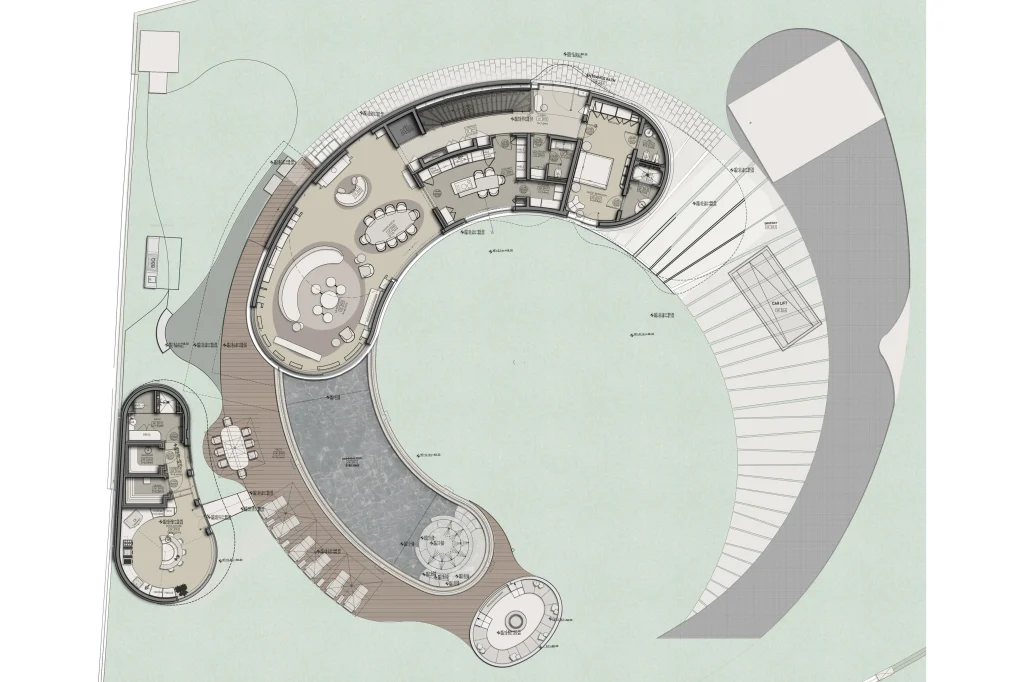
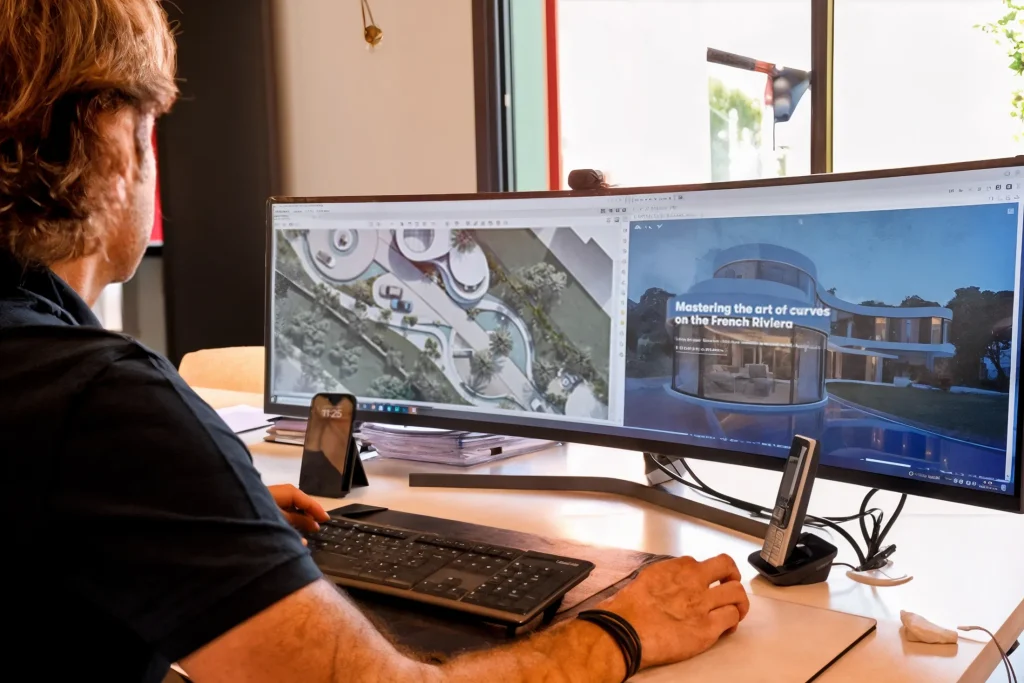
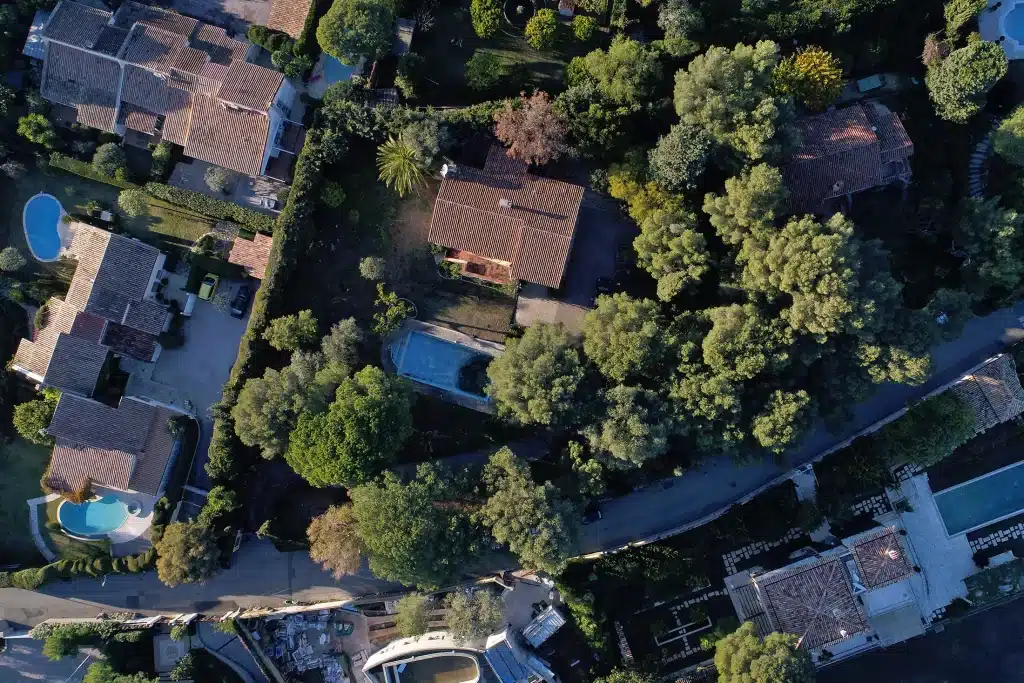
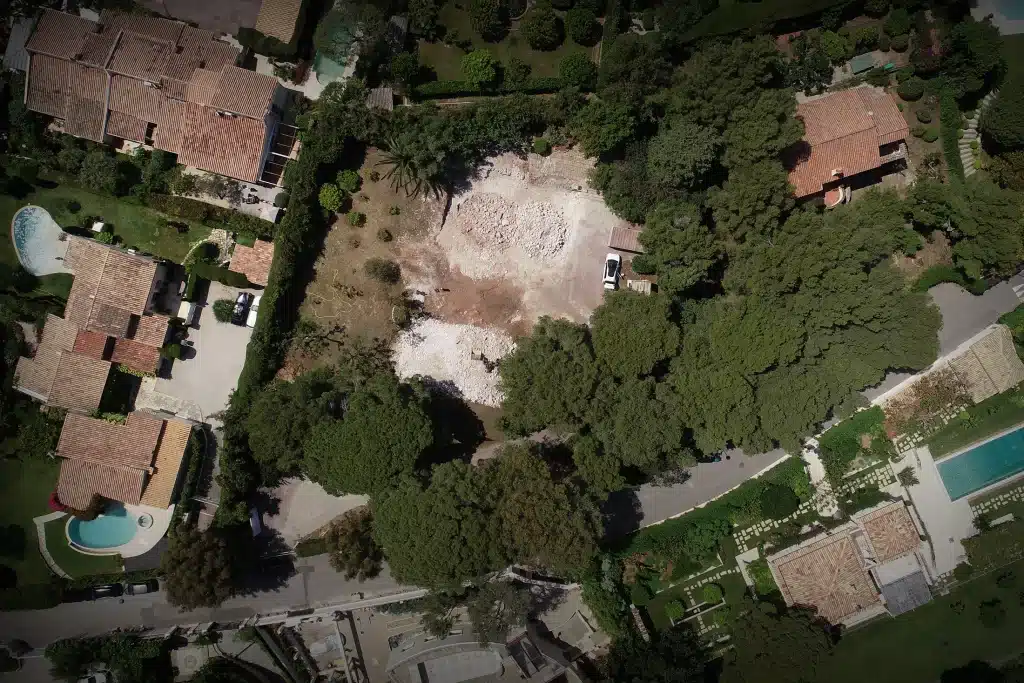
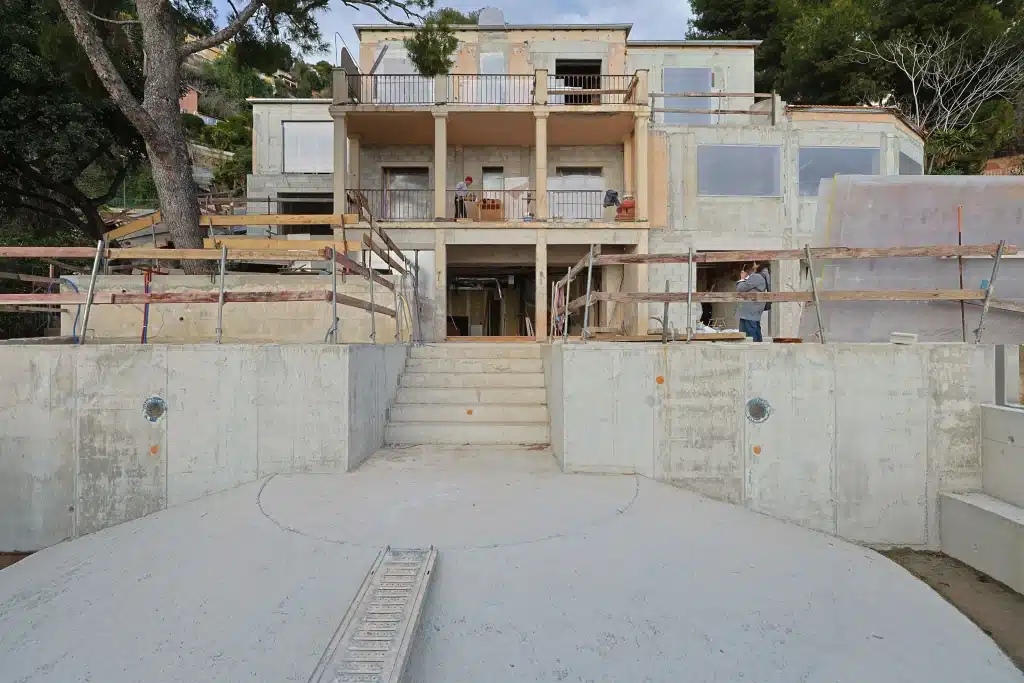
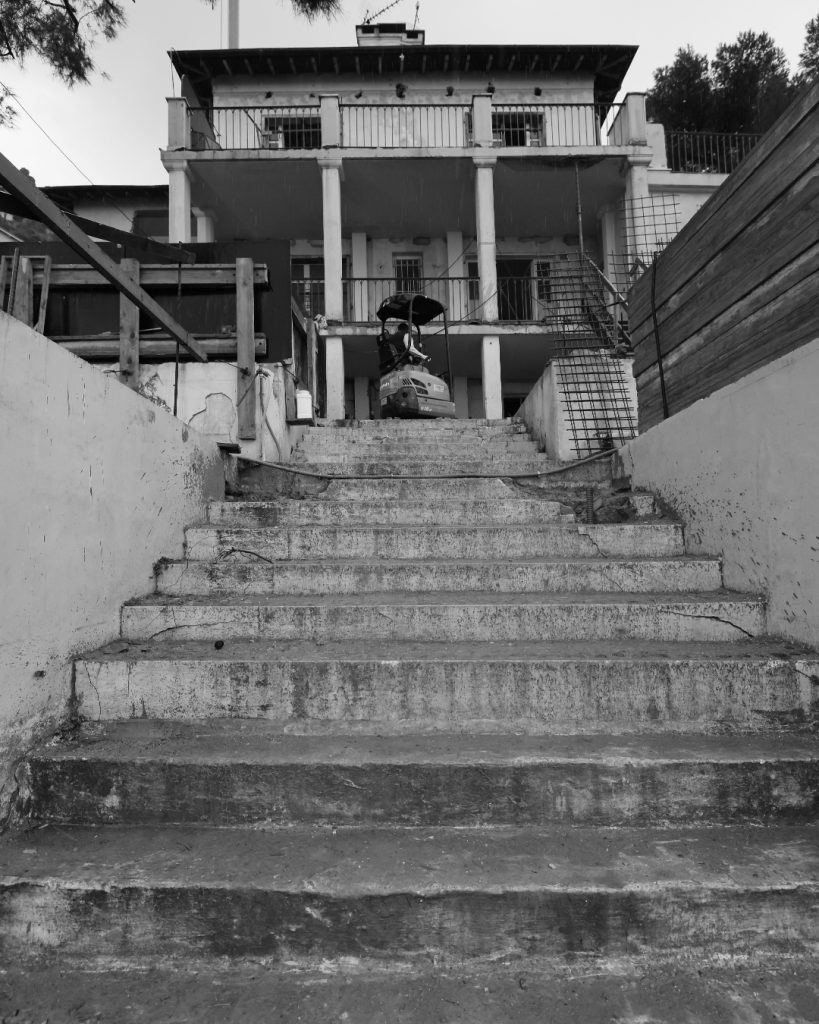
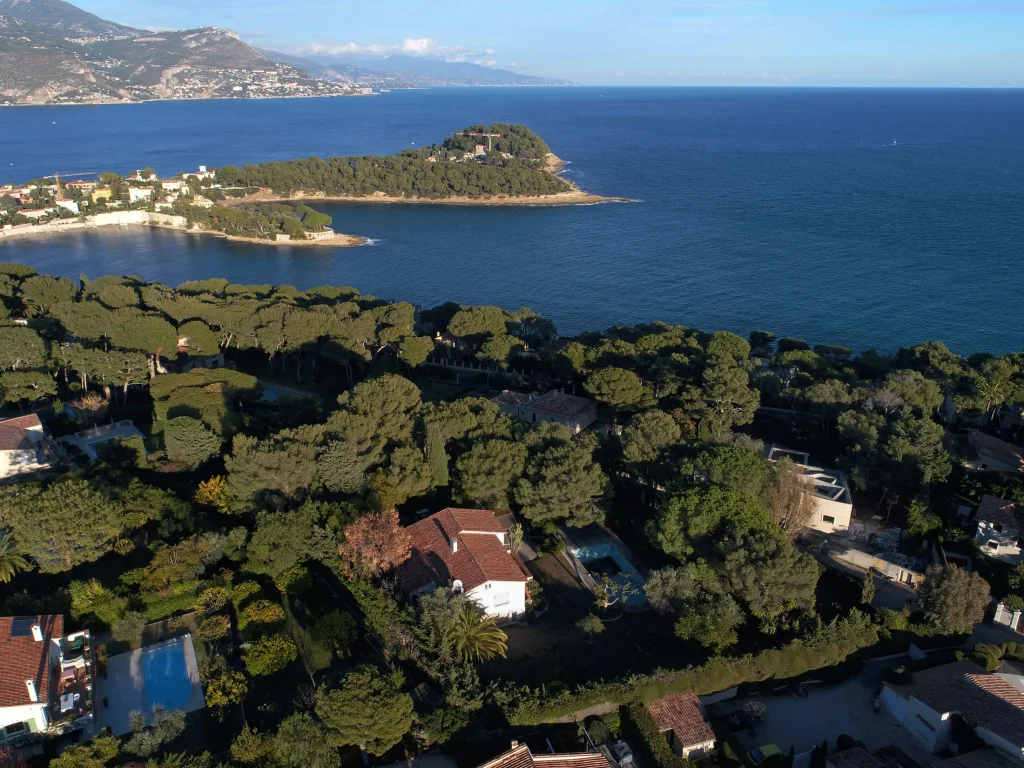
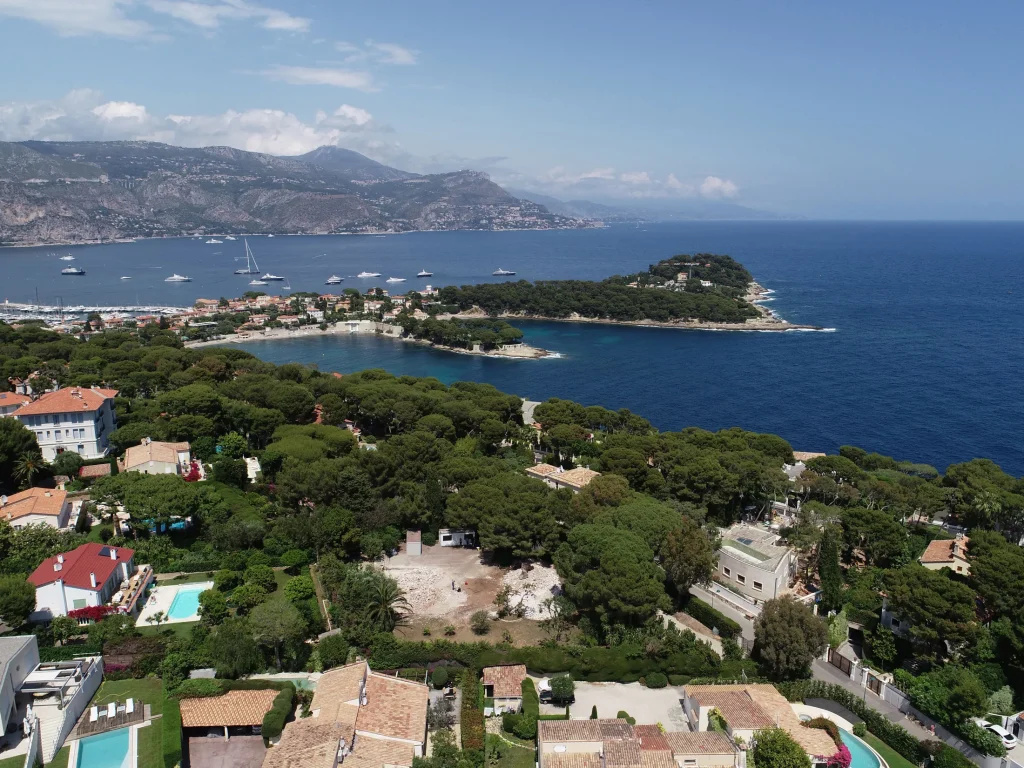
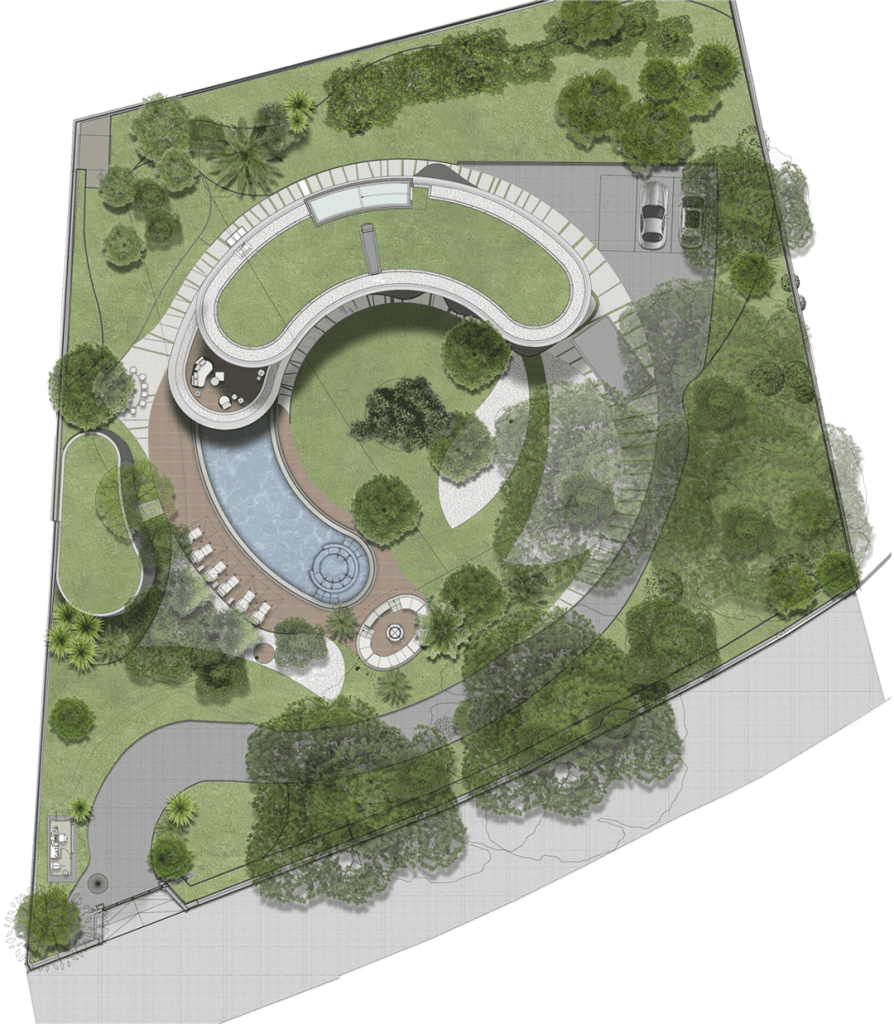
Lanis stands on a steep plot in Saint-Jean-Cap-Ferrat, replacing a former mid-century house with a design generated directly from the land. Developed with complete creative freedom, the project follows the site’s contour lines, the coastal road alignment, and the compact mineral ground as its primary drivers.
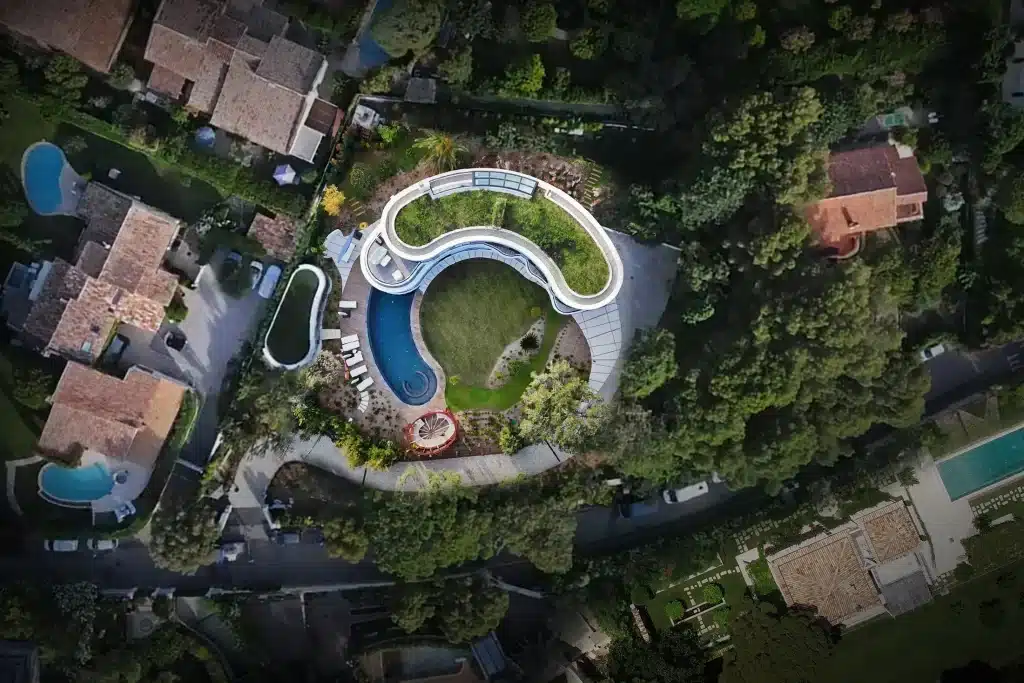
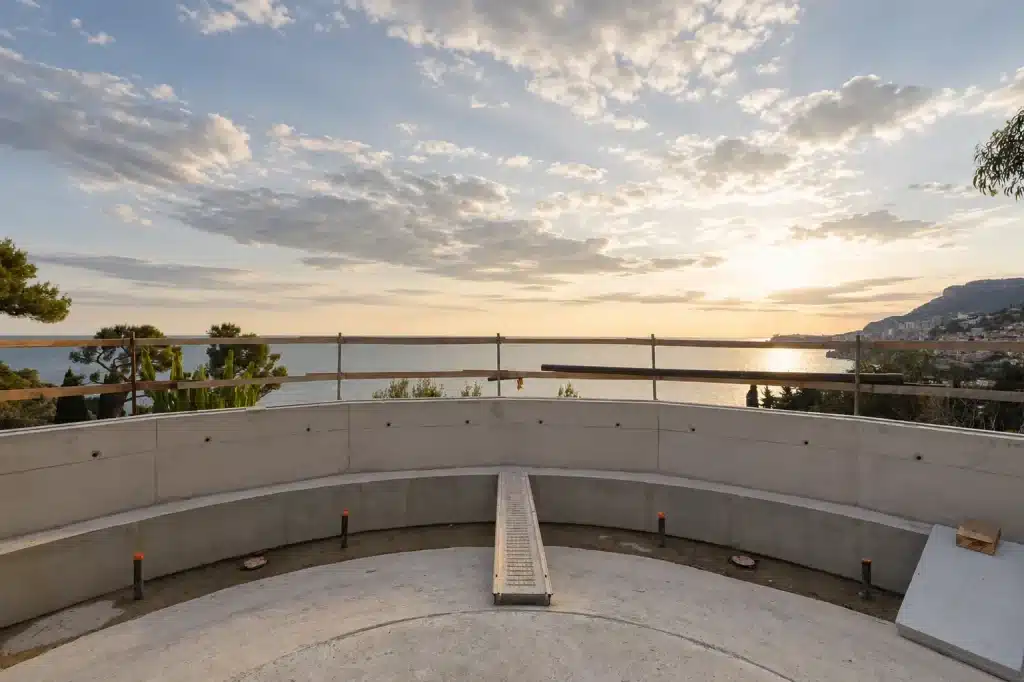
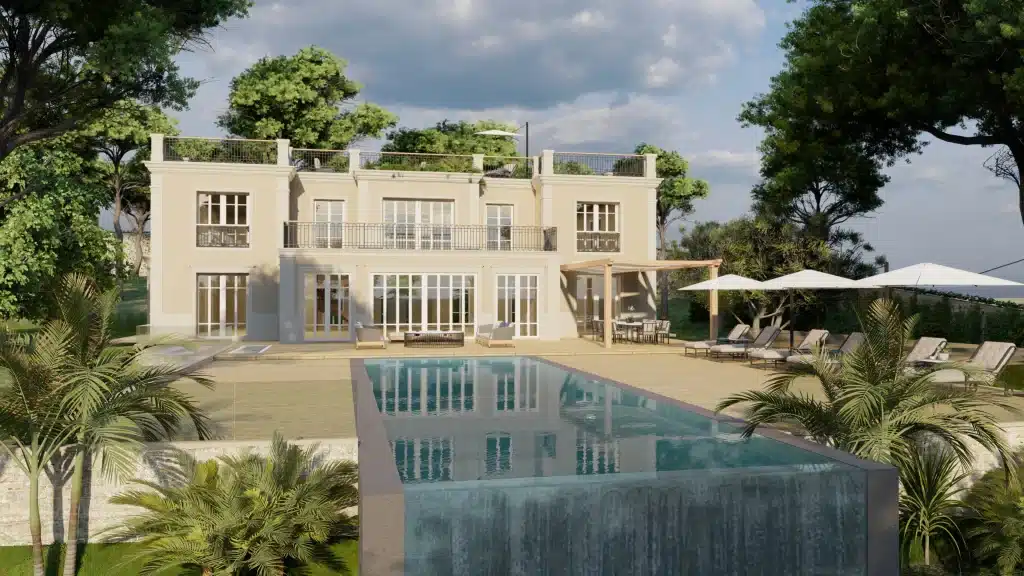
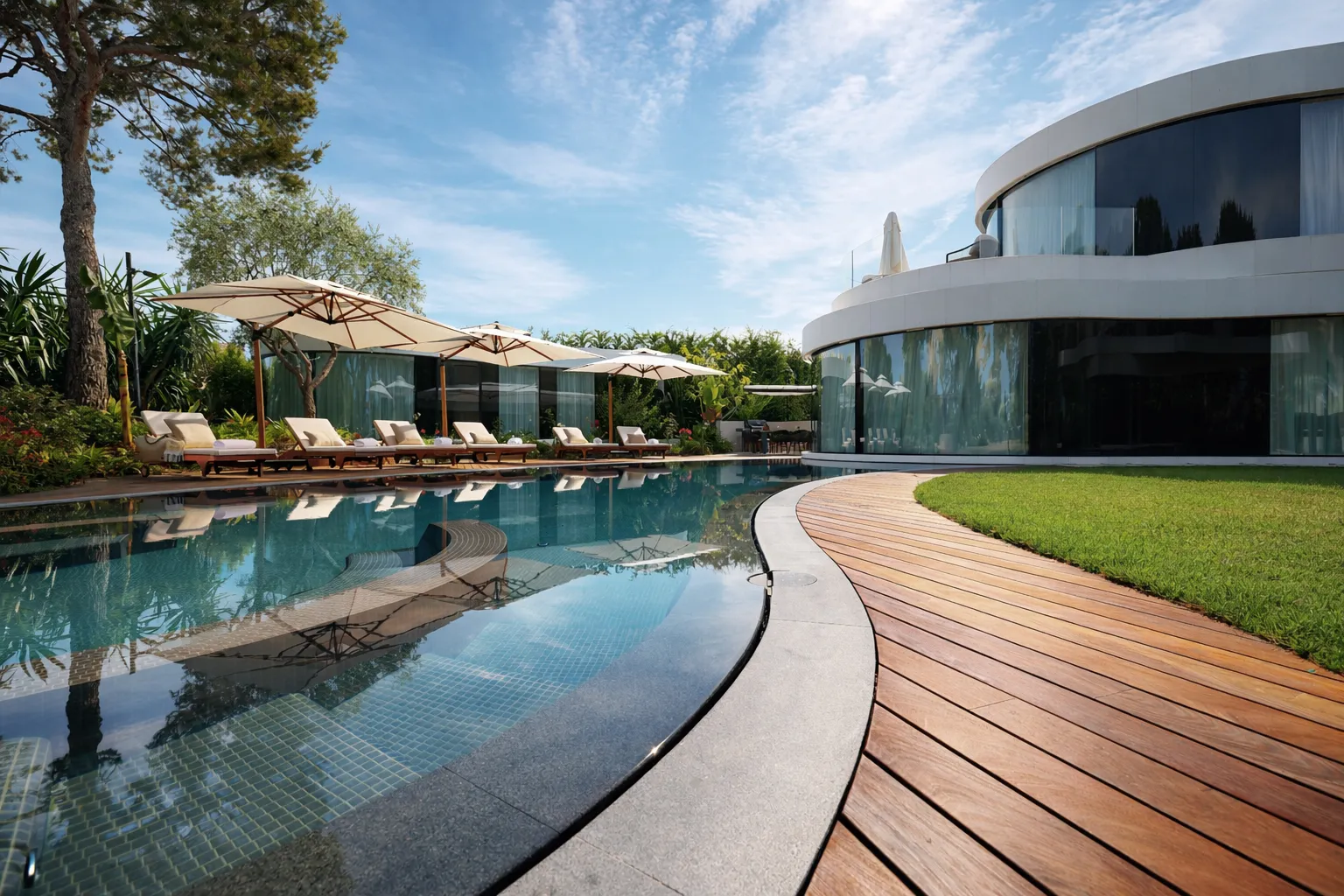
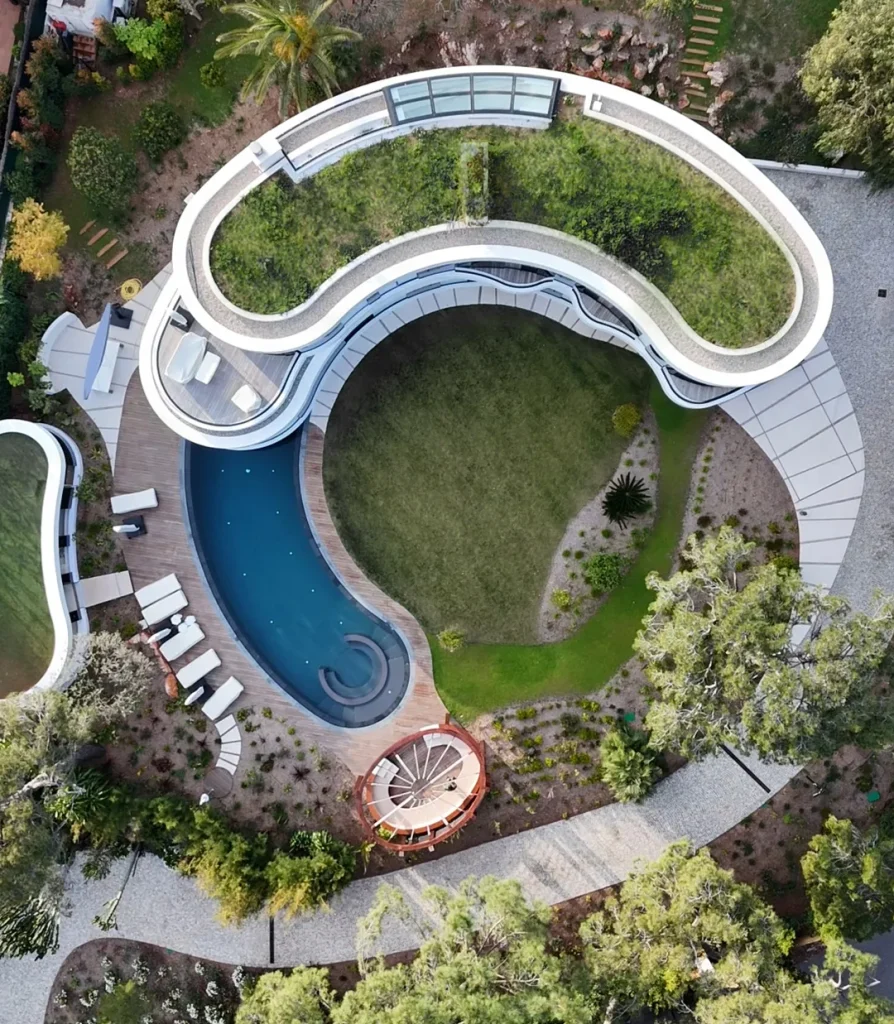
A single continuous curve begins at street level and extends through the plan toward the pool terrace, where the architecture reaches its full expression. This luxury villa in Saint-Jean-Cap-Ferrat is defined by topography rather than frontage. Its geometry feels anchored, as if drawn directly from the terrain.
A Continuous Curved Plan

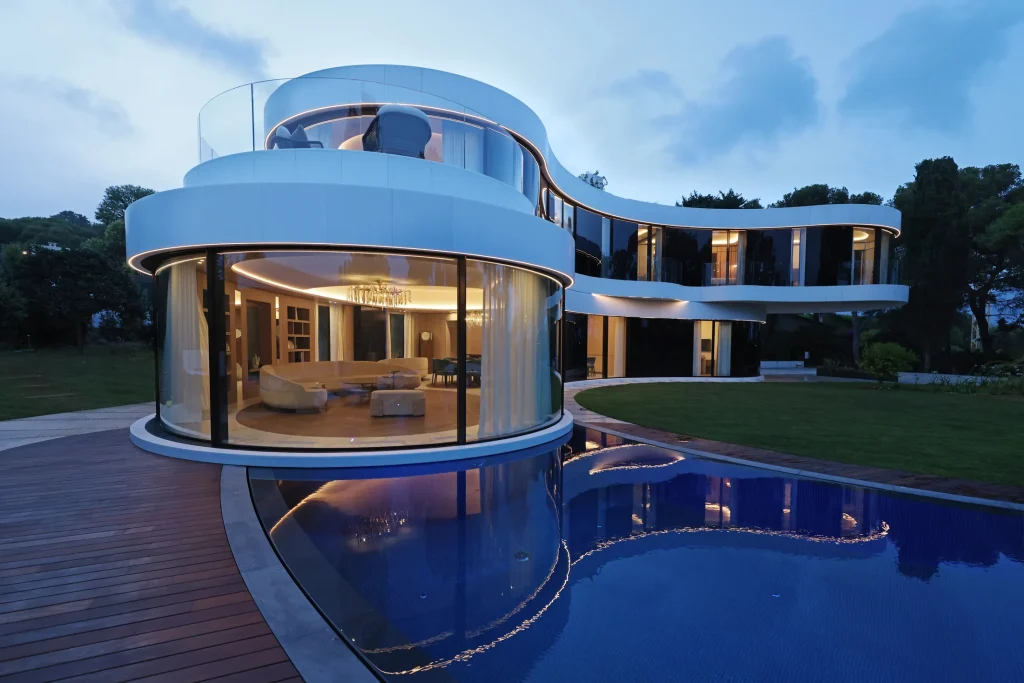
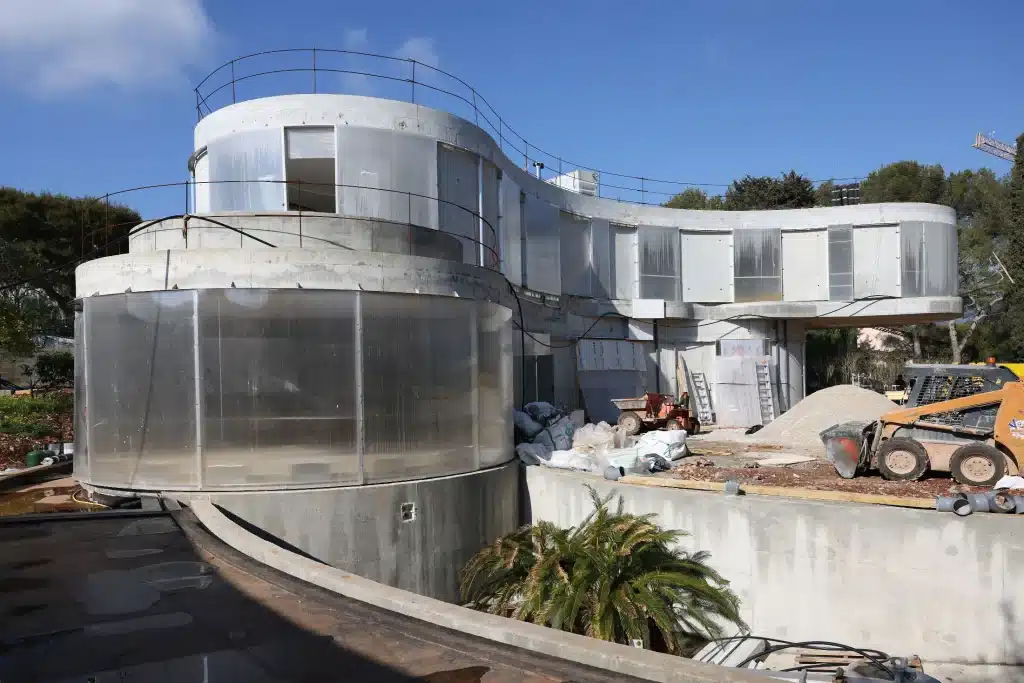
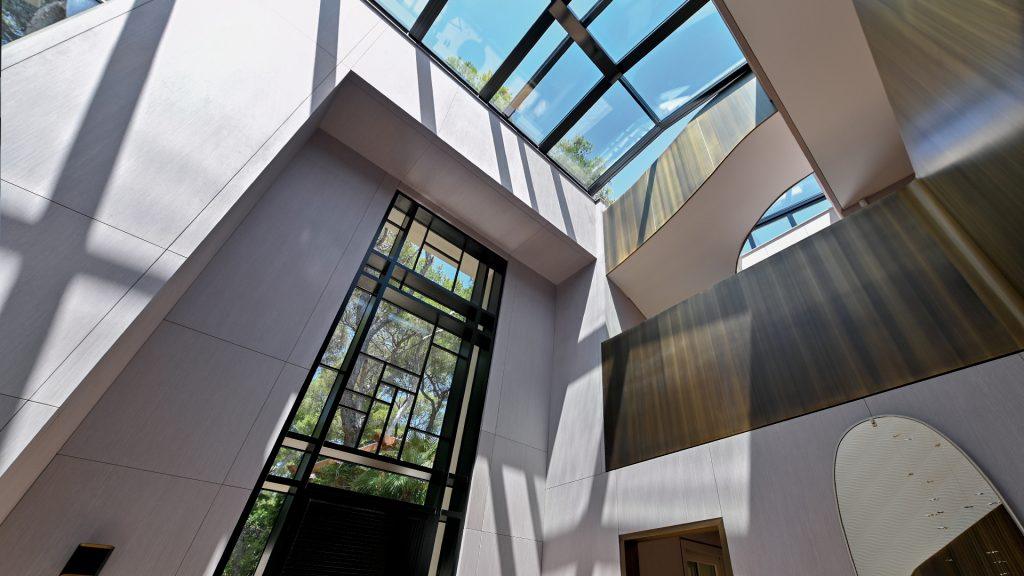
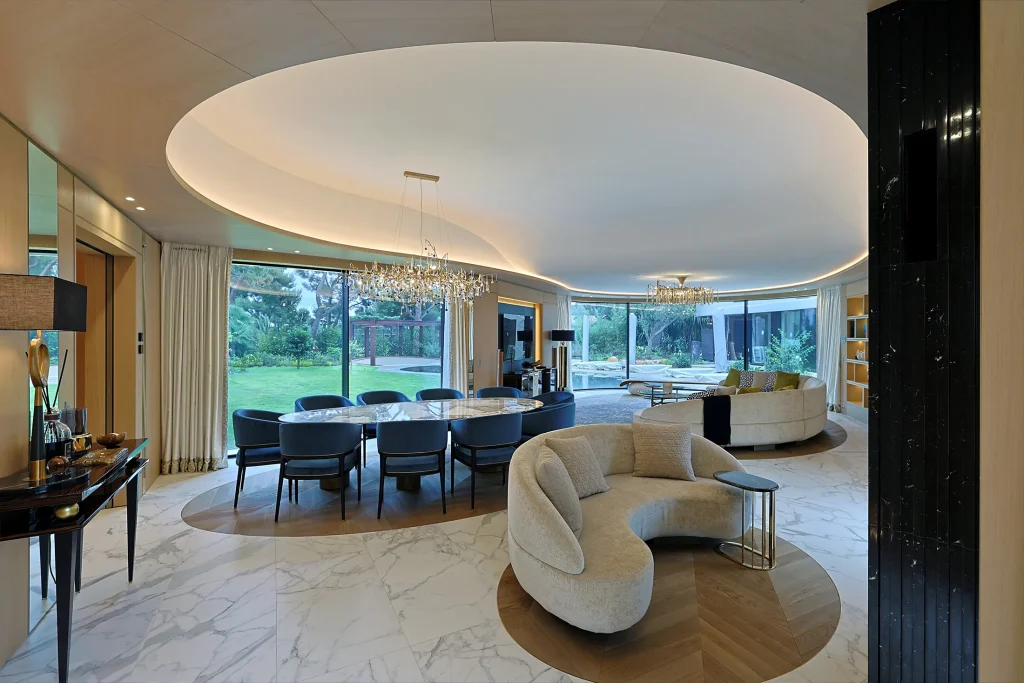
The curve defines both form and experience. Circulation flows without abrupt angles, ceilings rise in gentle arcs, and curved glazing opens wide views toward the garden and the Mediterranean horizon. A subtle horizontal shift between two identical volumes creates a sheltered entrance below and a terrace above, establishing depth through proportion rather than ornament.
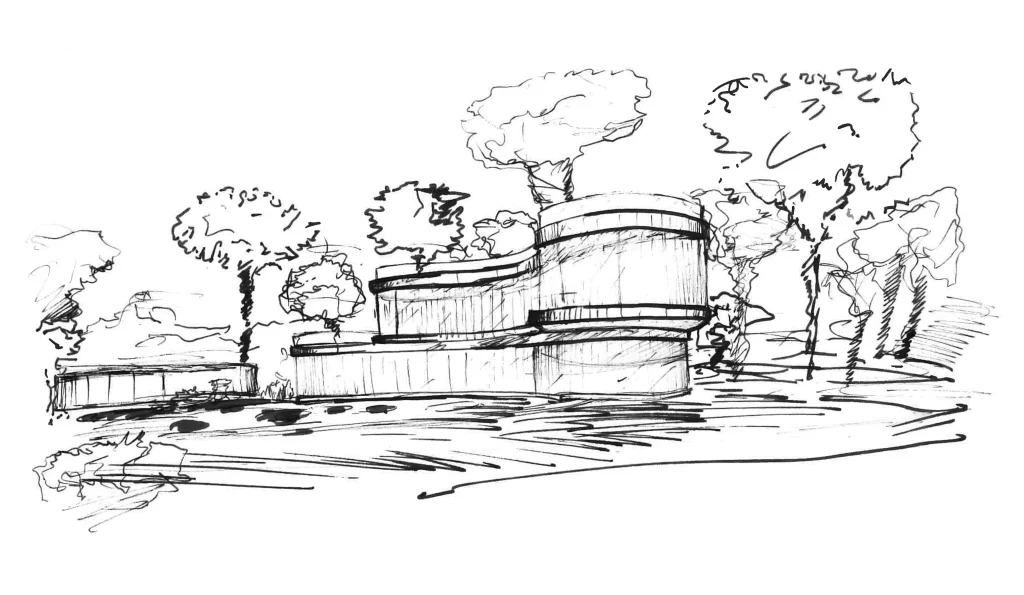
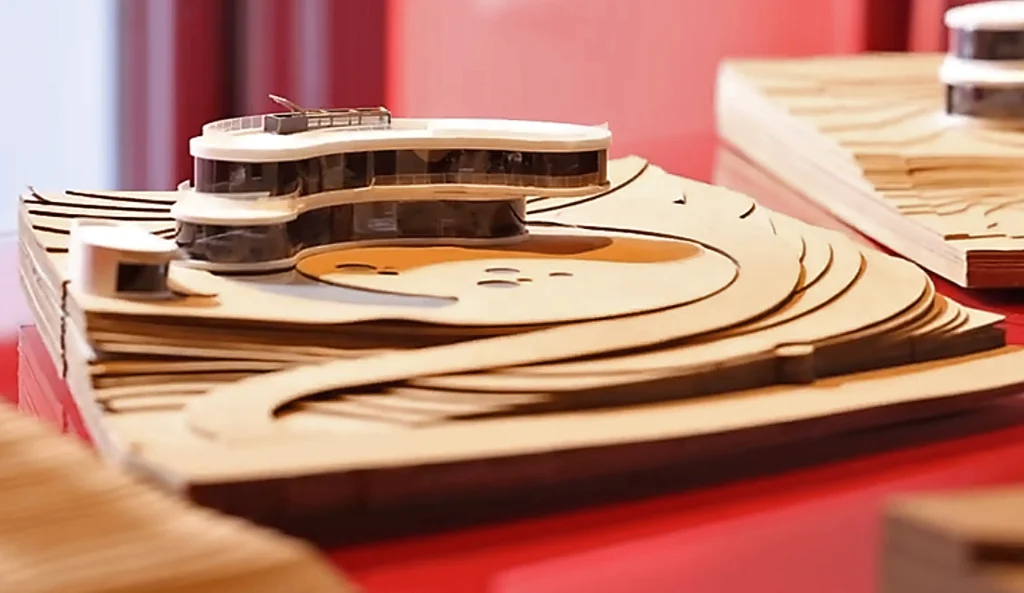
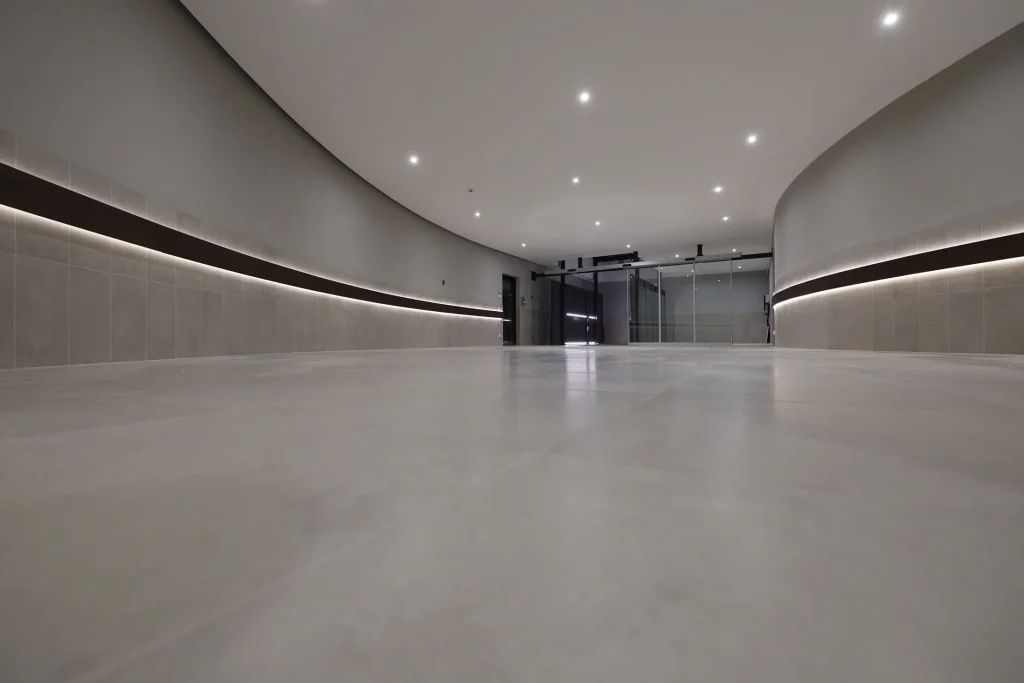
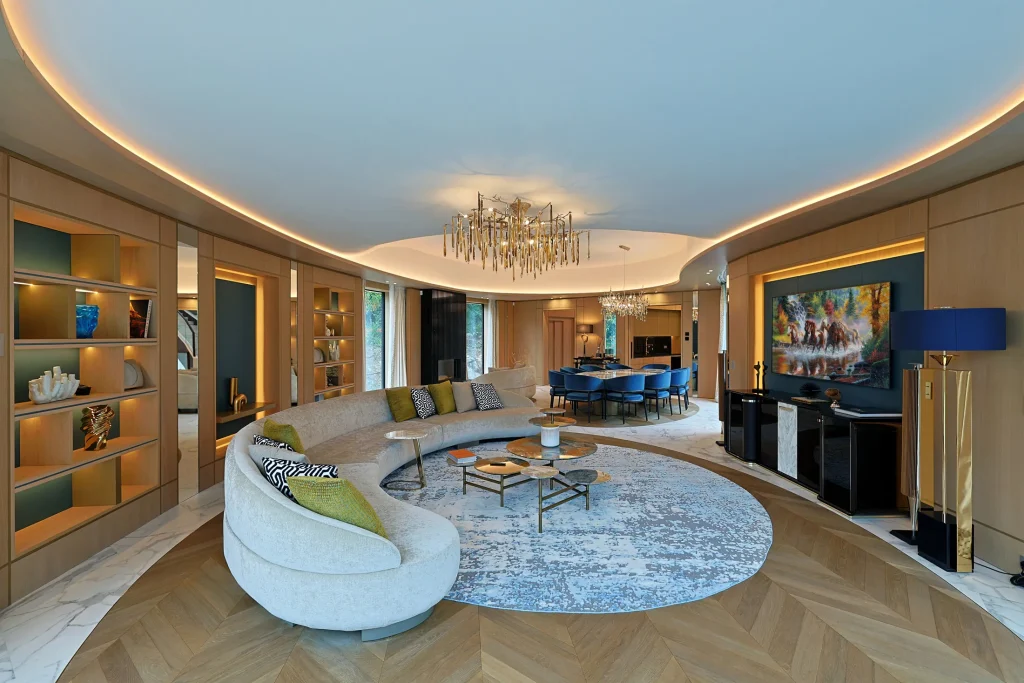
This logic extends beyond the exterior form, shaping interior walls, ceilings, and spatial transitions with the same continuity. Movement through the house remains fluid and intuitive, connecting arrival, living areas, and private spaces in a continuous sequence. Within the landscape of high-end residential architecture in France, the geometry remains calm, controlled, and livable, an inhabitable architecture shaped by movement and use.
Glass Façade and Material Continuity
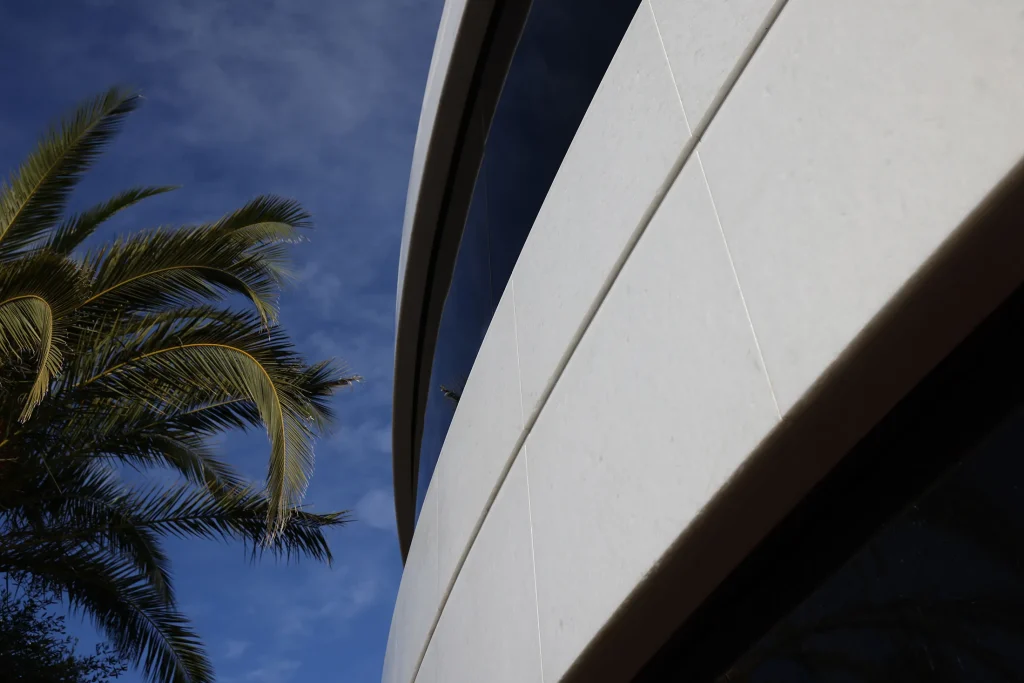
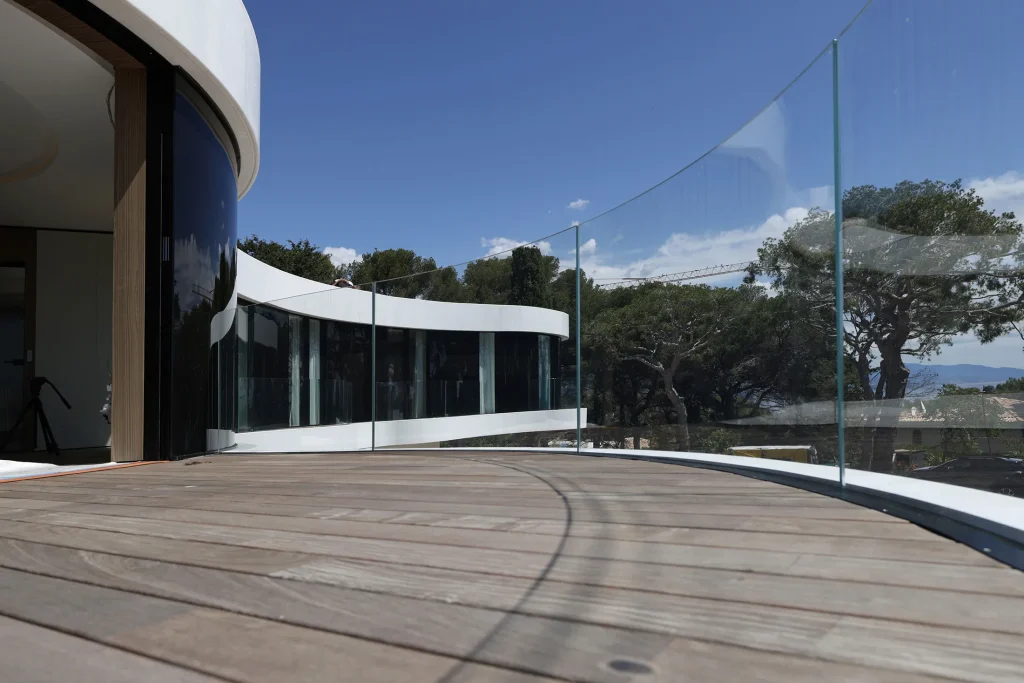
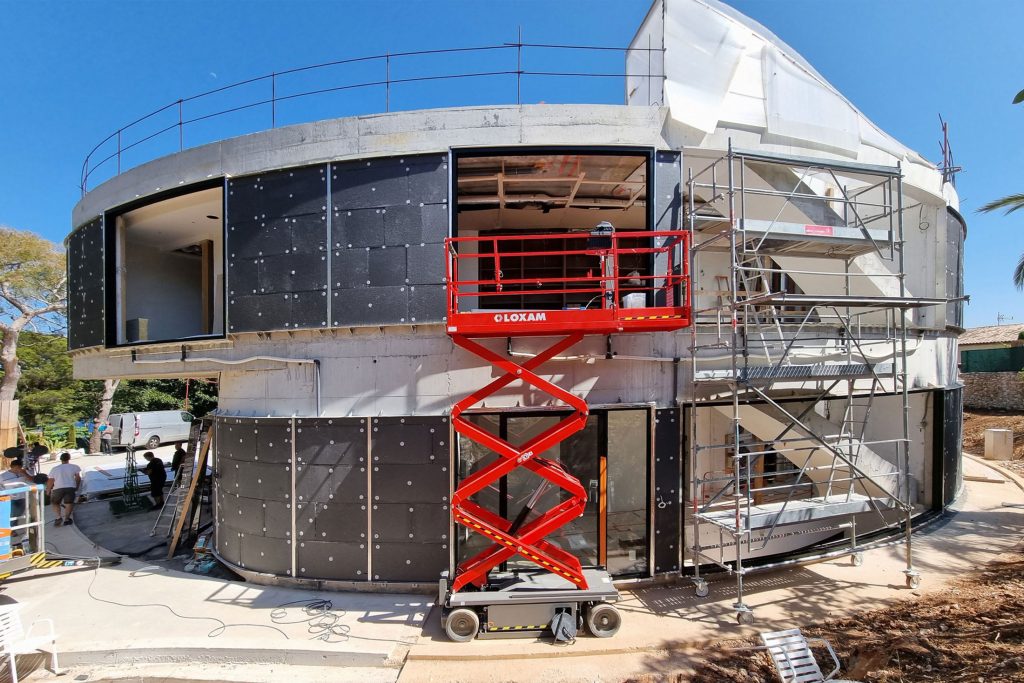
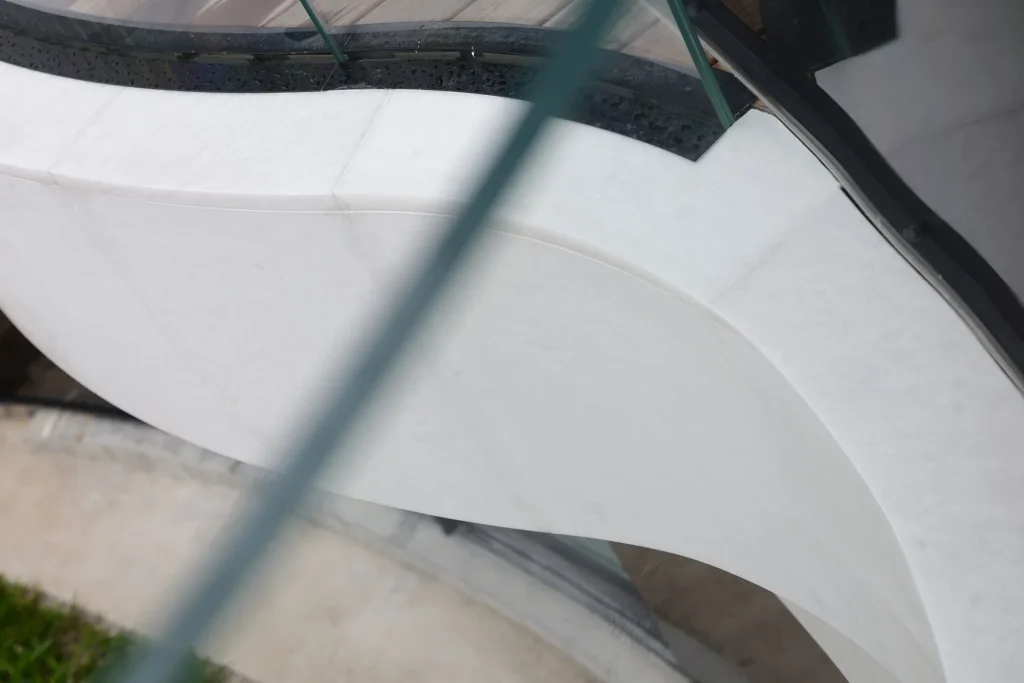
Material selection reinforces this clarity. The façade is predominantly glazed, allowing the architecture to remain visually light while expressing the fluid geometry of the volumes. Horizontal bands clad in white marble frame the glass envelope, precisely cut to follow each curve and installed as a ventilated system. Light moves across these surfaces throughout the day, revealing the building’s changing character.
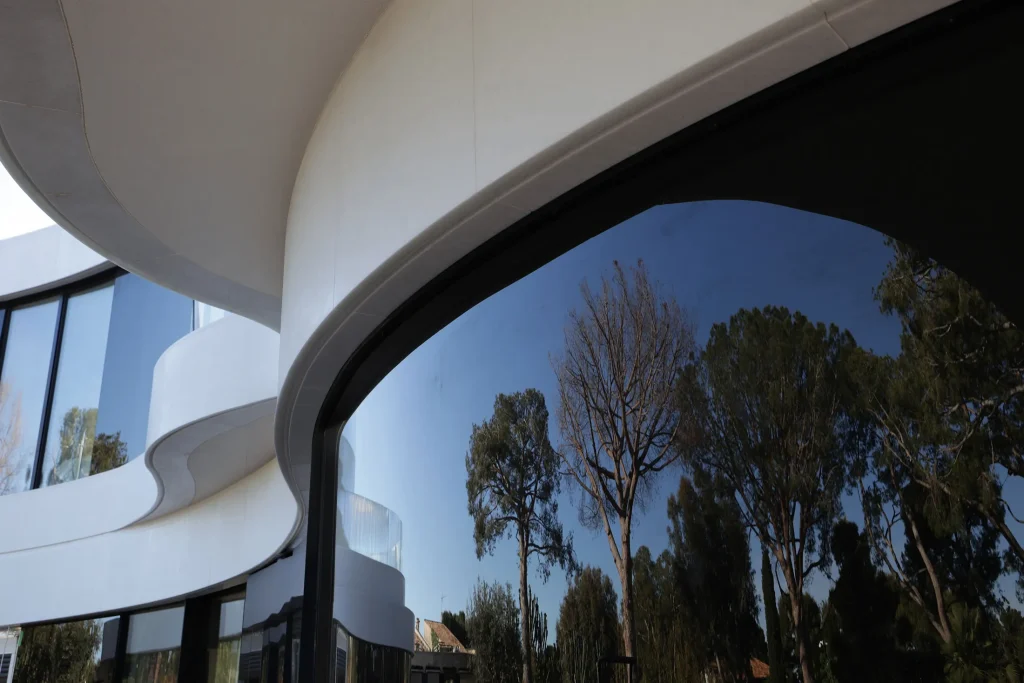
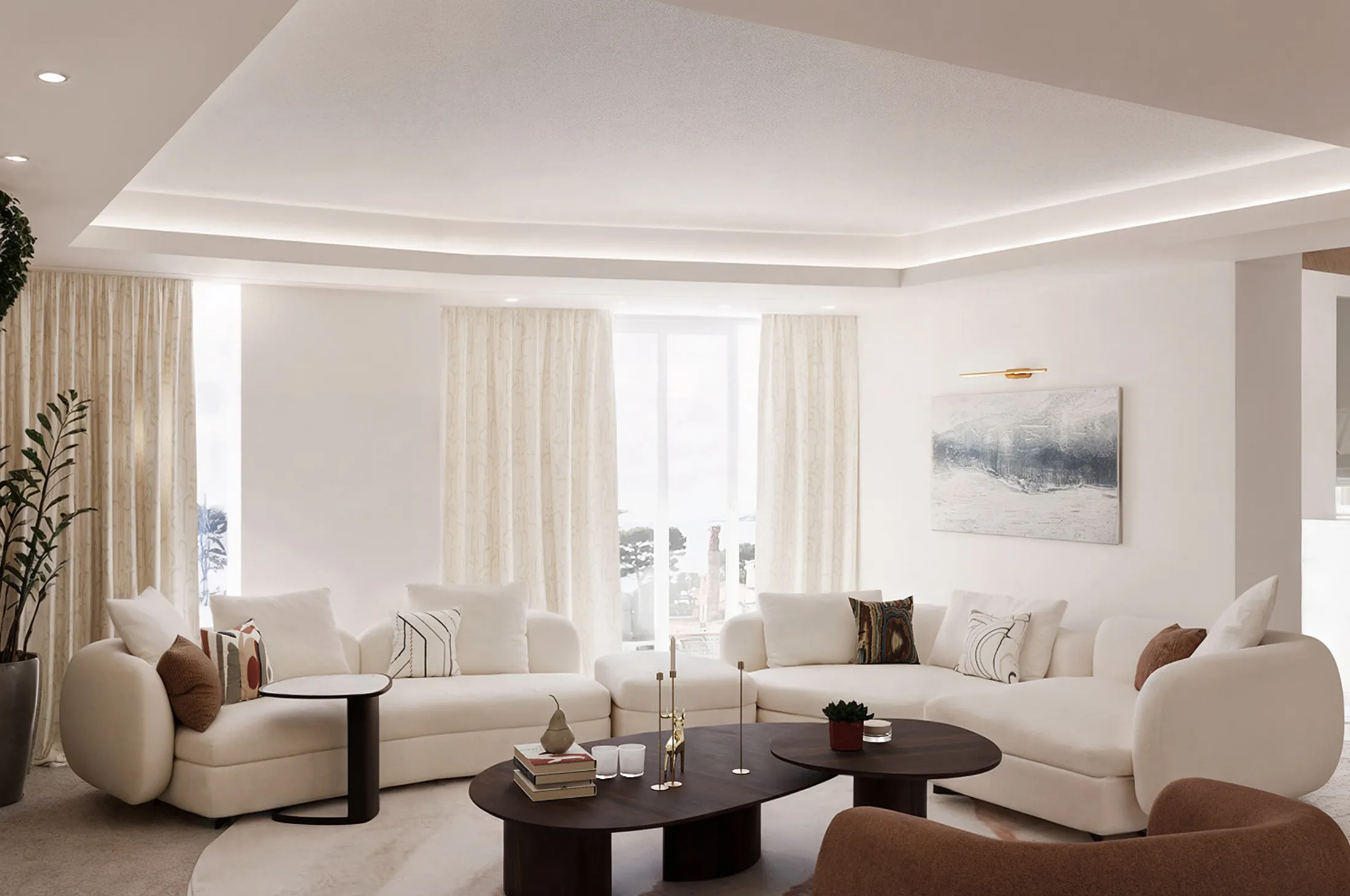
Inside, oak parquet and marble flooring meet along clean lines, while timber-lined ceilings soften the mineral structure. Fully curved sliding and operable glazing dissolve the boundary between interior and exterior, allowing terraces and living spaces to function as one cohesive environment shaped by Mediterranean light.

Living and Exterior Sequence

The villa is organized as a continuous sequence of living spaces oriented toward the landscape. Reception areas extend toward the pool terrace, reinforcing the direct relationship between interior and exterior.
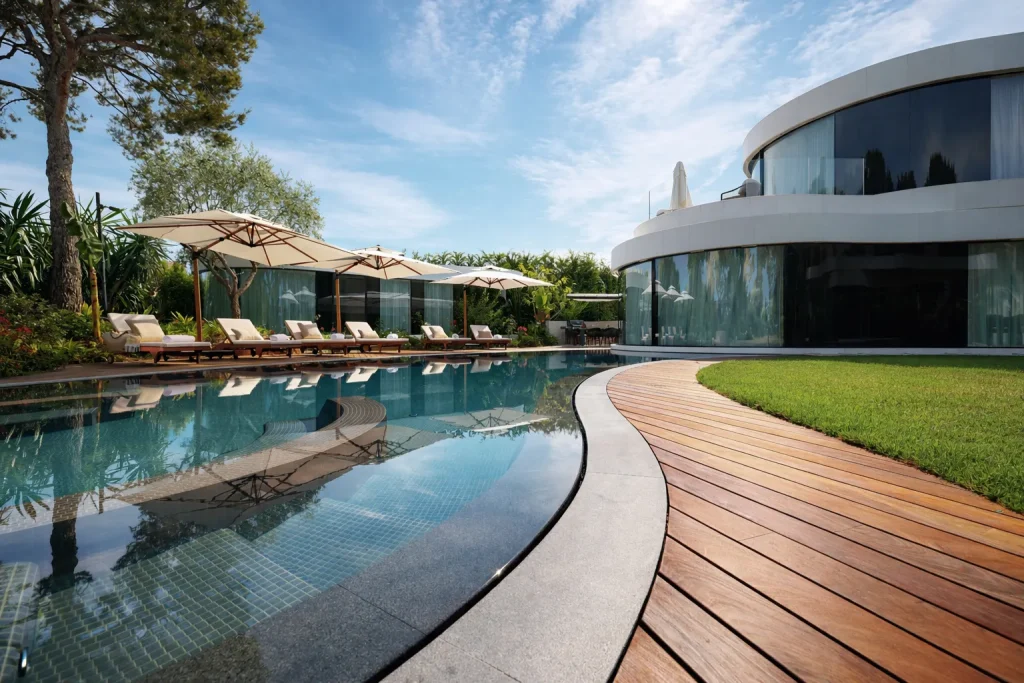
At the end of the architectural curve, the pool becomes a central element of the composition, extending the geometry into the open horizon. A dedicated poolhouse complements the main volume, integrating spa functions including sauna, hammam, and massage areas. This secondary structure expands the living experience, allowing wellness and outdoor life to unfold as a natural extension of the architecture.

Excavation and Integrated Access

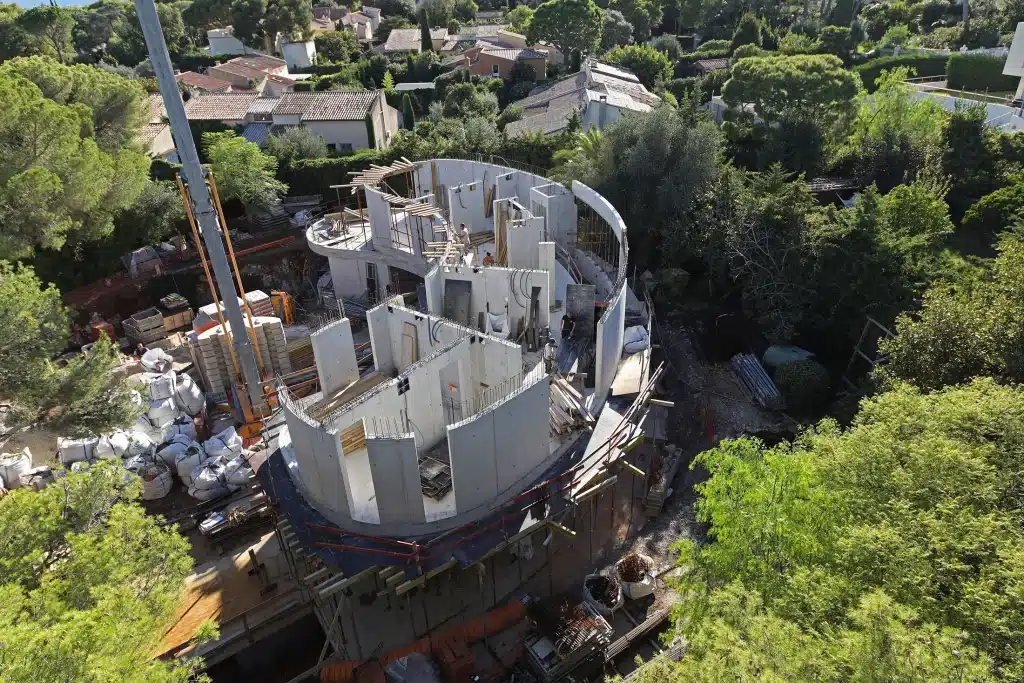
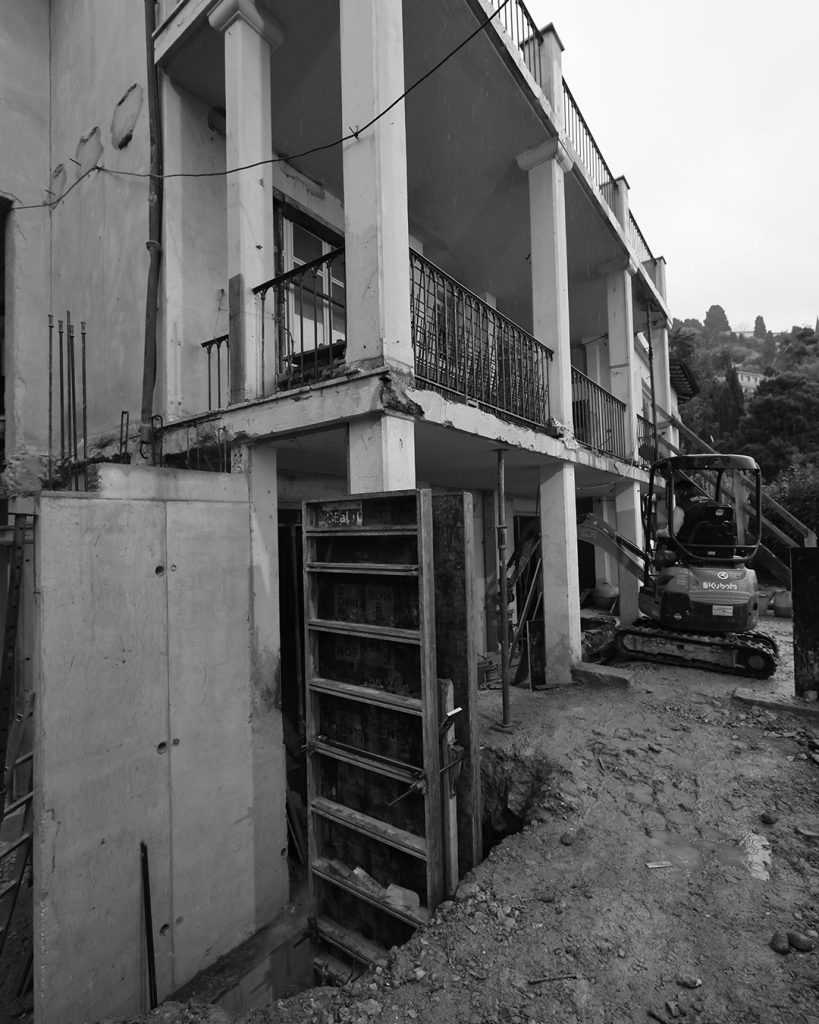
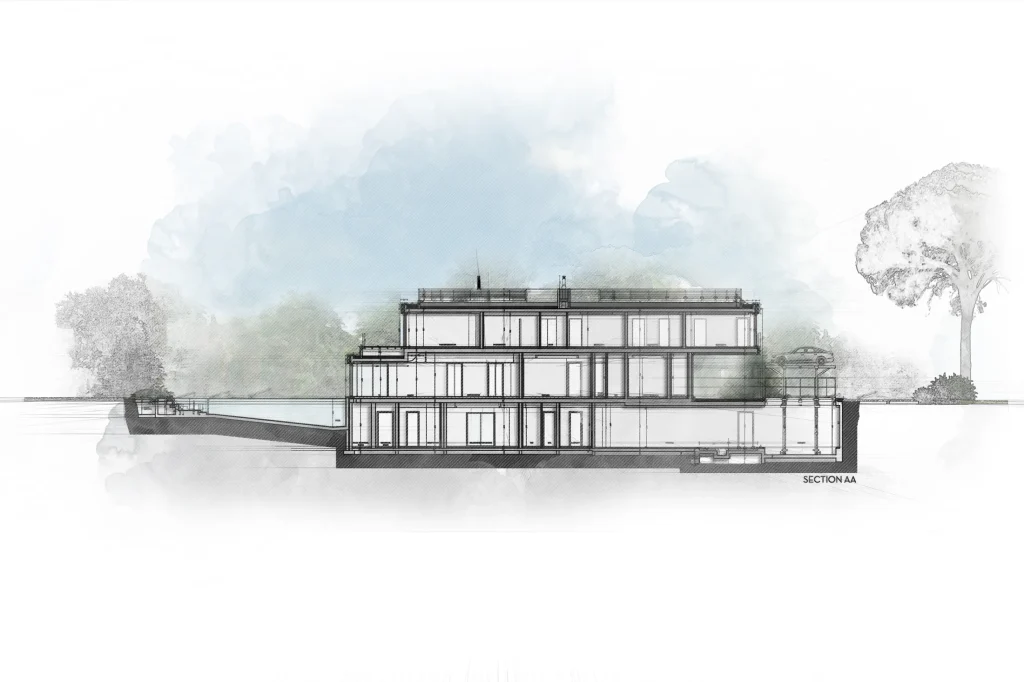
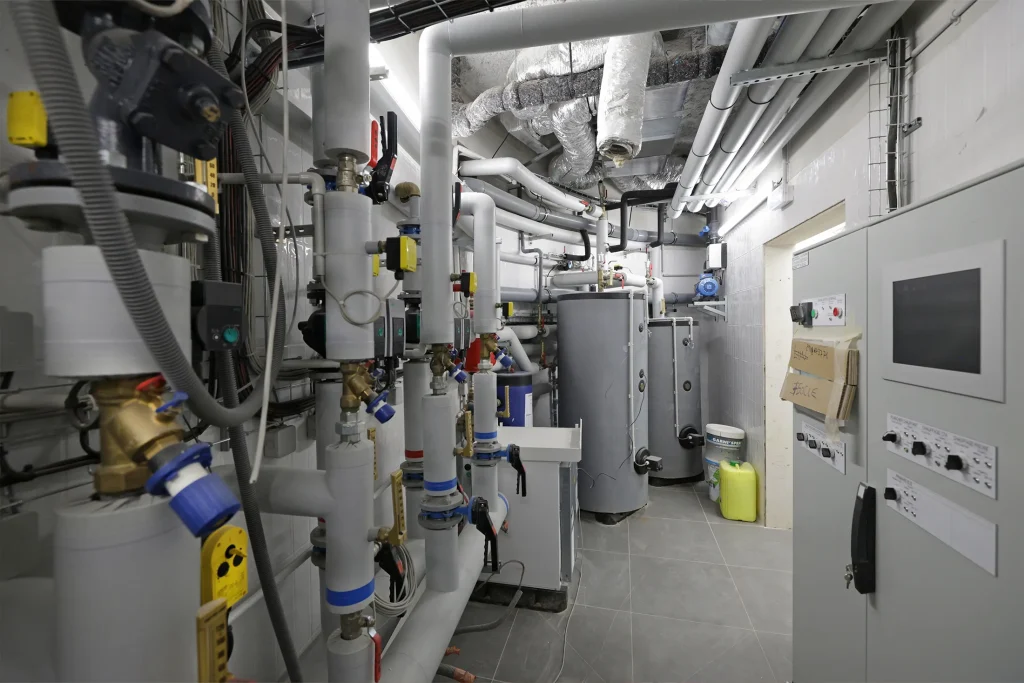
Behind this fluidity lies rigorous construction. Excavation into the dense Cap-Ferrat rock allowed the creation of a peripheral technical void around the basement, ensuring durability over time and protection from humidity.
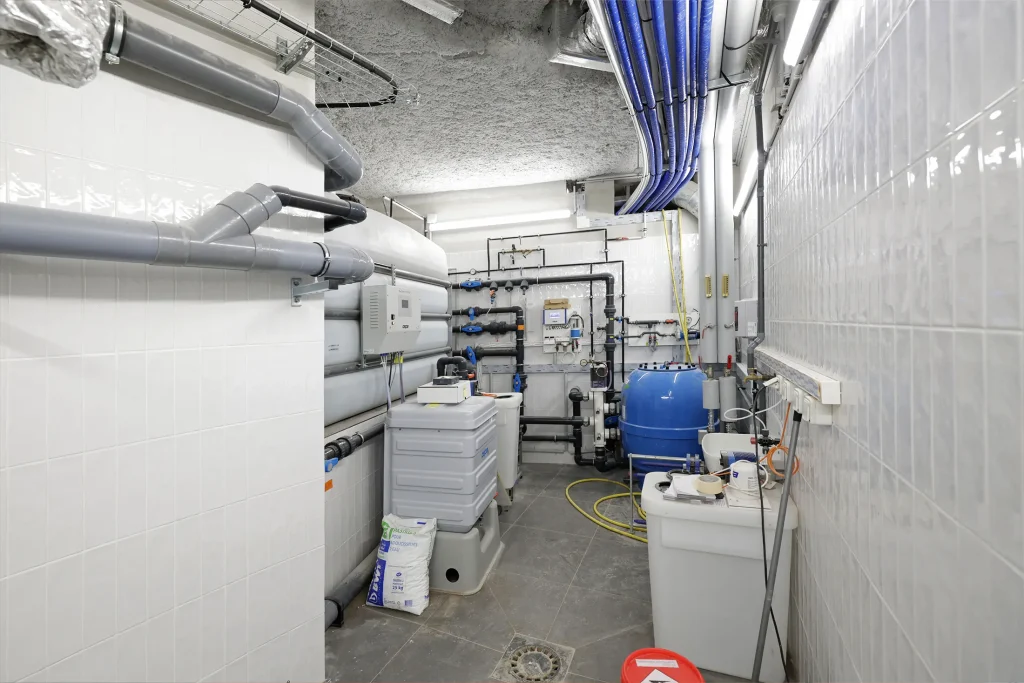
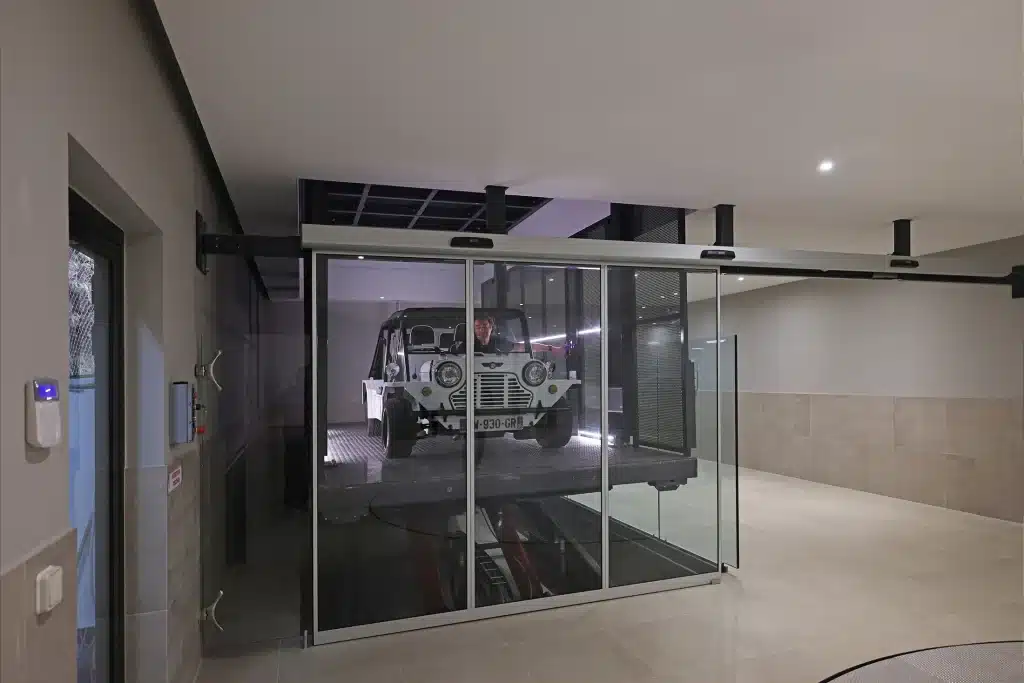
Vehicular access is resolved discreetly through a concealed lift at street level, finished with the same material as the roadway to remain invisible when closed. Below, a rotating platform allows vehicles to maneuver efficiently within the constrained site, preserving both landscape continuity and spatial coherence.
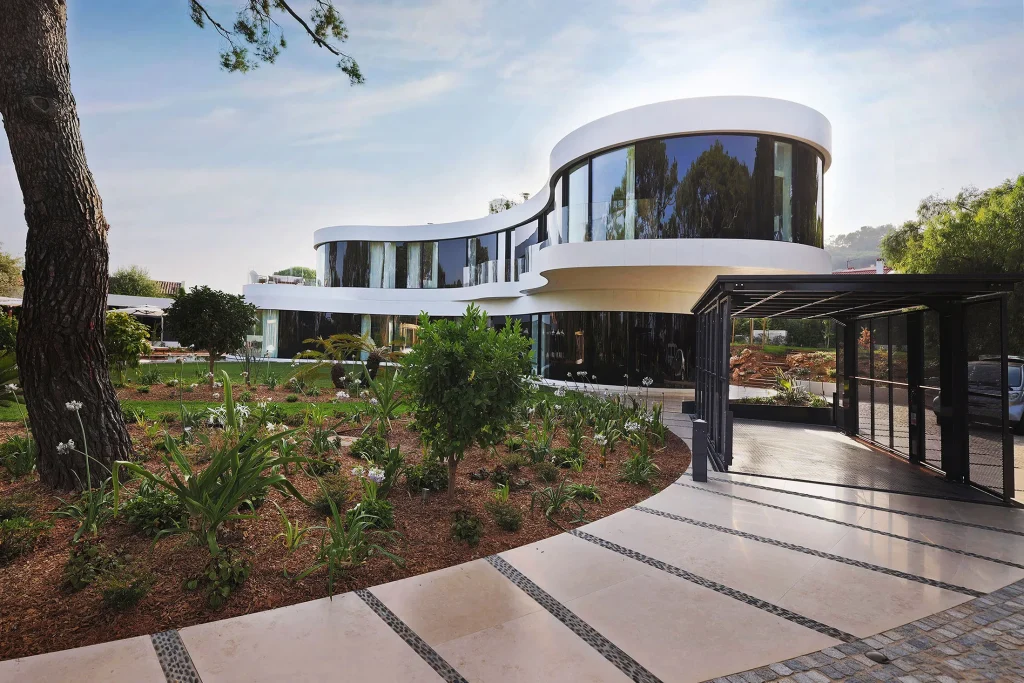
Lanis expresses a disciplined architectural approach where curve, material, and light remain in balance, a contemporary coastal residence shaped by its site and designed for a precise and continuous living experience.

Check the progress below:
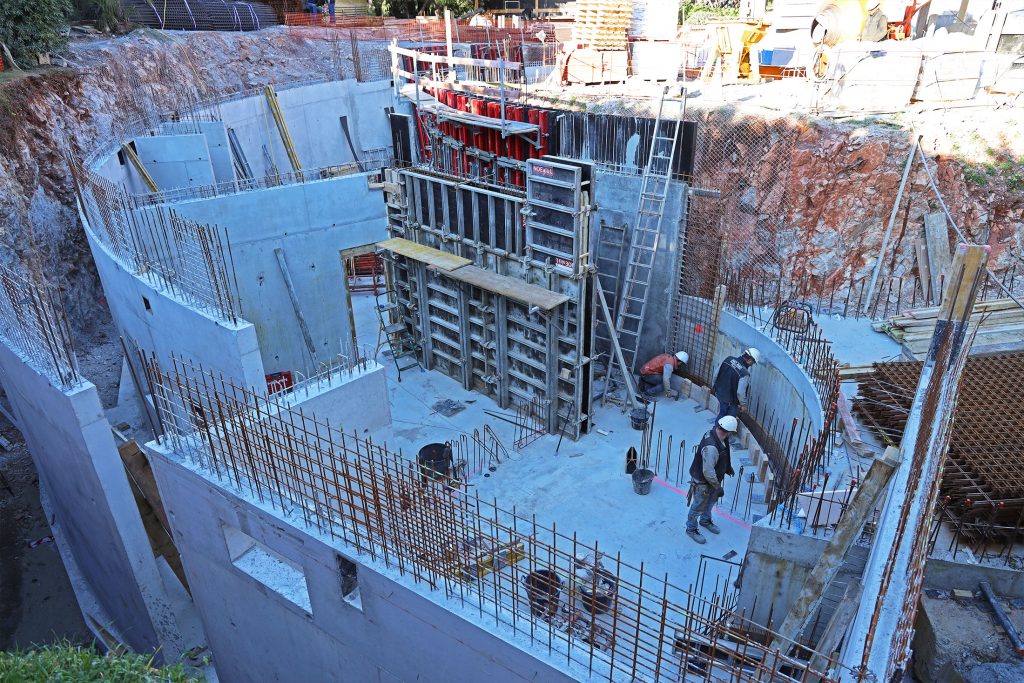
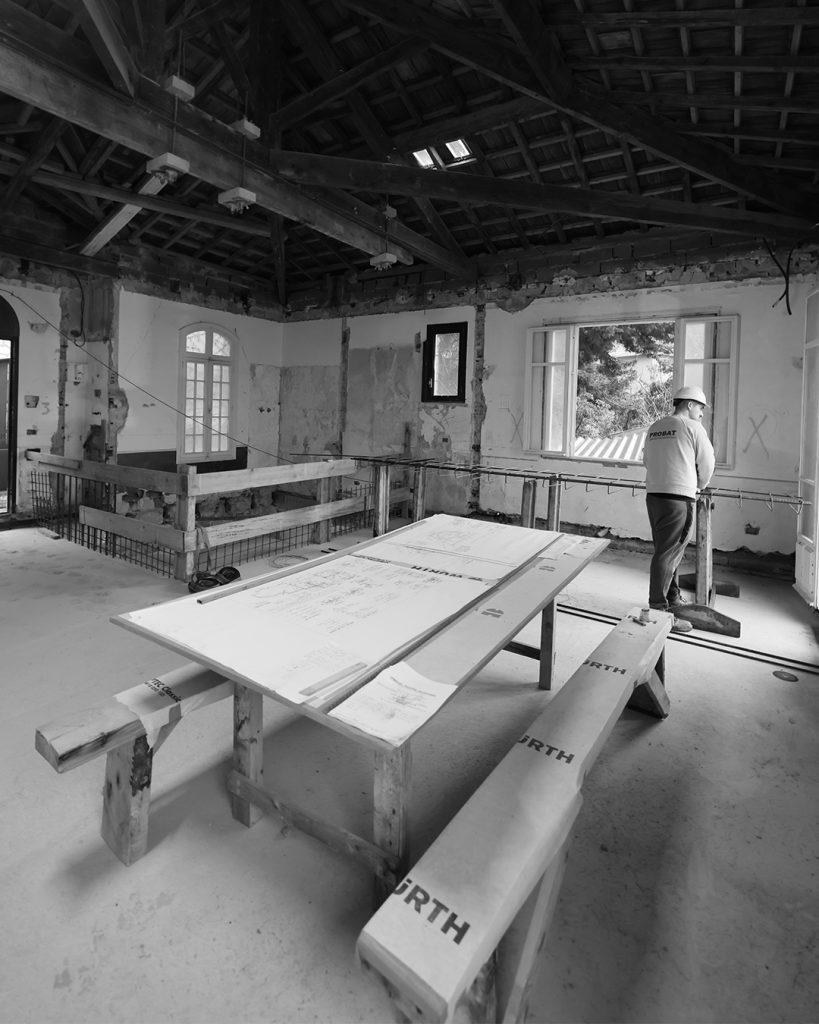
Lanis onsite
Lanis onsite

Nice

Balancing Heritage and Intervention

Restoration Through Removal

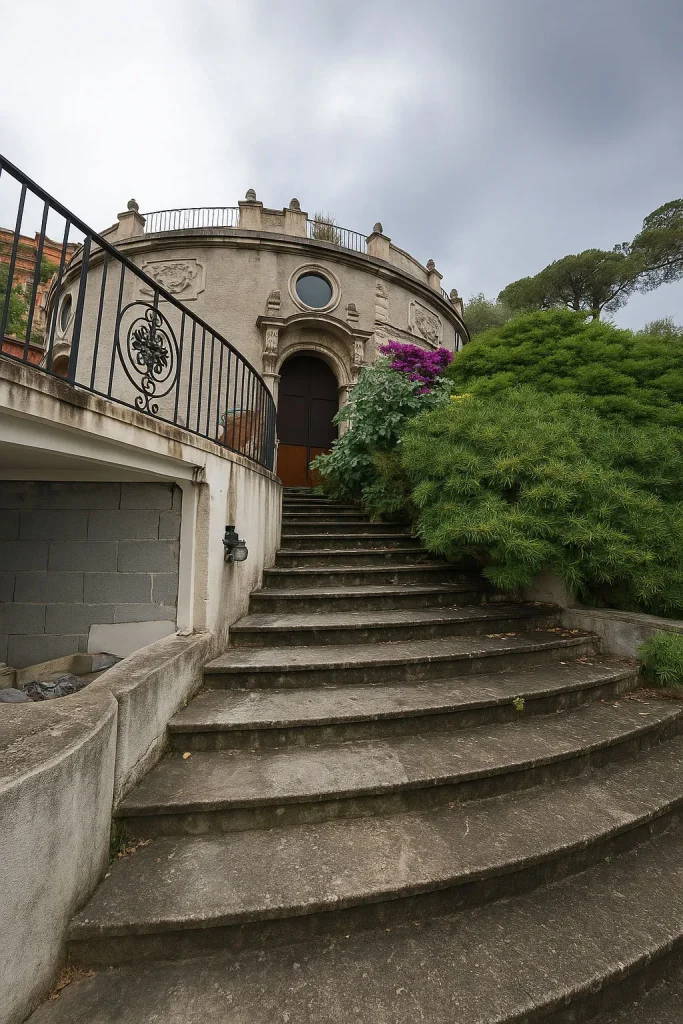
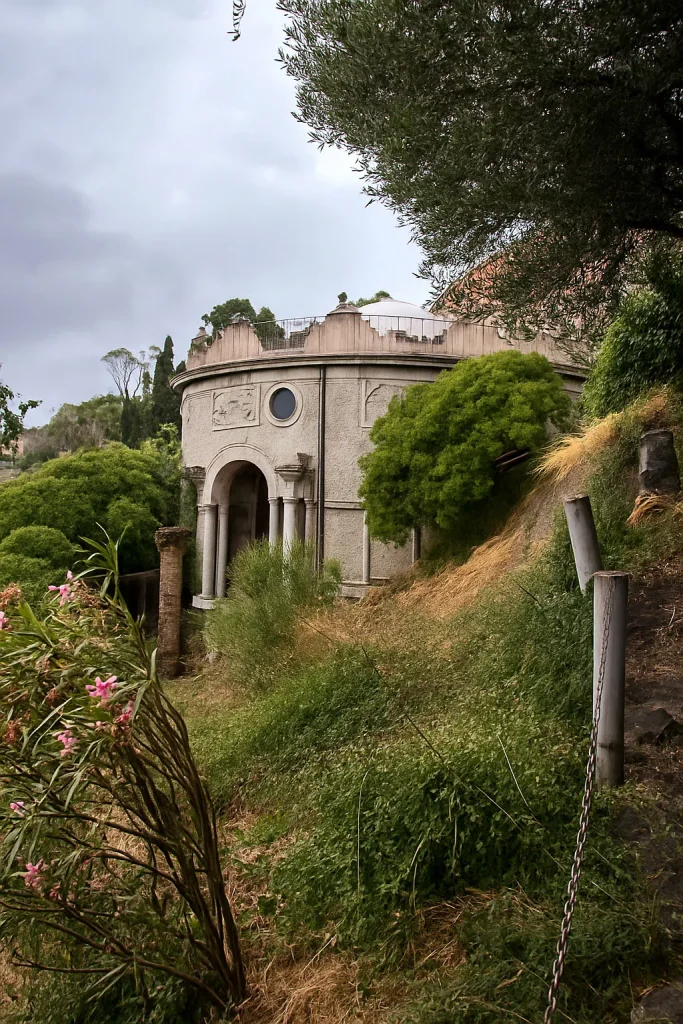
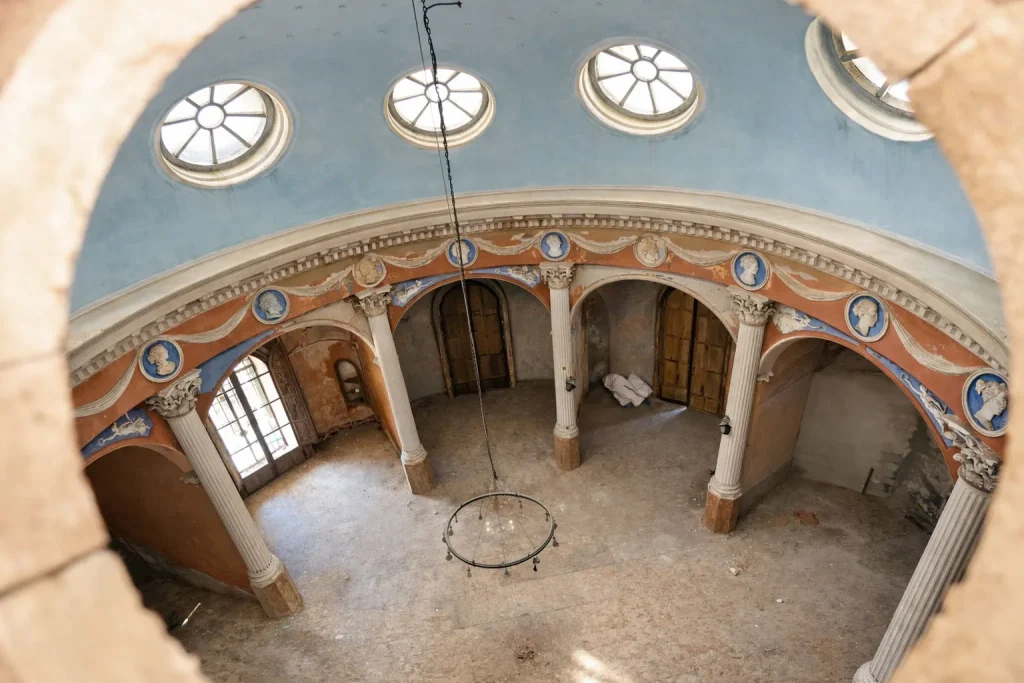
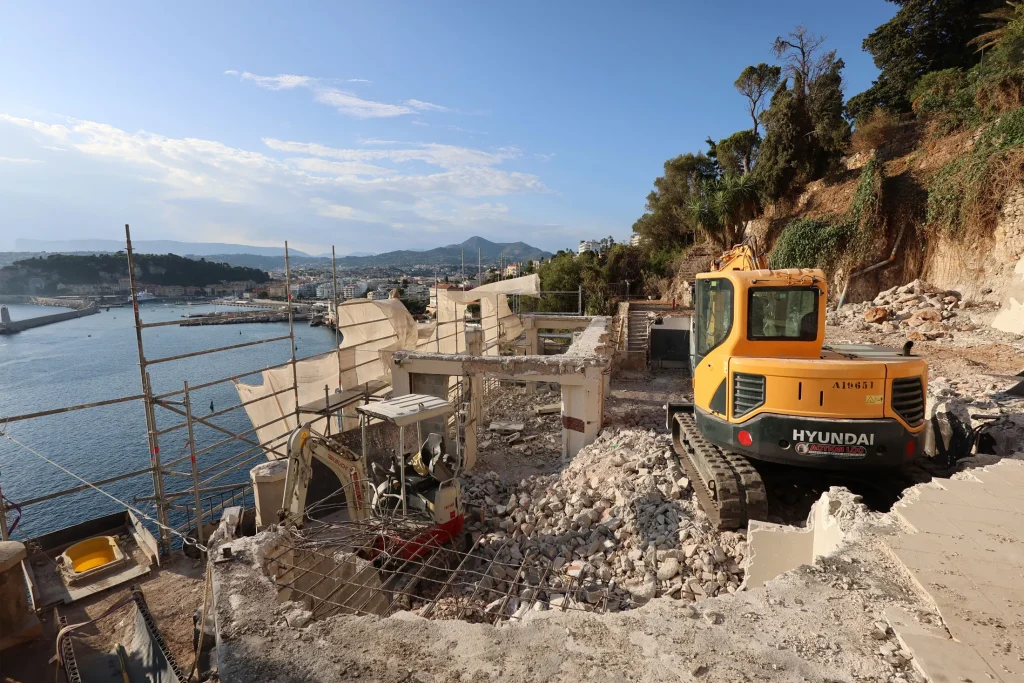
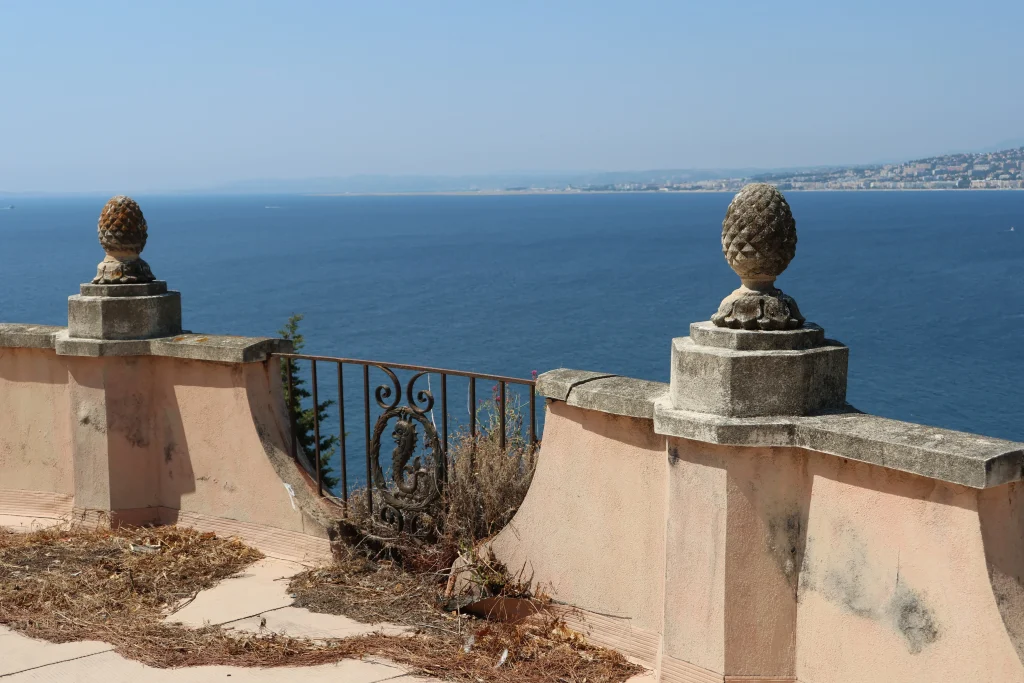
La Rotonde sits on the ridge of Mont Boron in Nice, overlooking the Mediterranean with a wide, uninterrupted panorama. For many years, the original circular structure was hidden behind a later villa that disrupted both its visibility and spatial clarity. The project begins with removal. By demolishing the secondary building, the historic rotunda regains its presence and legibility. A new villa is set further back on the site, allowing the original structure to stand independently once again. The intervention reshapes the terrain with restraint rather than adding volume.

Circular Geometry and Spatial Continuity

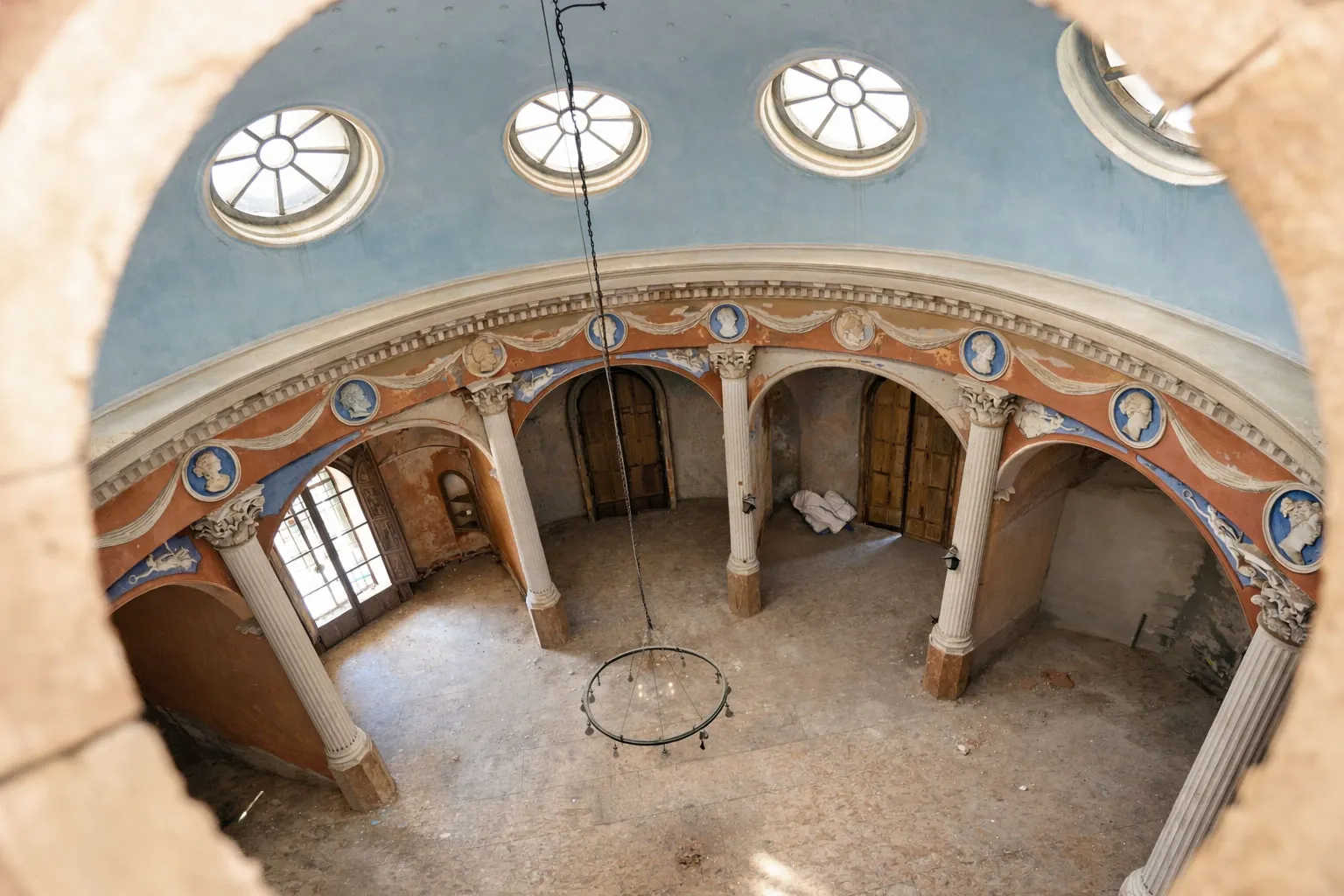
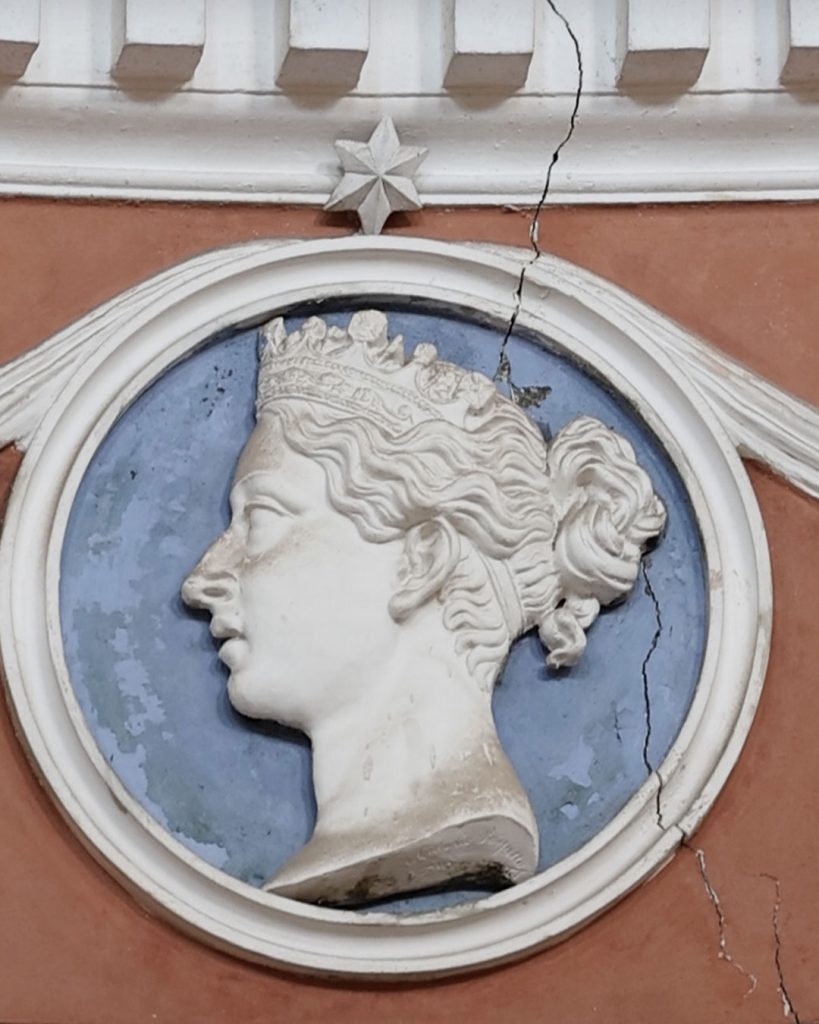
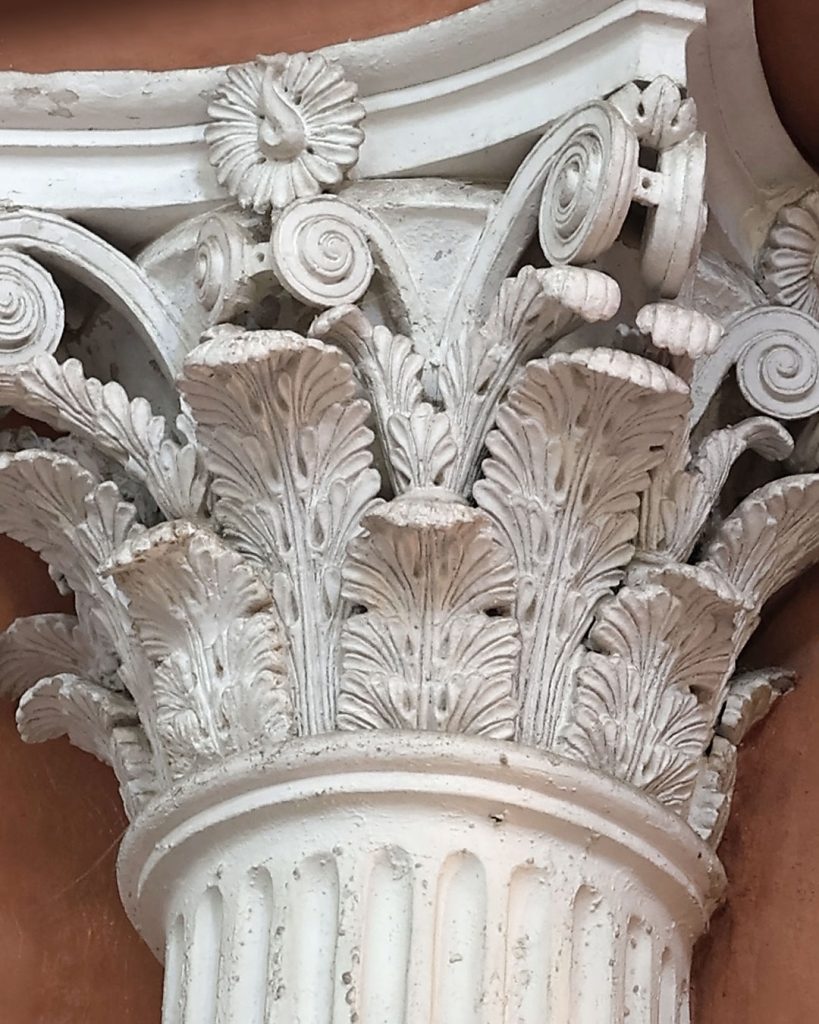
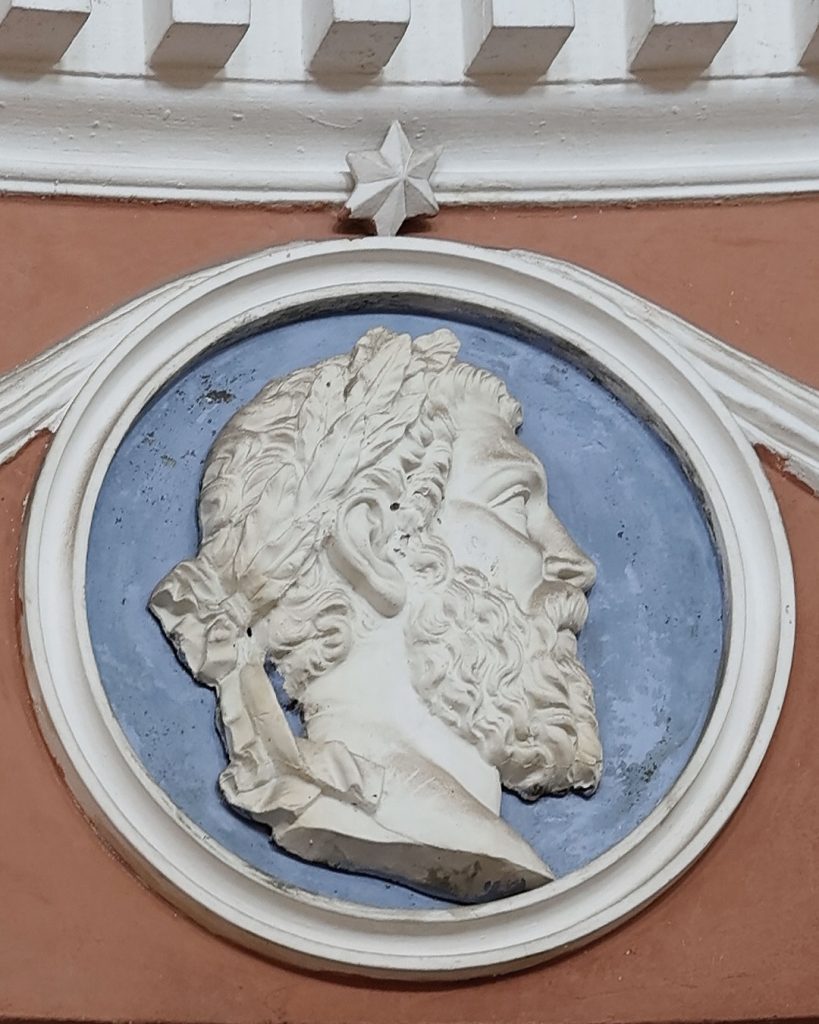
The circular geometry determines the internal organization of the Rotonde. Originally conceived as a reception and concert space, its plan avoids hierarchy; the center and perimeter hold equal importance. The restoration carefully reinstates architectural elements such as columns, alcoves, and mouldings, guided by archival research and on-site study. Structural upgrades and contemporary systems are introduced discreetly, without altering the spatial perception. The aim is not reinterpretation, but continuity – enabling residential use while preserving formal integrity.

A Contemporary Villa in Dialogue

The new villa references the rotunda through gentle curvature at its edges and terraces, without imitating its form. Its glass façade with big windows was chosen to blend into the vegetation of Mont Boron, reducing visual impact within the landscape. Facing west, the building incorporates vertically rotating and sliding shutters that control sunlight and frame selective sea views. Interior finishes remain restrained and material-led, allowing proportion and natural light to shape daily living rather than decorative emphasis.

Technical Constraints and Site Response

The site presents considerable logistical challenges, as there is no direct vehicular access. Demolition, restoration, and construction were therefore carried out via the upper pedestrian route, influencing both planning and detailing. The project ultimately establishes a dialogue between two volumes – one historic, one contemporary – each distinct yet geometrically aligned. Rather than seeking contrast, the architecture restores clarity to the original structure and introduces a balanced coexistence rooted in respect and precision.

Roquebrune-Cap-Martin

A Dialectic of Coastal Luxury and Familial Intimacy

A Villa Shaped by Its Waterfront Context

Set along the sunlit coastline, Vilarem is a carefully composed retreat that balances openness with privacy. This waterfront luxury villa extends across three levels, positioned to capture wide views of the Mediterranean while maintaining a strong connection to everyday family life. The architecture responds directly to its setting, allowing interior spaces to remain constantly linked to the sea, light, and surrounding landscape.

Balancing Openness and Control

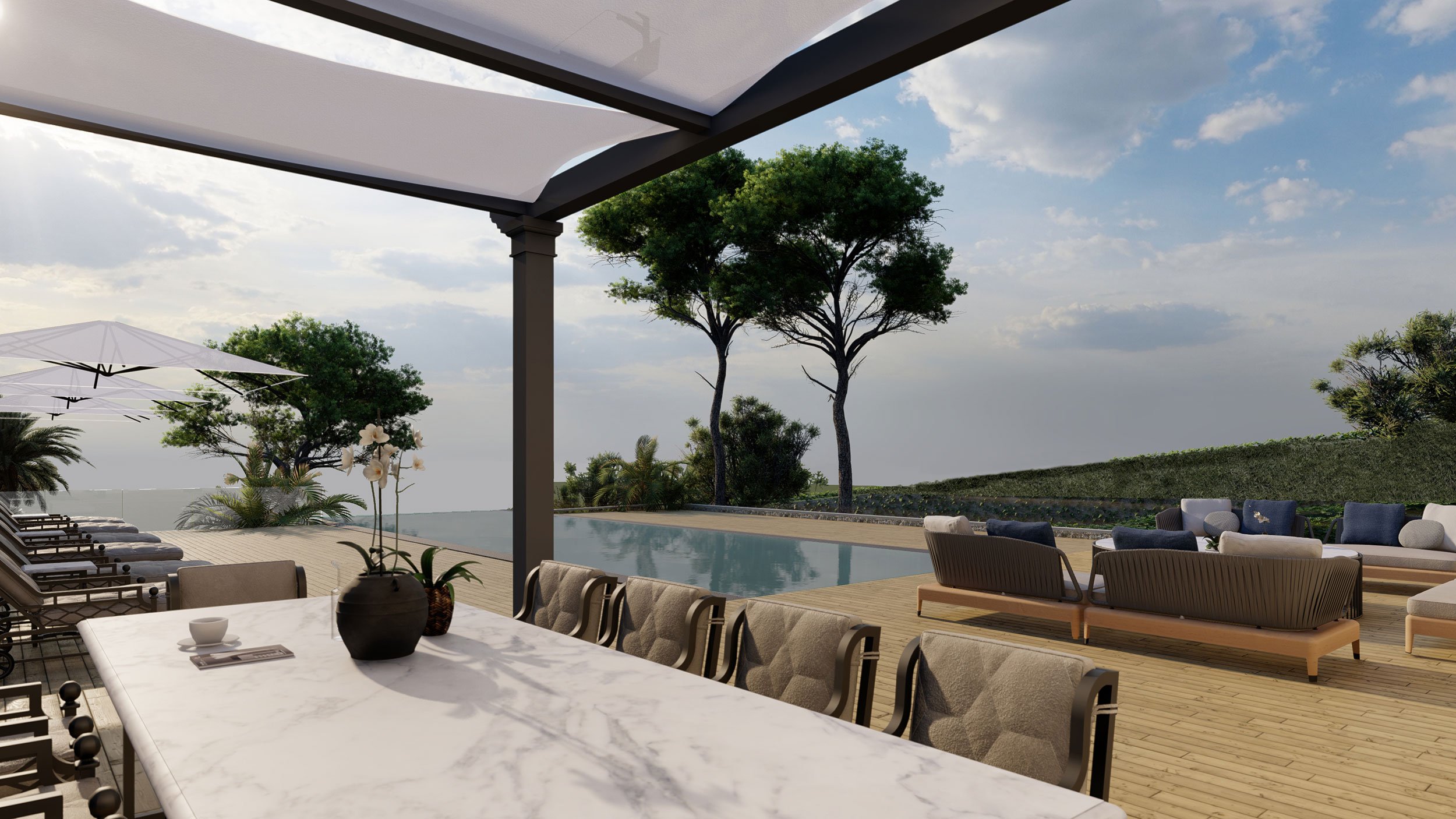
The design focuses on creating a continuous relationship between inside and outside. Large glazed openings, terraces, and fluid transitions allow movement to feel uninterrupted, while still maintaining a sense of structure and comfort. The swimming pool, with its glass edge appearing to merge into the sea, becomes a key element in this composition. It acts as both a visual extension of the horizon and a central gathering space, reinforcing the balance between openness and intimacy.

Texture, Material, and Atmosphere

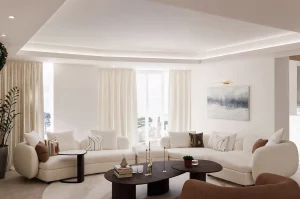
Inside, materials are selected to create warmth and depth. Tadelakt plaster walls interior bring a soft, tactile quality to the spaces, while artworks add moments of contrast and energy. A large dining table anchors the social areas, connecting seating zones and terraces in a natural flow. Curtains filter daylight gently, working alongside refined finishes such as Navona Lux flooring and marble surfaces. Together, these elements express a quiet sophistication where tactile minimalism in architecture defines the overall atmosphere.

Luxury Defined by Balance and Use

Every space within Vilarem is designed to balance scale with comfort. Floor-to-ceiling glazing frames the horizon, while circulation paths and terraces blur traditional boundaries between rooms and outdoor areas. The house supports both shared and private moments, allowing family life to unfold naturally within a refined setting. This approach reflects the essence of Côte d’Azur luxury architecture, where precision, proportion, and light come together to create spaces that feel both generous and livable.

Luxury villa landscape design Saint Jean Cap Ferrat with poolside seating and terrace by best architecture company Joe Aoun.

Saint Jean Cap Ferrat

On the Poetics of the Invisible

Architecture of Quiet Precision

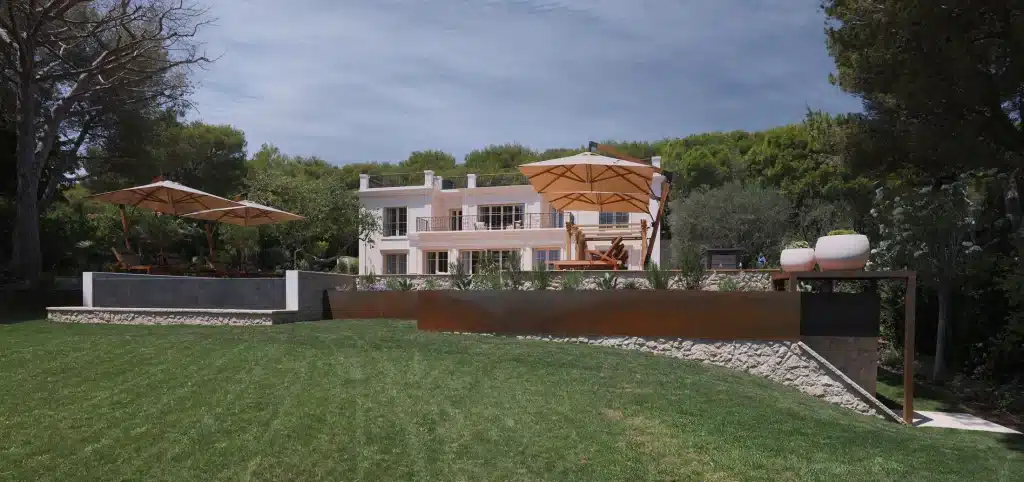
Villa Libeccio is a high-end residential architecture defined by discretion and balance. The design is carefully composed so that the technical systems and everyday mechanisms of the house remain hidden from view. What remains visible is an atmosphere of calm continuity, where daily life unfolds smoothly and naturally. The villa functions almost like a quiet piece of music: its rhythm is present in every space, yet the precision behind it stays largely unseen.

Extending Geometry into the Garden

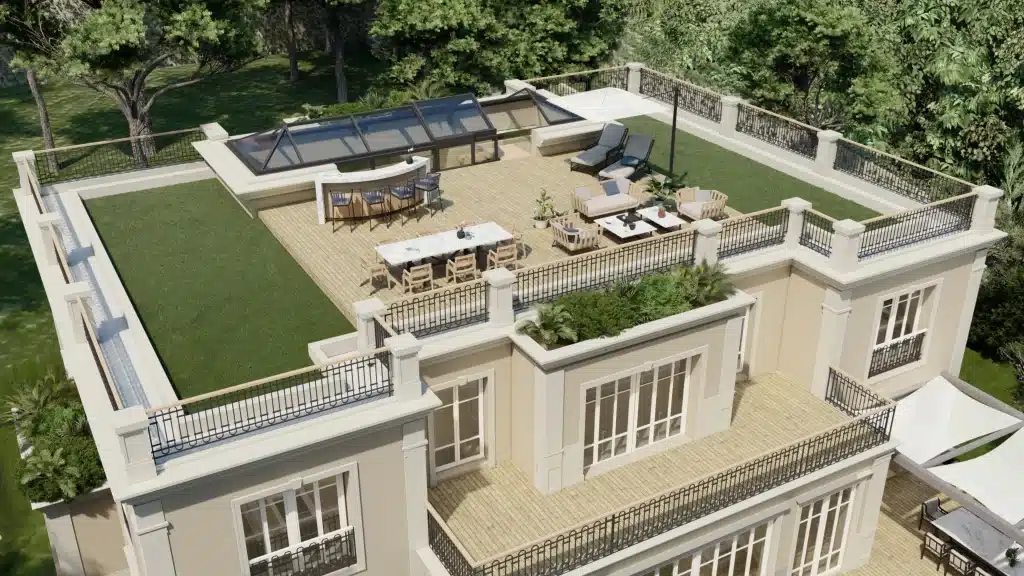
The villa sits on its coastal site with a calm and confident presence. Outside, the sculpted garden design continues the formal logic of the house, extending the geometry of this modern classical architecture into the landscape. A swimming pool forms the central outdoor element, reflecting the Mediterranean sky while capturing changing light and movement throughout the day. Together, the architecture and the garden create a balanced setting where the built environment and nature remain closely connected.

Material Balance and Artistic Presence

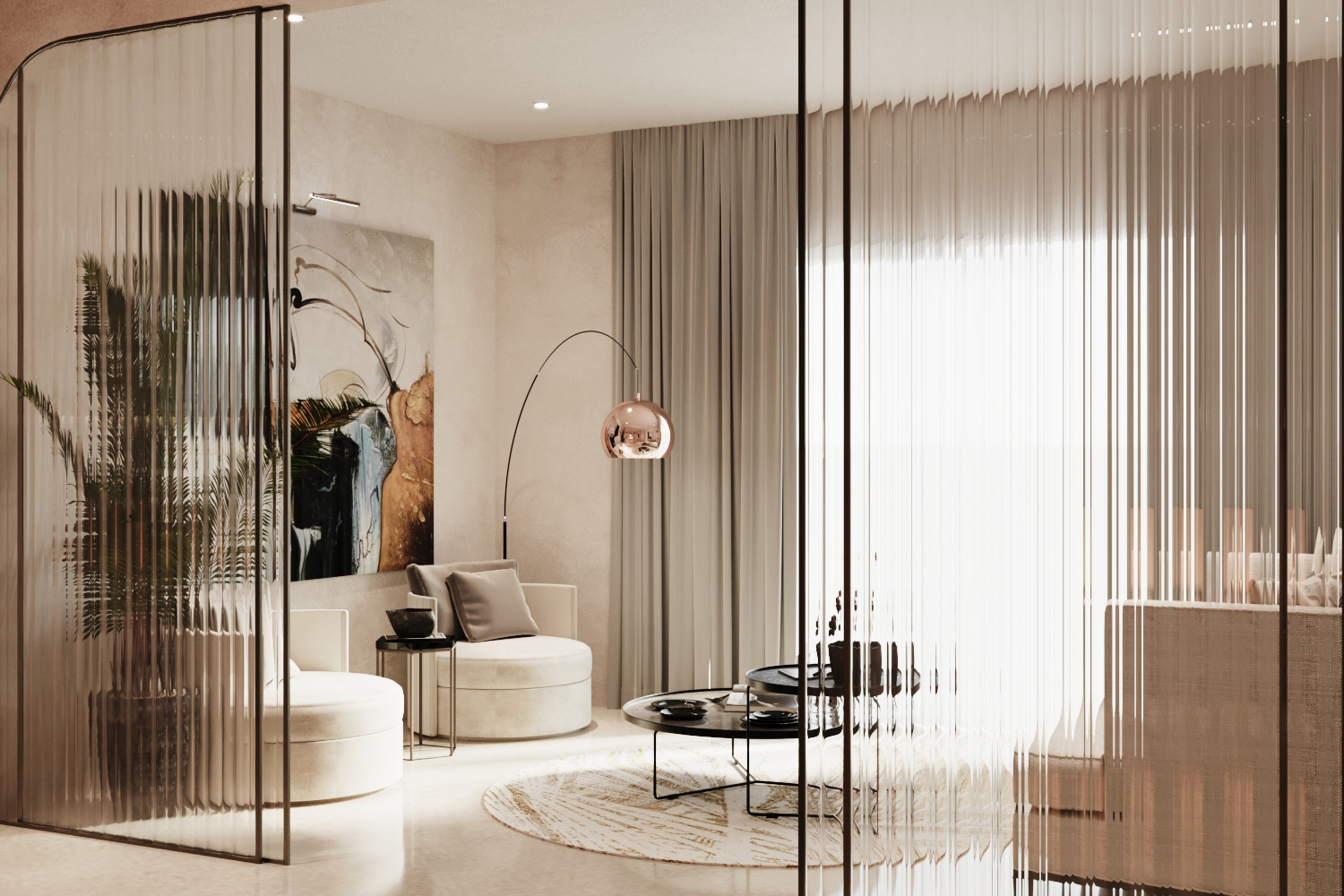
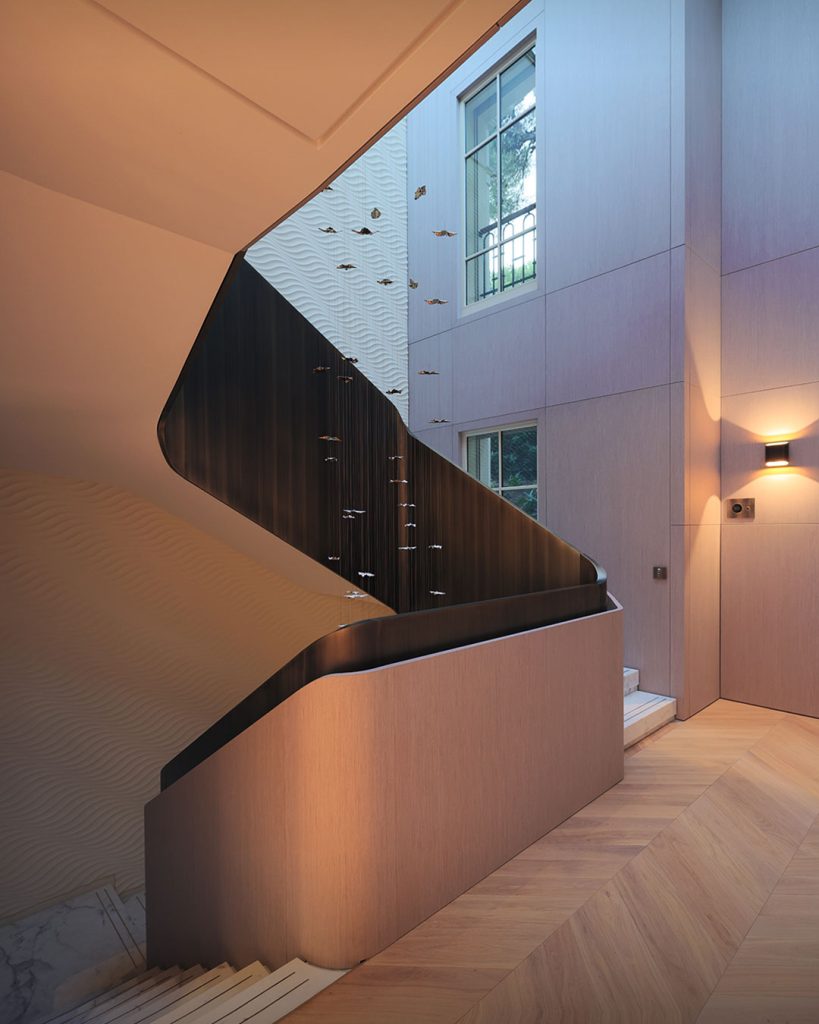
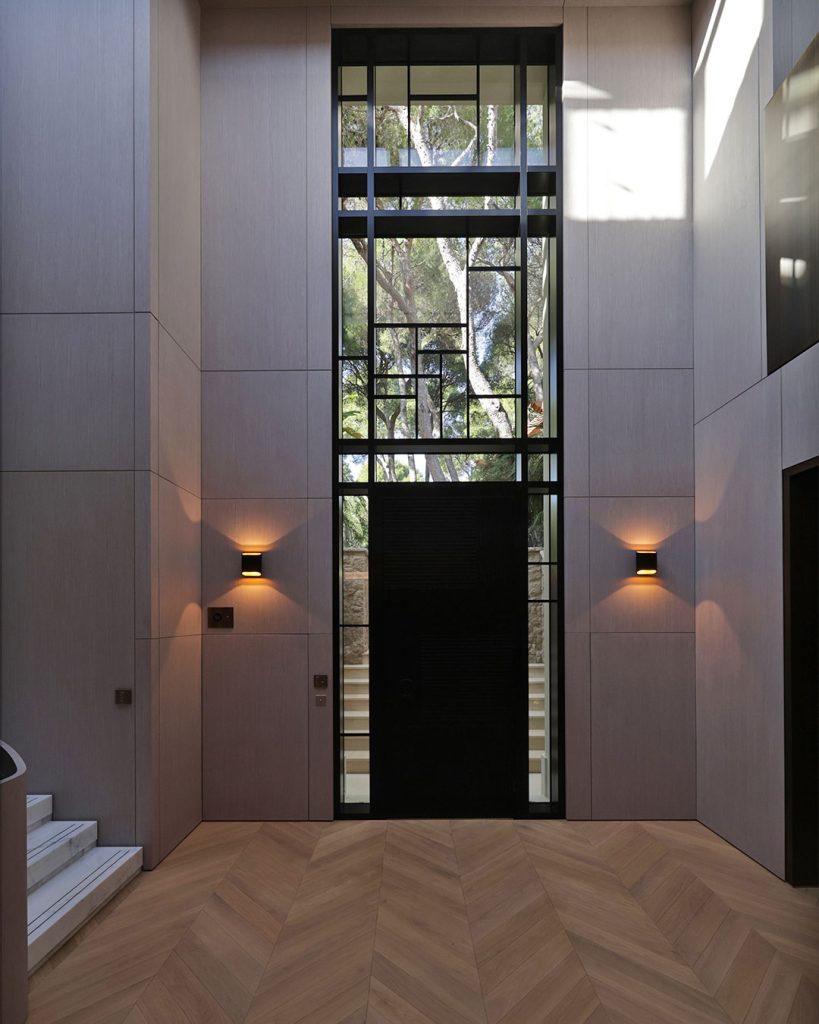
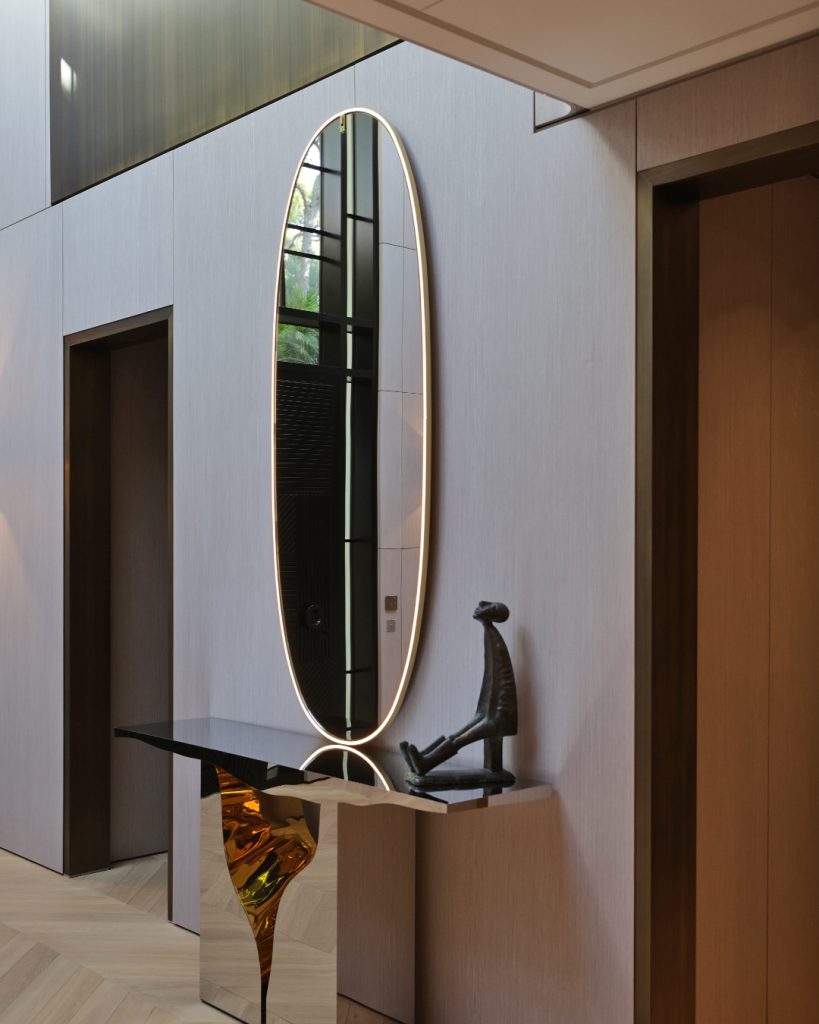
Inside the villa, a subtle dialogue unfolds between classical order and contemporary design. Materials such as marble, linen, and pale oak create a soft and luminous atmosphere. Carefully selected artworks introduce moments of contrast and intellectual depth within the calm interior palette. Furniture crafted with exceptional attention to detail occupies each space with quiet confidence, adding refinement without dominating the architecture. Every element from the movement of curtains to the feel of a door handle has been considered to maintain an atmosphere of restraint and balance.

Harmony Through Invisible Design

One of Libeccio’s greatest achievements is its ability to support the rhythms of family life without disturbing its calm composition. The house comfortably welcomes multiple generations, allowing grandparents, children, and guests to share the spaces naturally. Movement through the villa feels intuitive, as if guided by an invisible structure that organizes daily activity. In this way, the project reflects the principles of luxury coastal villa architecture, where elegance is expressed not through excess but through quiet harmony between people, space, and the surrounding landscape.