Nice
Living Architecture on the Mediterranean Edge
A Corten Envelope in Dialogue with the Landscape
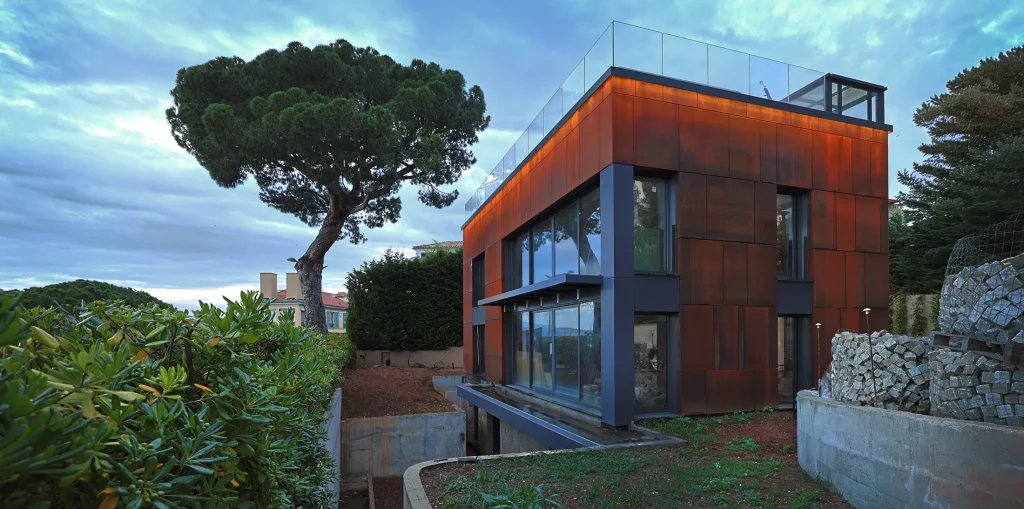
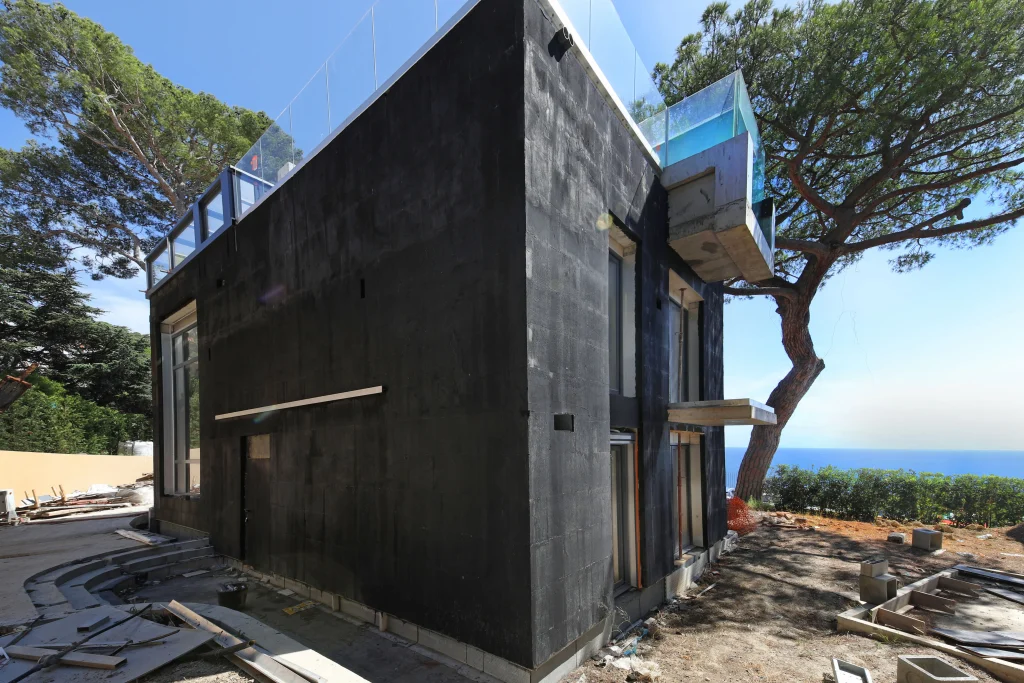
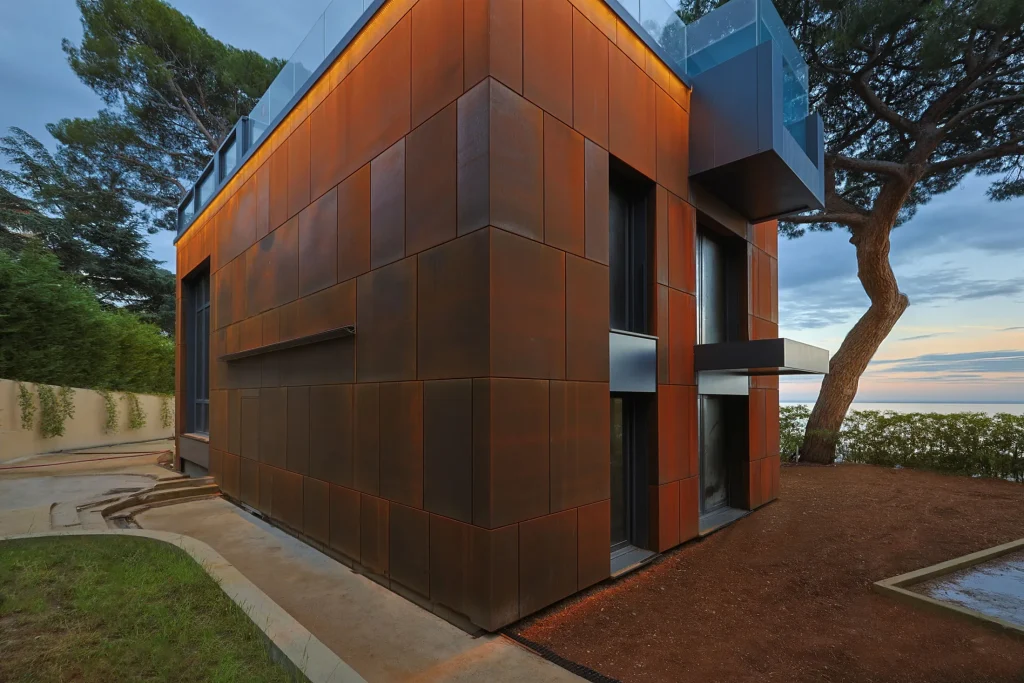
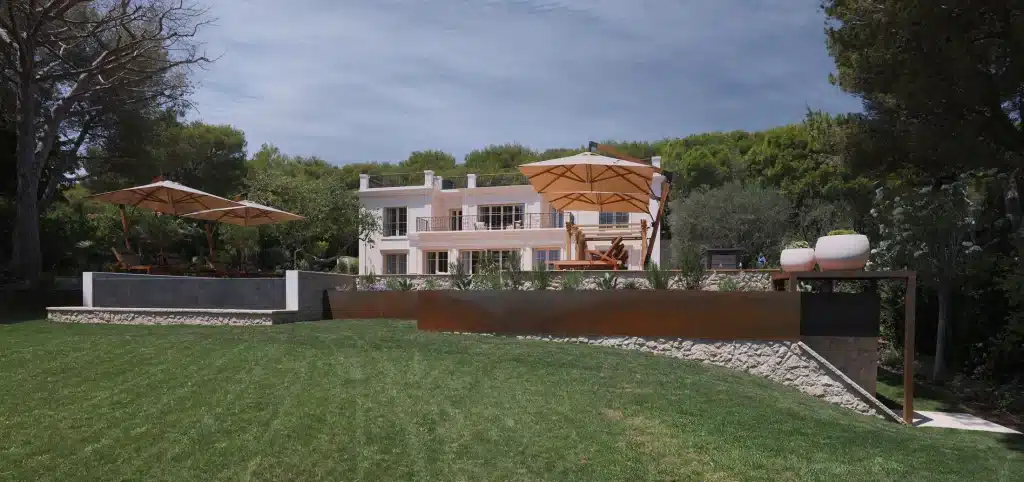
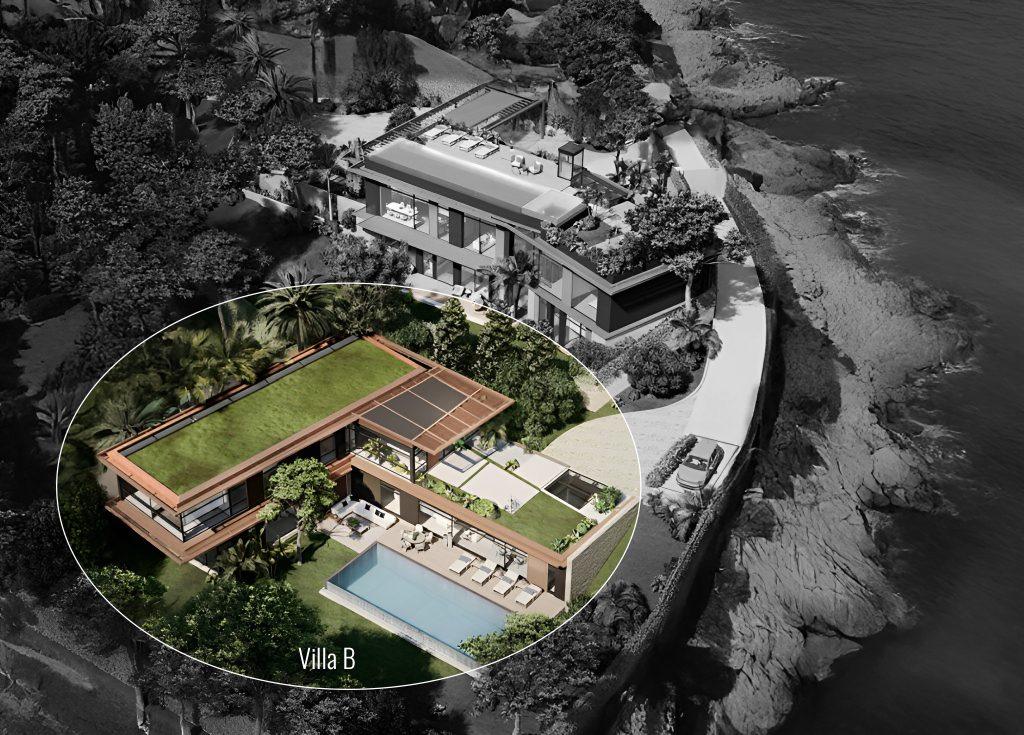
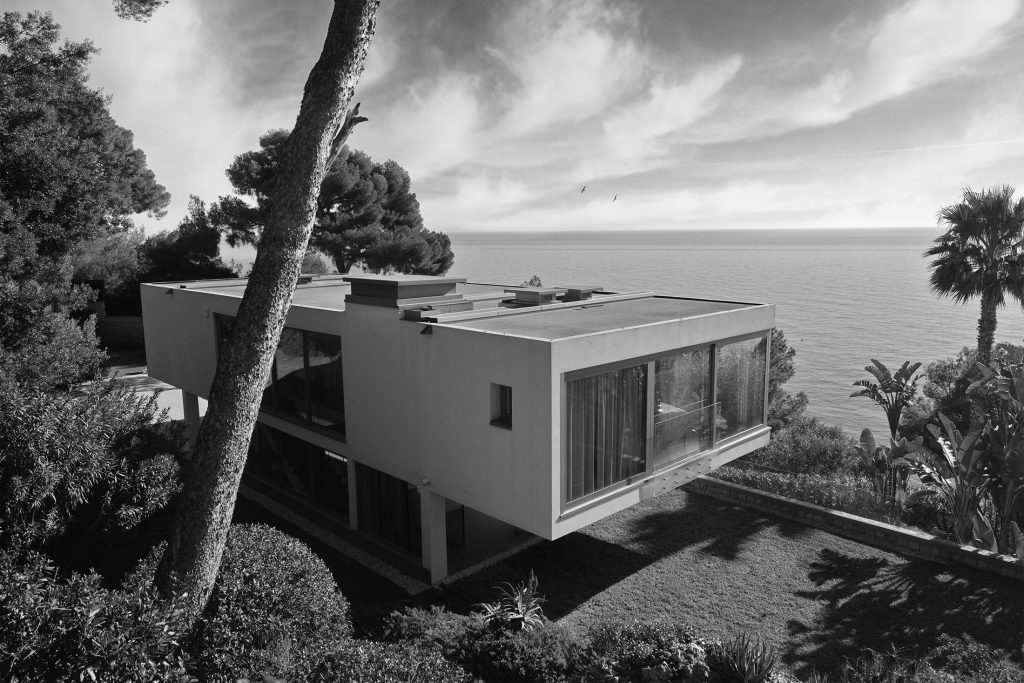
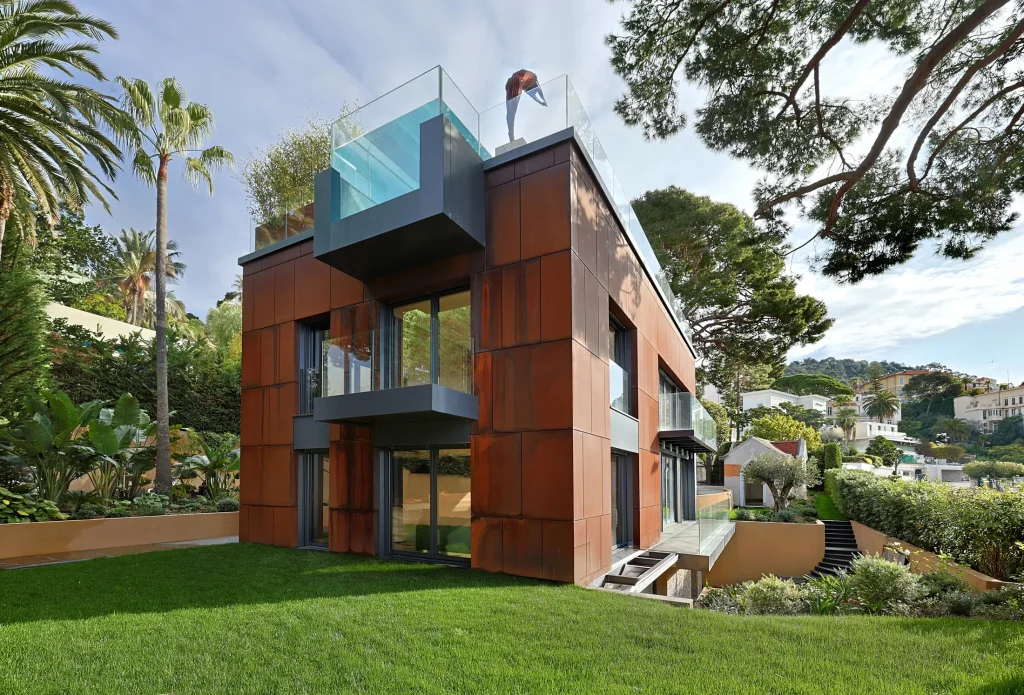
Located on the slopes of Mont Boron along Boulevard Carnot in Nice, the villa overlooks the Mediterranean with sweeping views toward the port lighthouse and the coastline beyond. Its architecture is defined by a corten steel envelope that wraps the house in a warm, mineral skin. Unlike static materials, corten evolves over time, changing with the Riviera’s shifting light, rain, and sea air. The building constantly transforms with its environment.
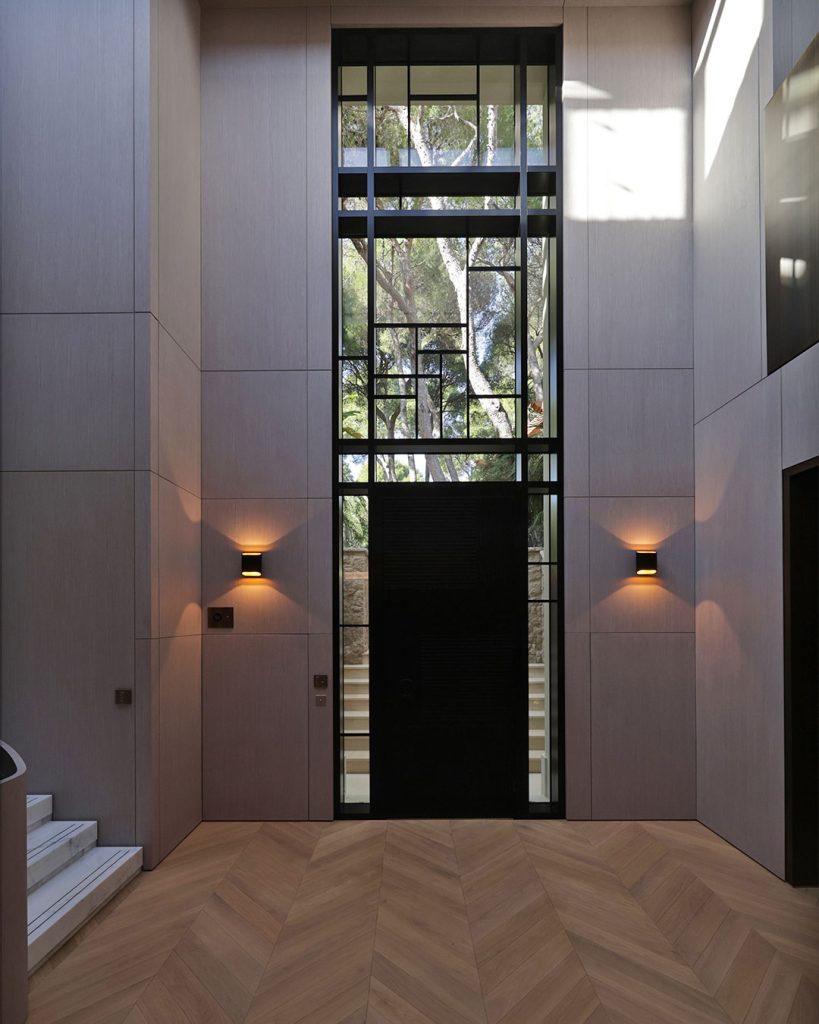
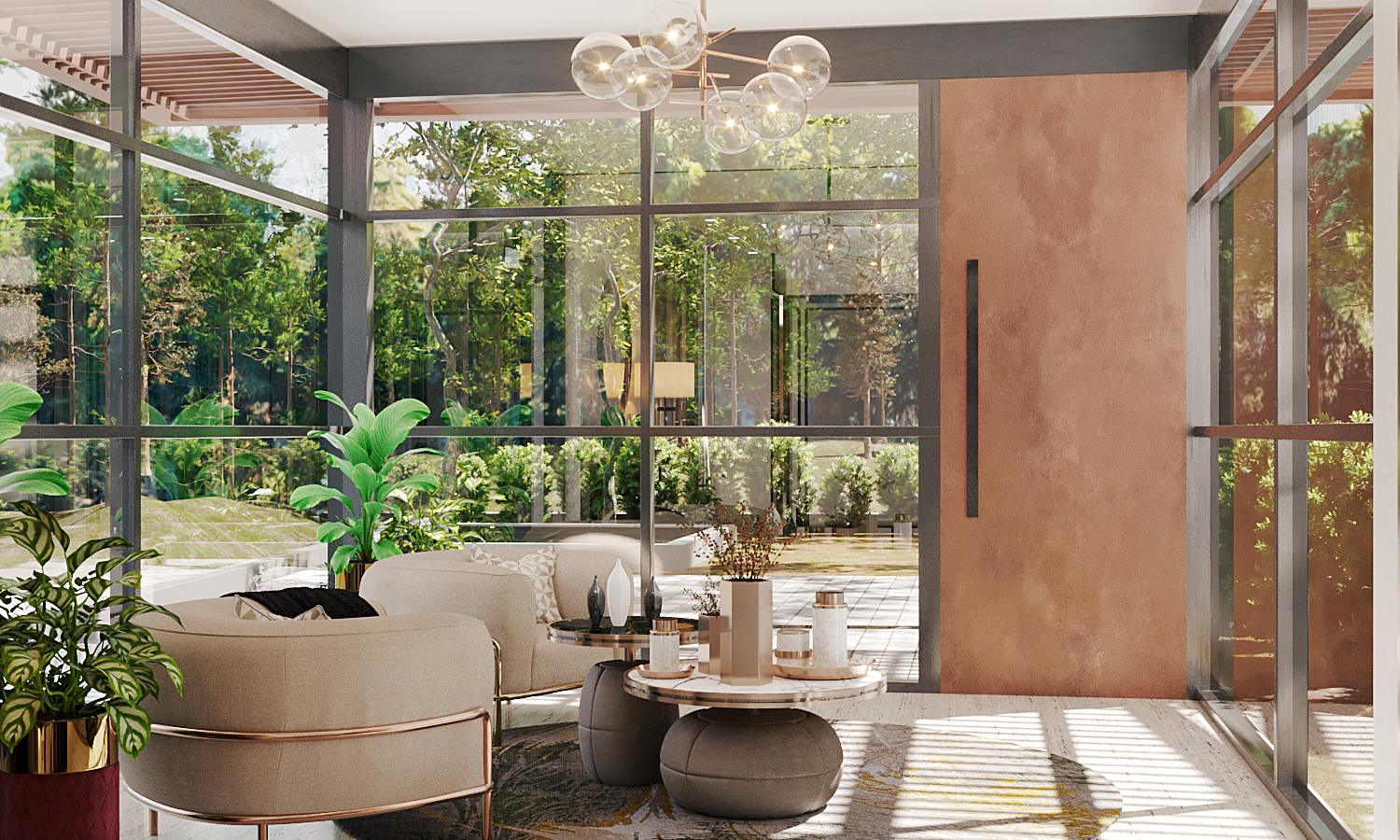
The metallic shell contrasts with large glazed openings that frame the sea and landscape. This dialogue between weight and transparency shapes the architectural identity of the house.
Transparency and Vertical Connection
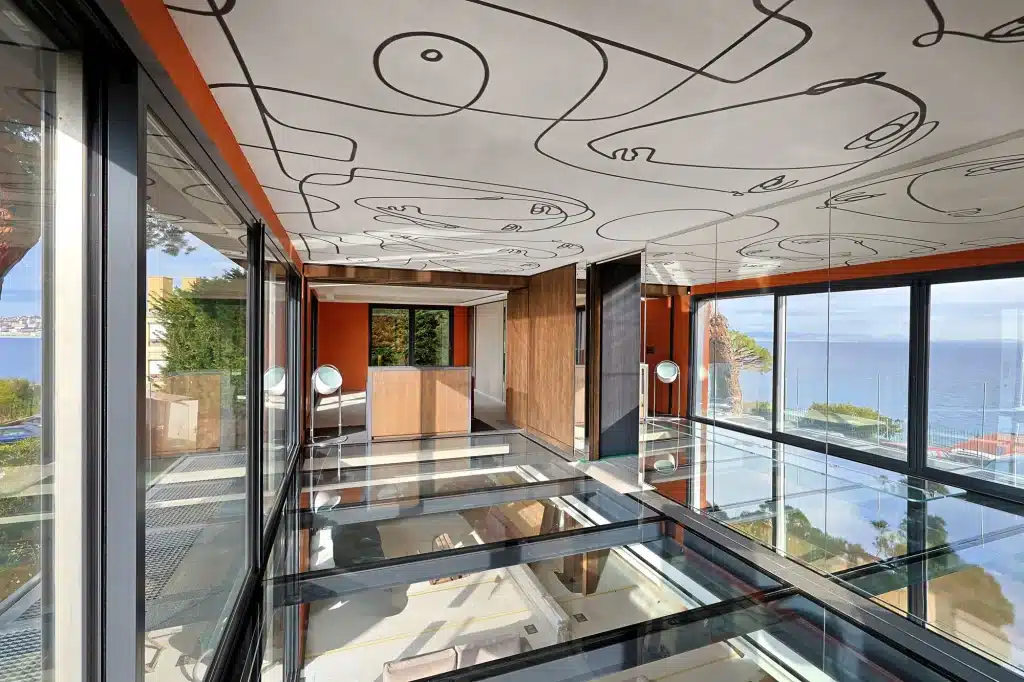
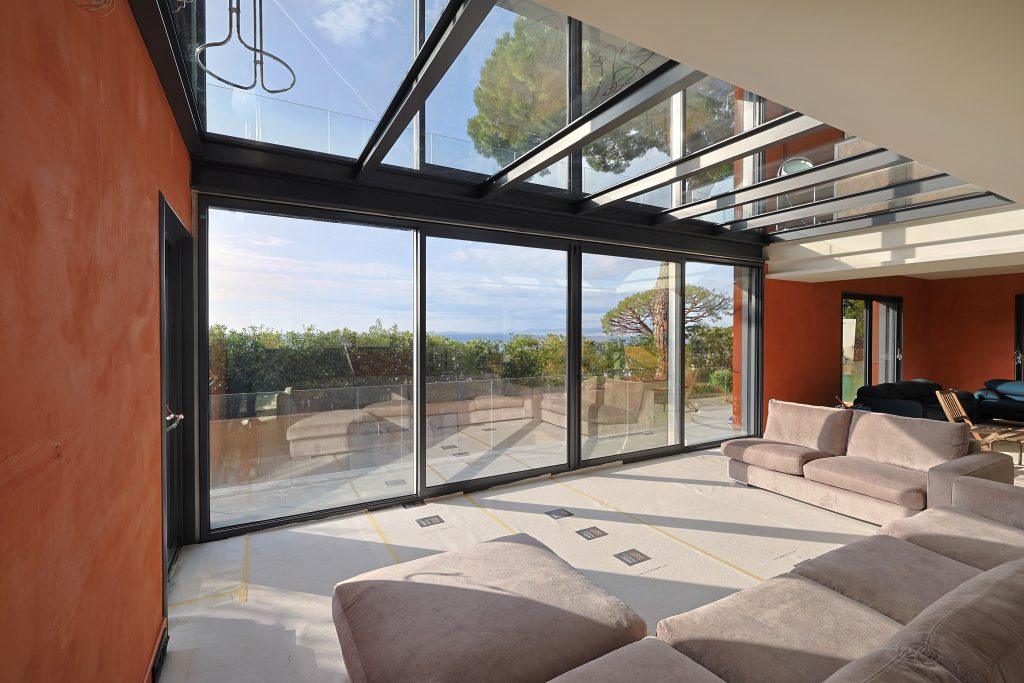
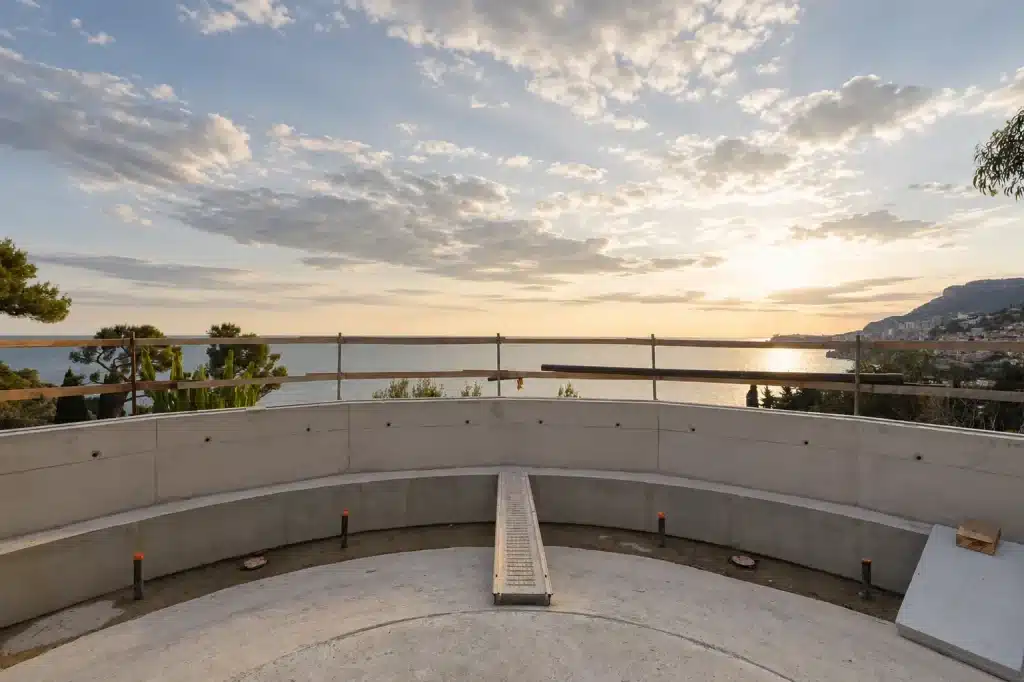
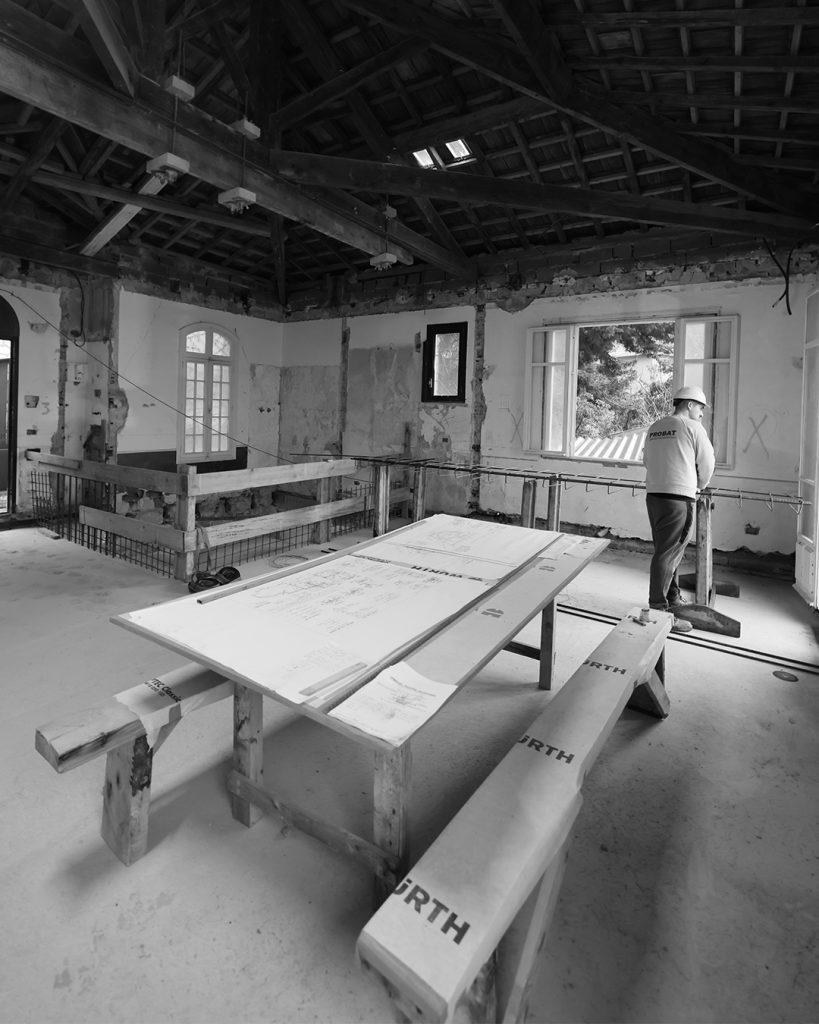
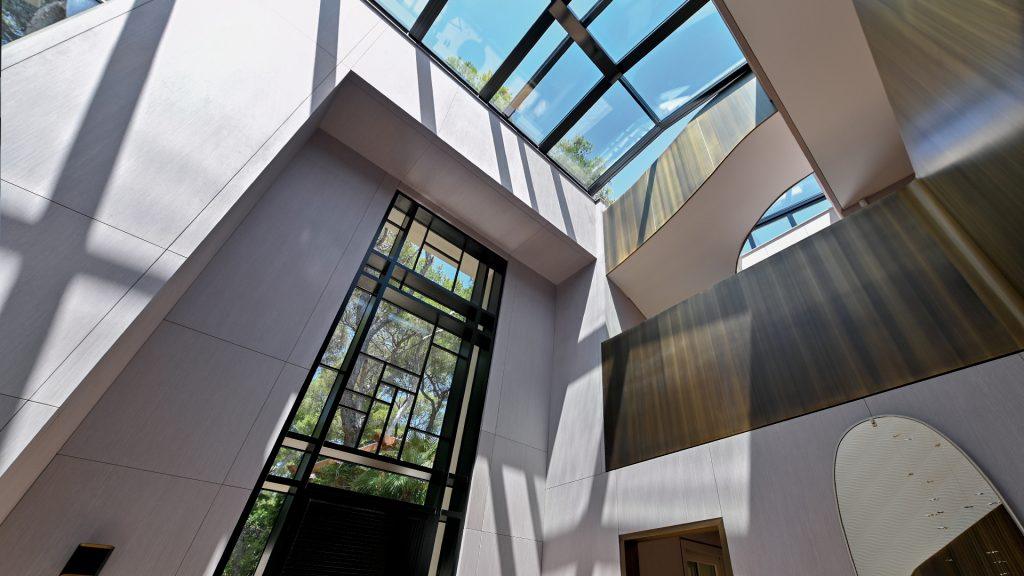
During construction, an unexpected moment reshaped the design. While the upper floor was still unfinished, a temporary platform revealed an extraordinary perspective across the landscape. Rather than losing this view, the project evolved to include a glass floor suspended between the living room and the main bedroom.
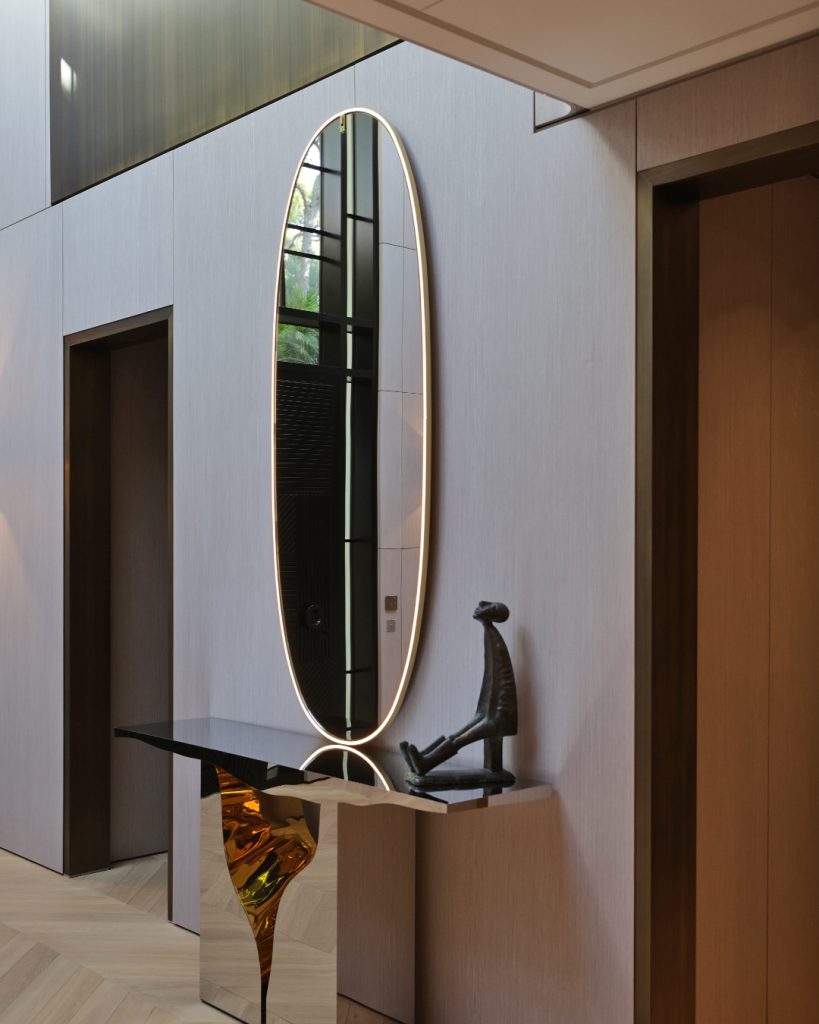
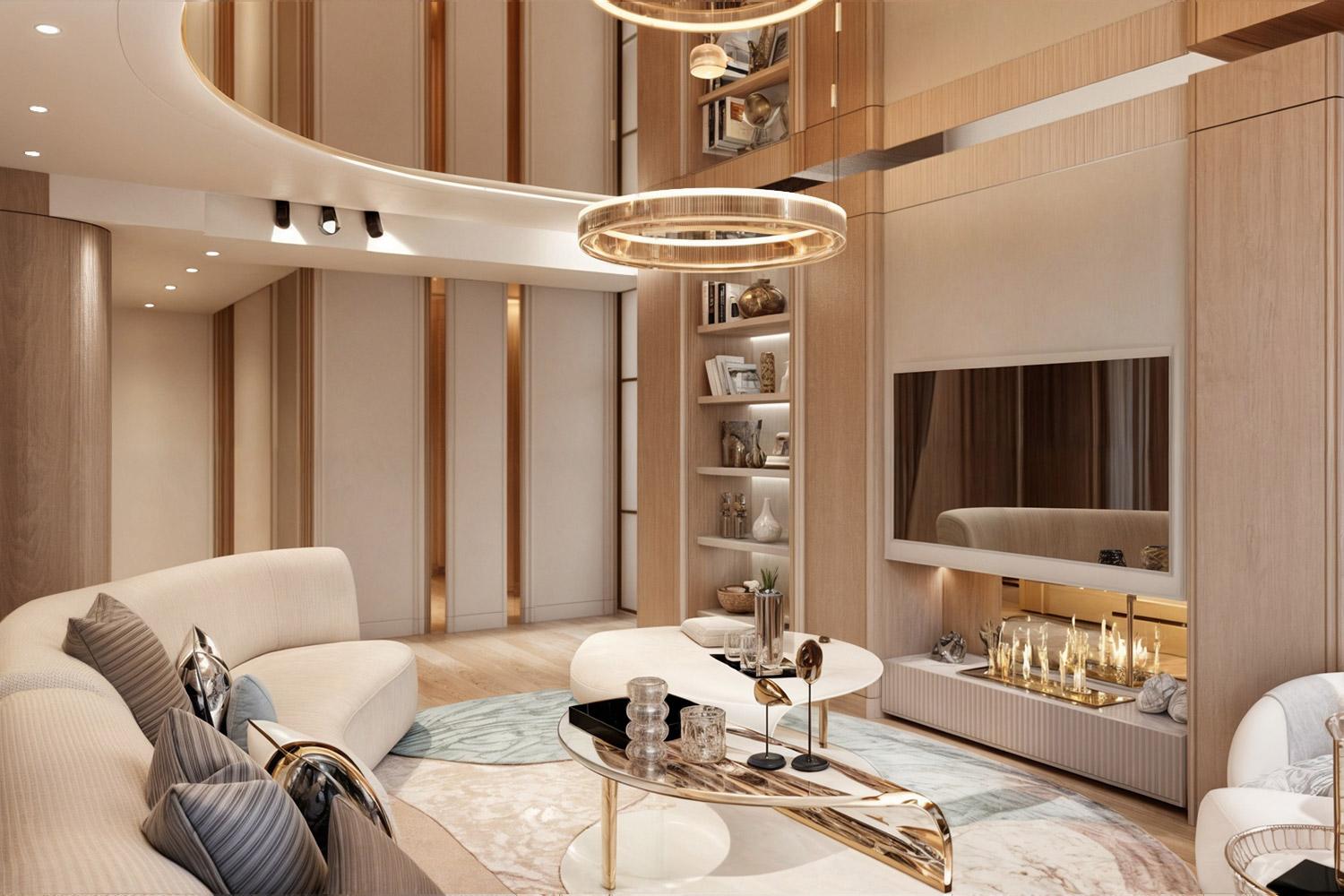
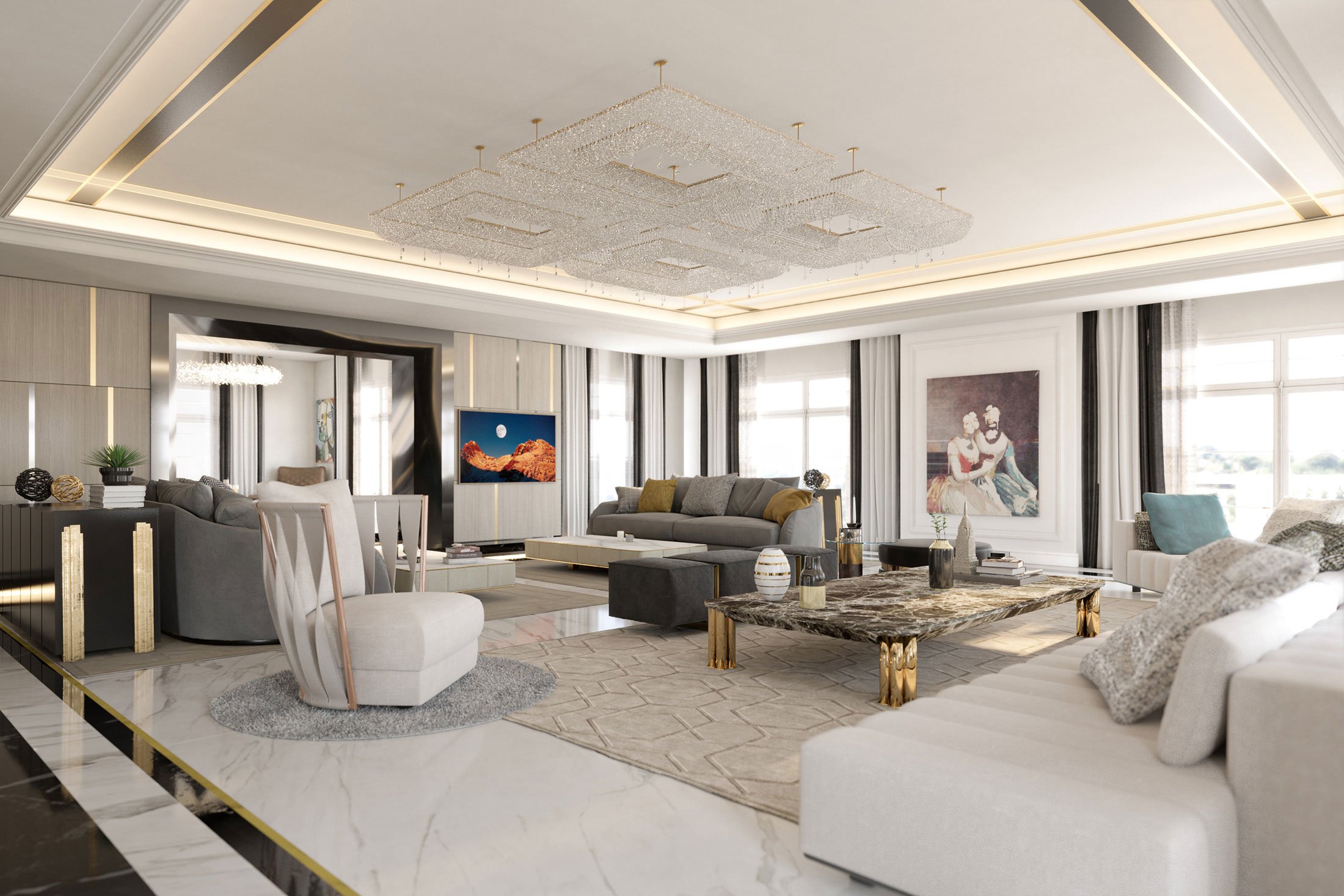
This transparent surface preserves the original double-height space while establishing a strong visual link between levels. Mirrors and a ceiling fresco extend the visual perspective of the space, amplifying the surrounding panorama and creating the sensation of being immersed within the landscape itself.
Spaces Oriented Toward the Horizon
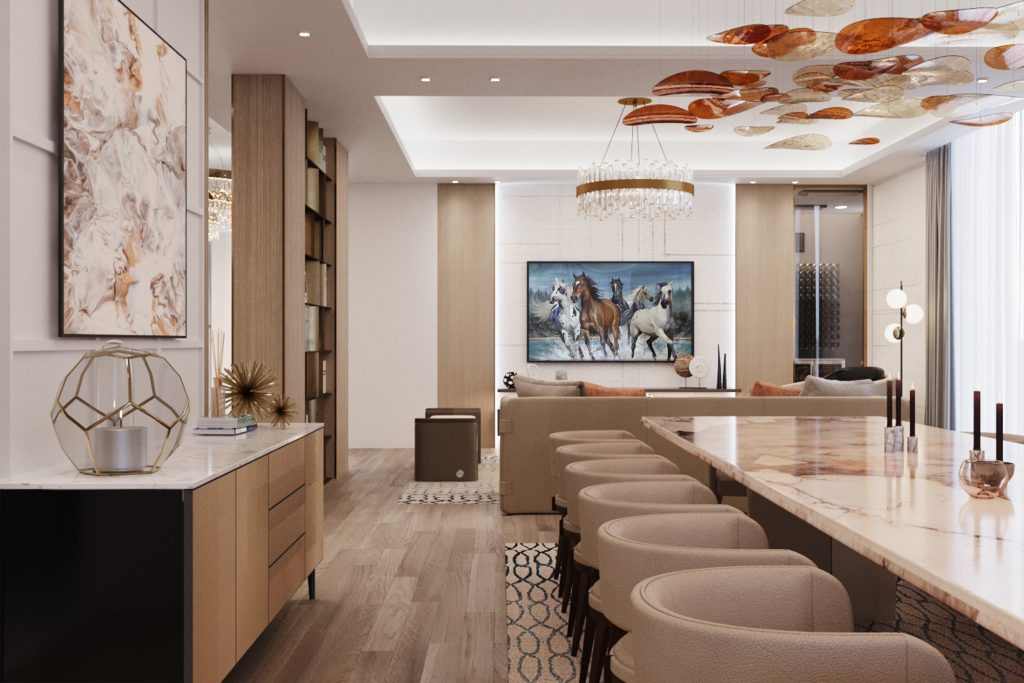
The organization of the villa follows a vertical sequence shaped by the Mediterranean panorama. The main living spaces, including the living room and dining area, occupy the principal level and open widely toward the sea. Above, the master suite and its adjoining office are positioned on the upper floor, where the glass walkway captures an even broader perspective of the coastline.
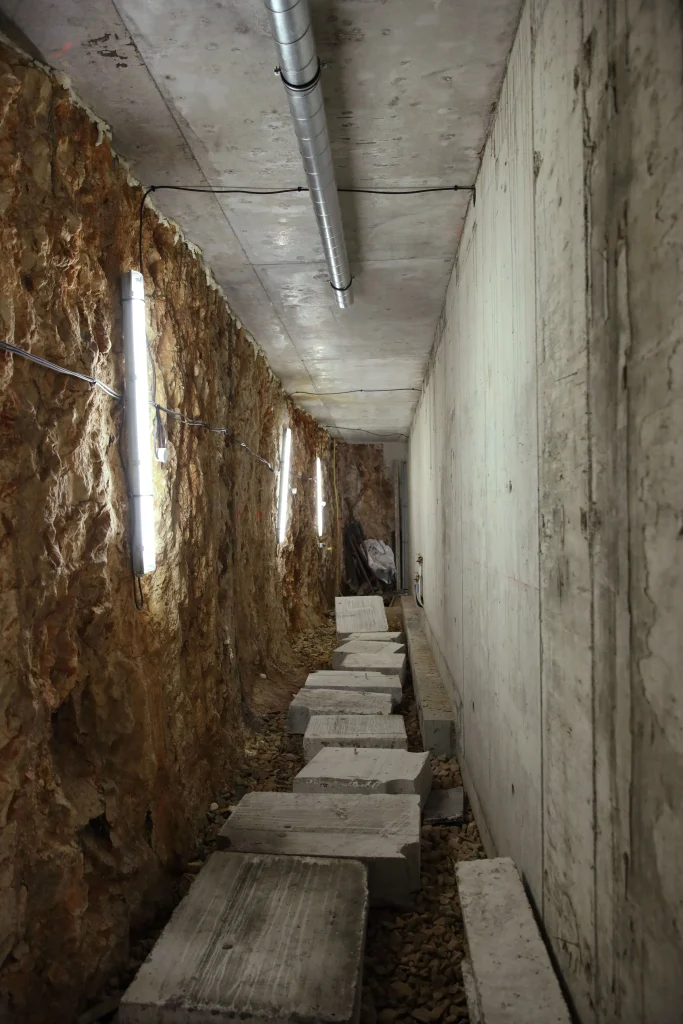
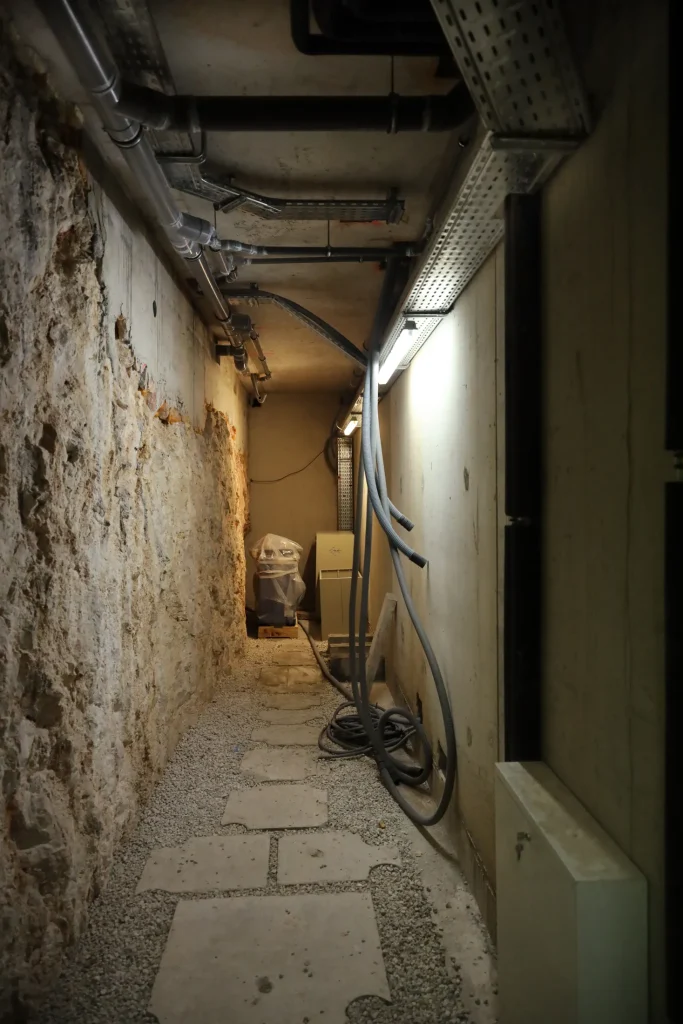
Below, the garden level contains three guest bedrooms opening onto terraces and landscaped areas, while the basement integrates a cinema room, gym, spa, and technical facilities.
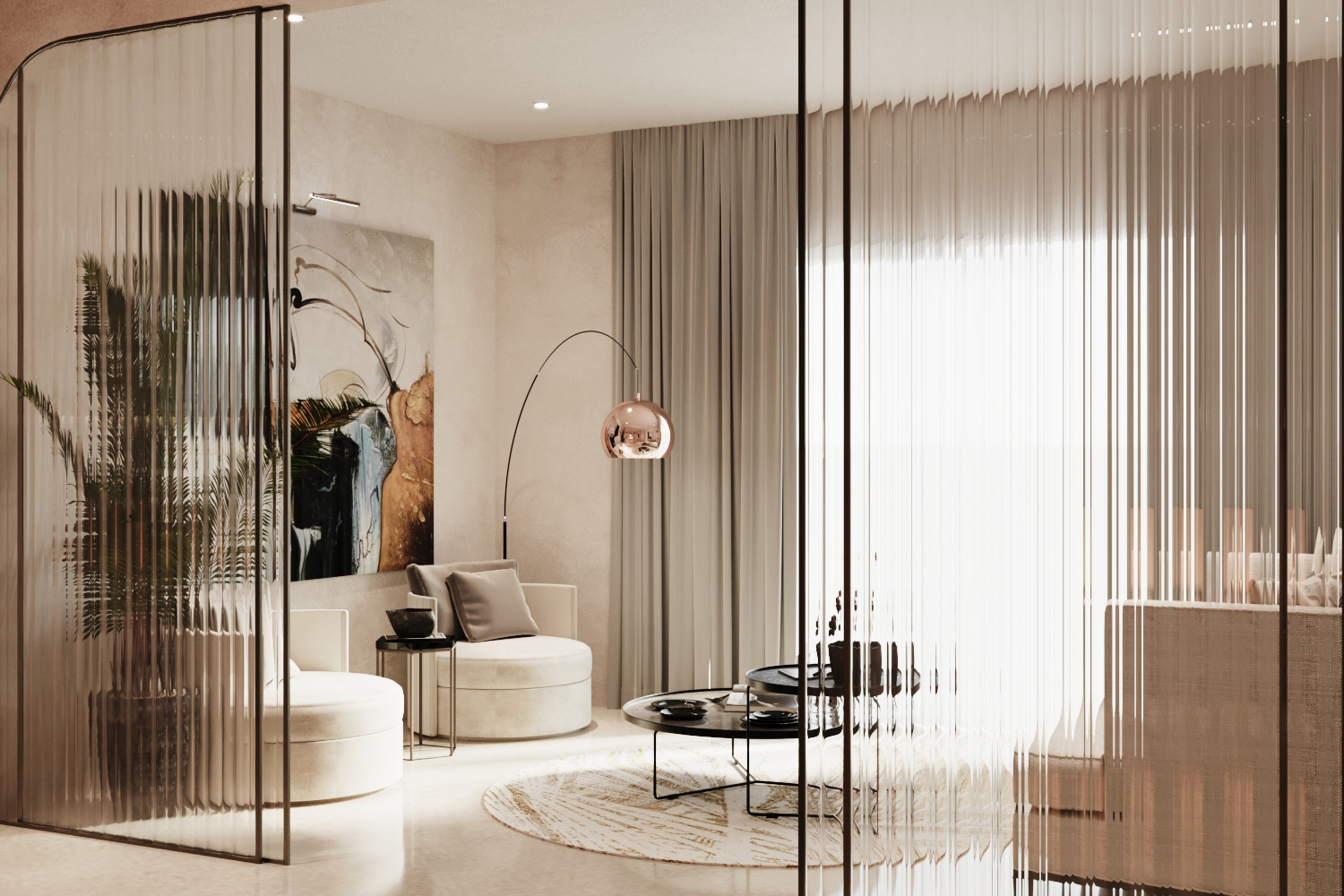
Despite the extensive openness toward the sea, privacy is carefully orchestrated throughout the house. Sliding screens, adjustable shutters, and integrated blinds allow spaces to shift easily between openness and discretion, ensuring both panoramic views and complete intimacy when required
The Roof Terrace as a Fifth Façade
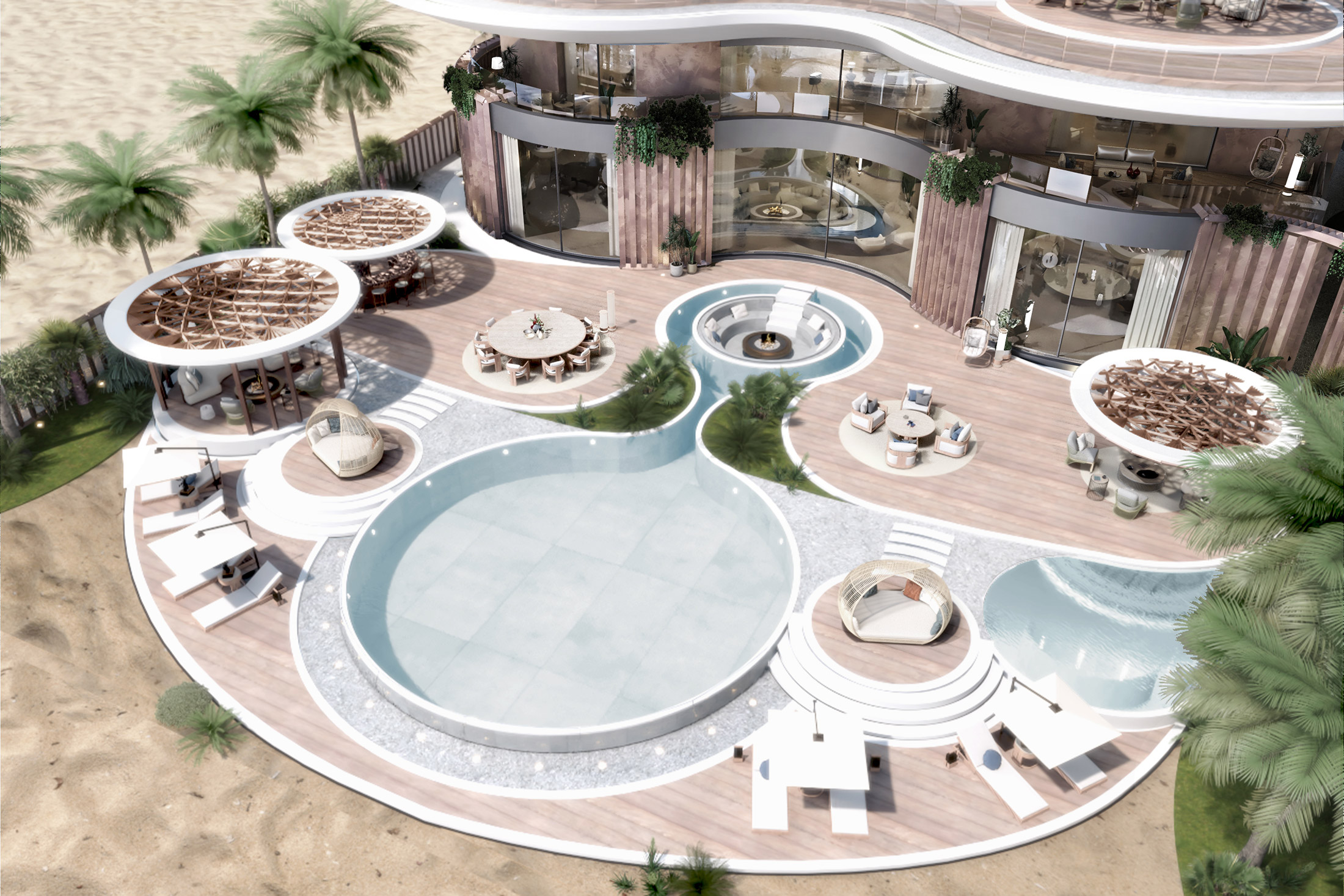
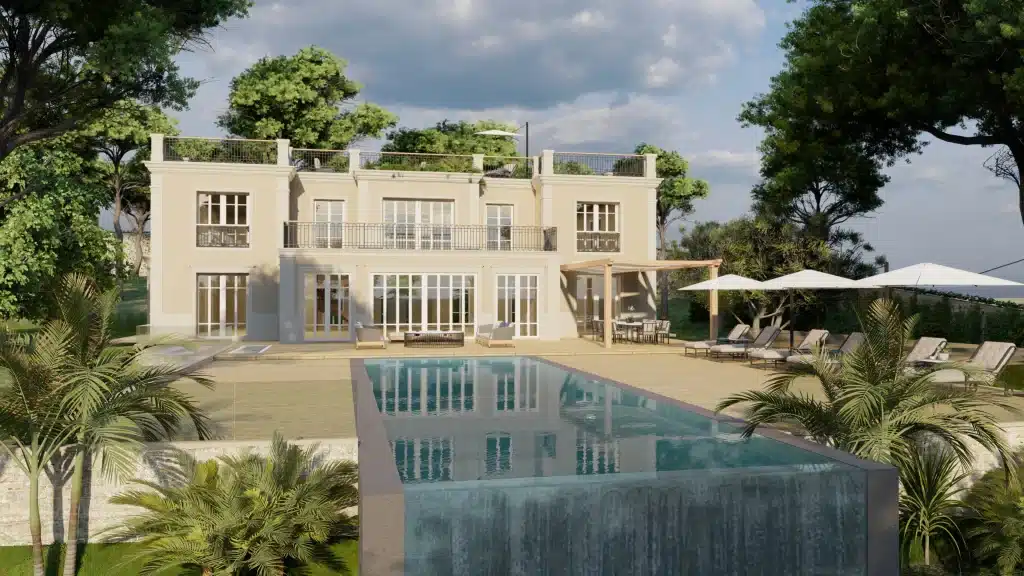
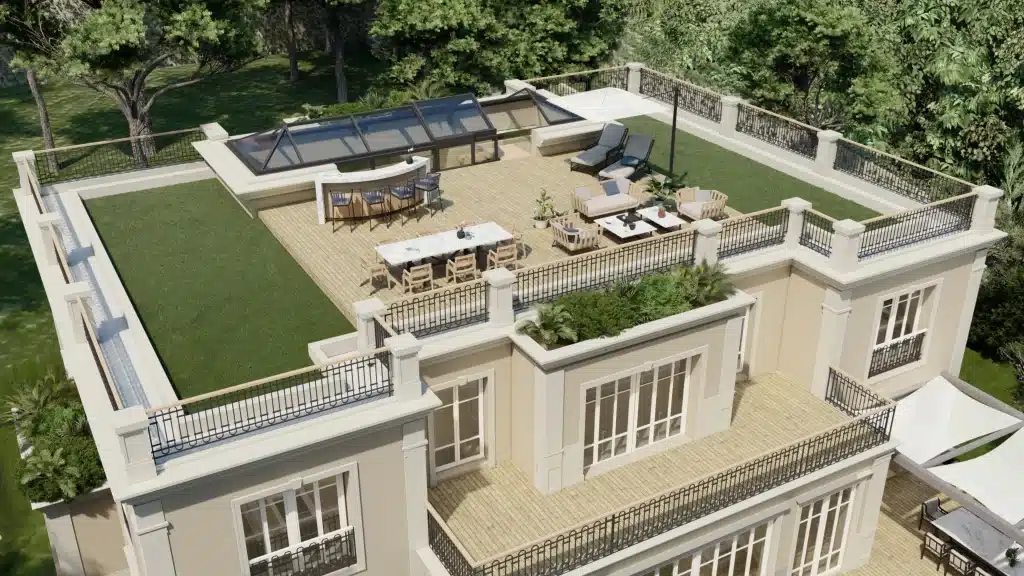
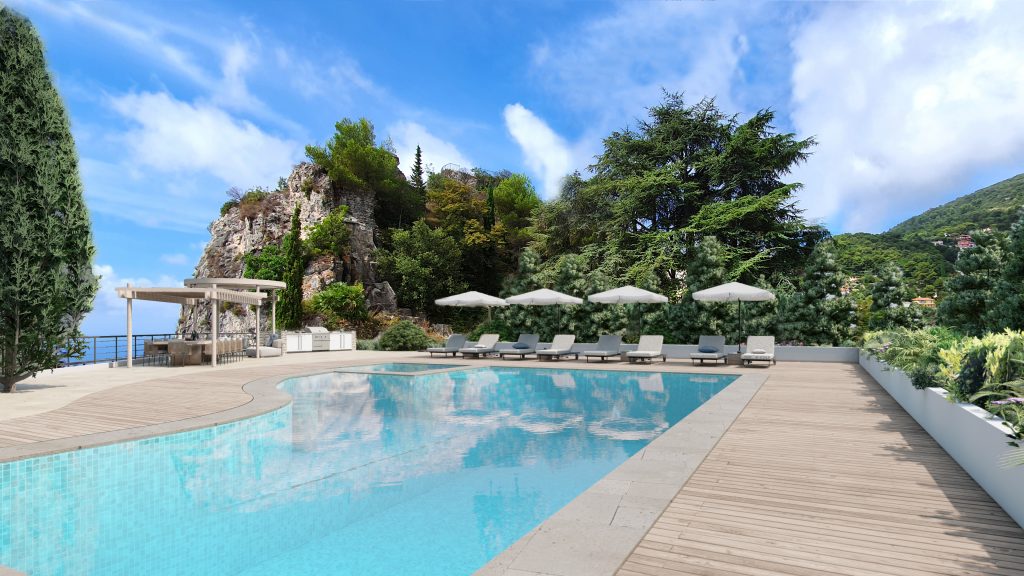
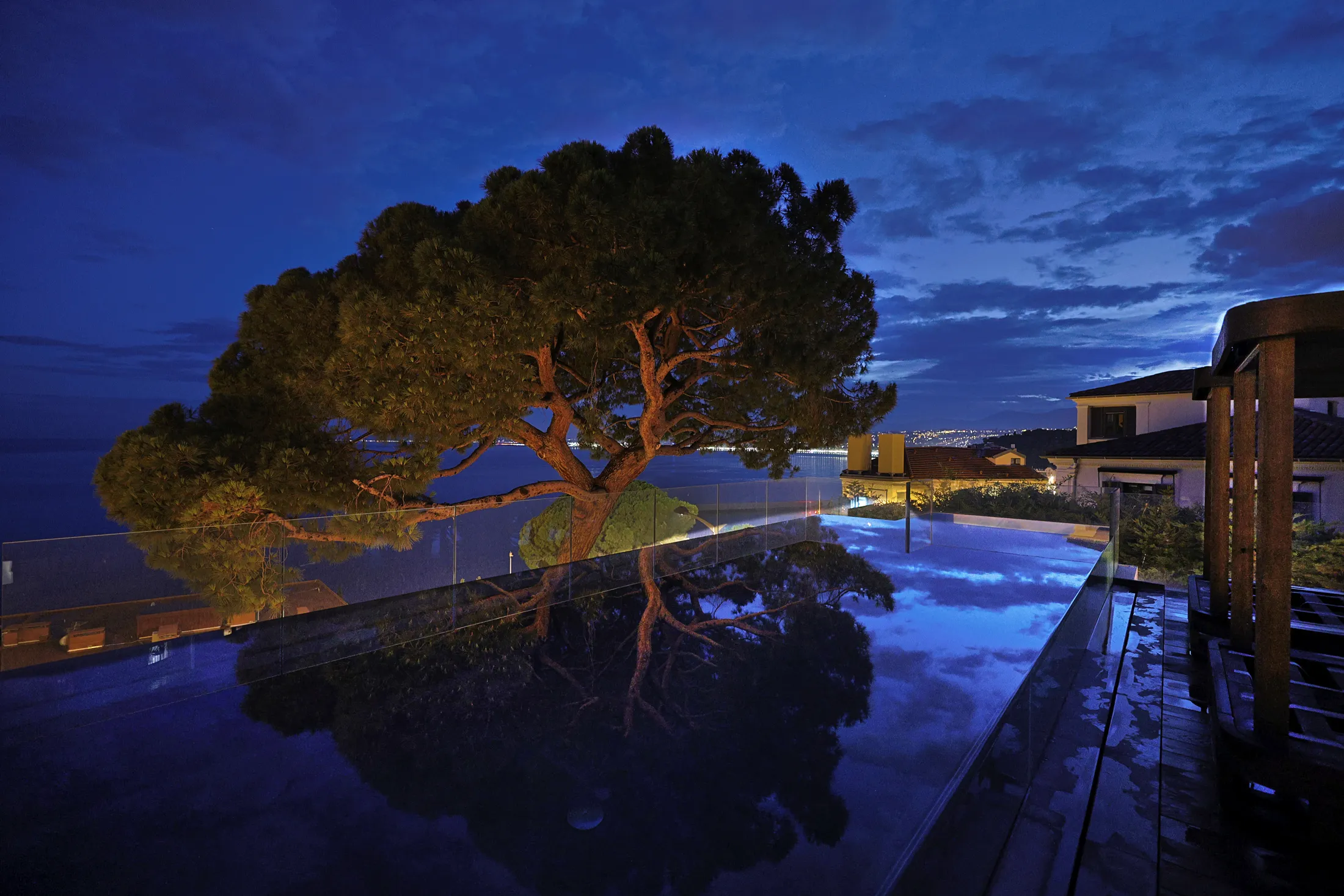
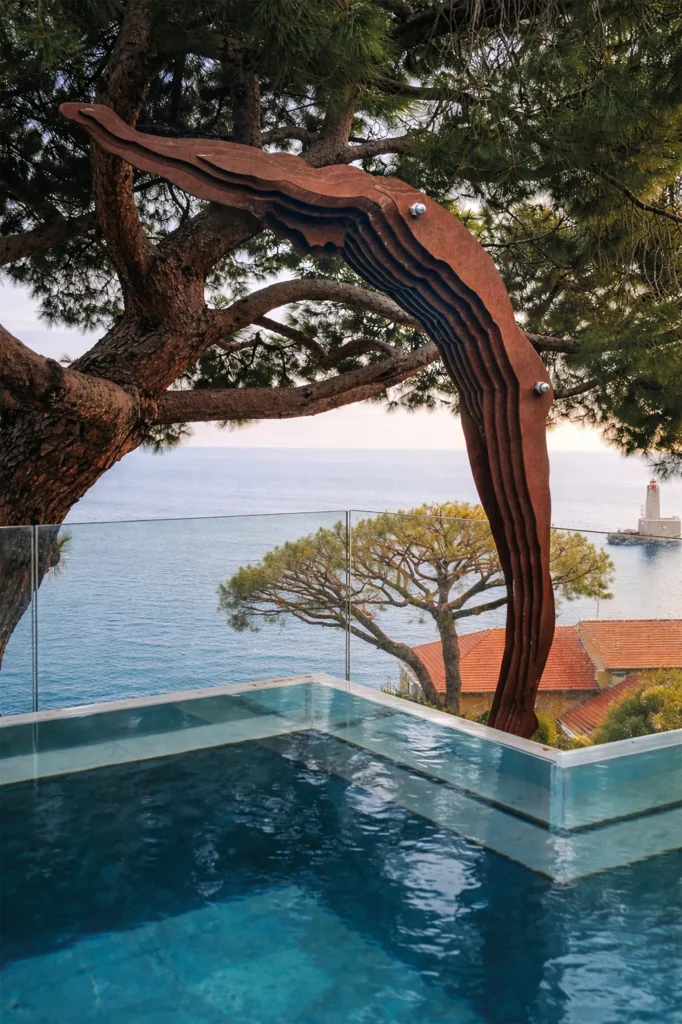
To preserve the limited green areas of the plot, the swimming pool was positioned on the roof terrace. This decision transforms the roof into an architectural landscape. The glass-sided pool allows water to remain visible from outside while maintaining generous interior ceiling heights below.
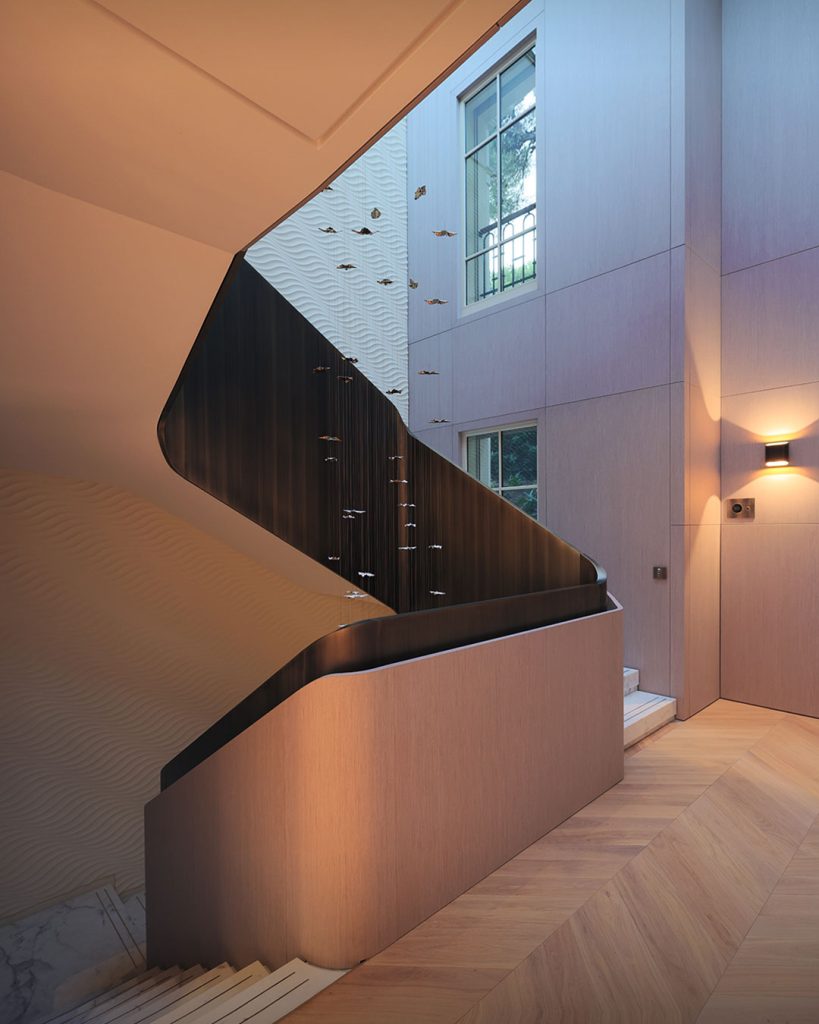
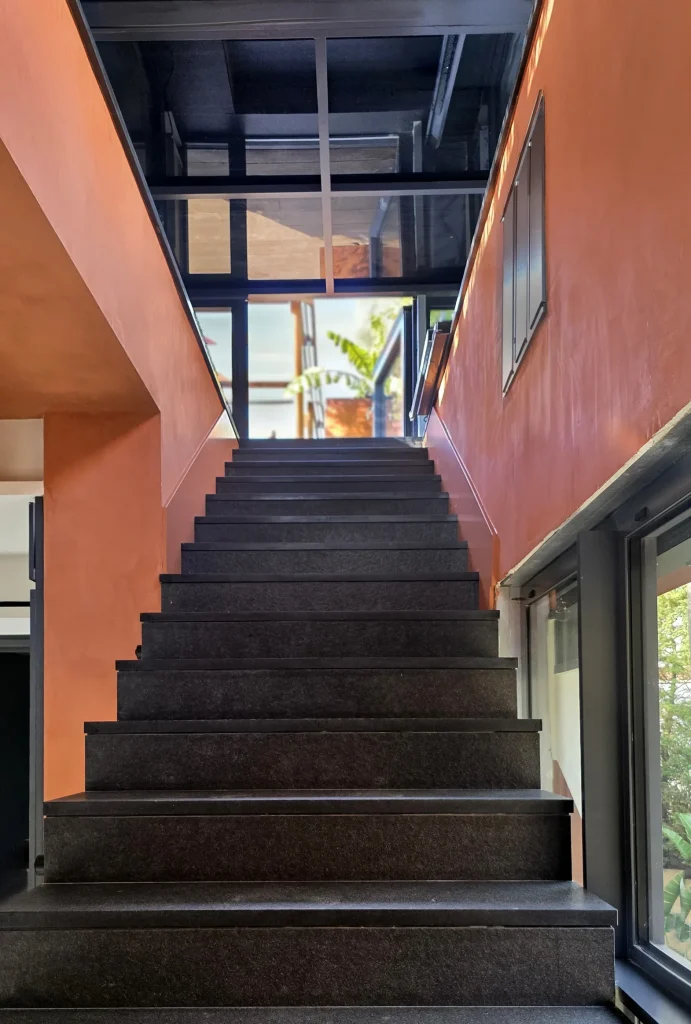
Access to the roof terrace is integrated through a motorized mirrored glass skylight that opens above the interior staircase. When closed, the reflective surface blends into the architecture, preserving visual continuity while discreetly connecting the living space to the rooftop pool.
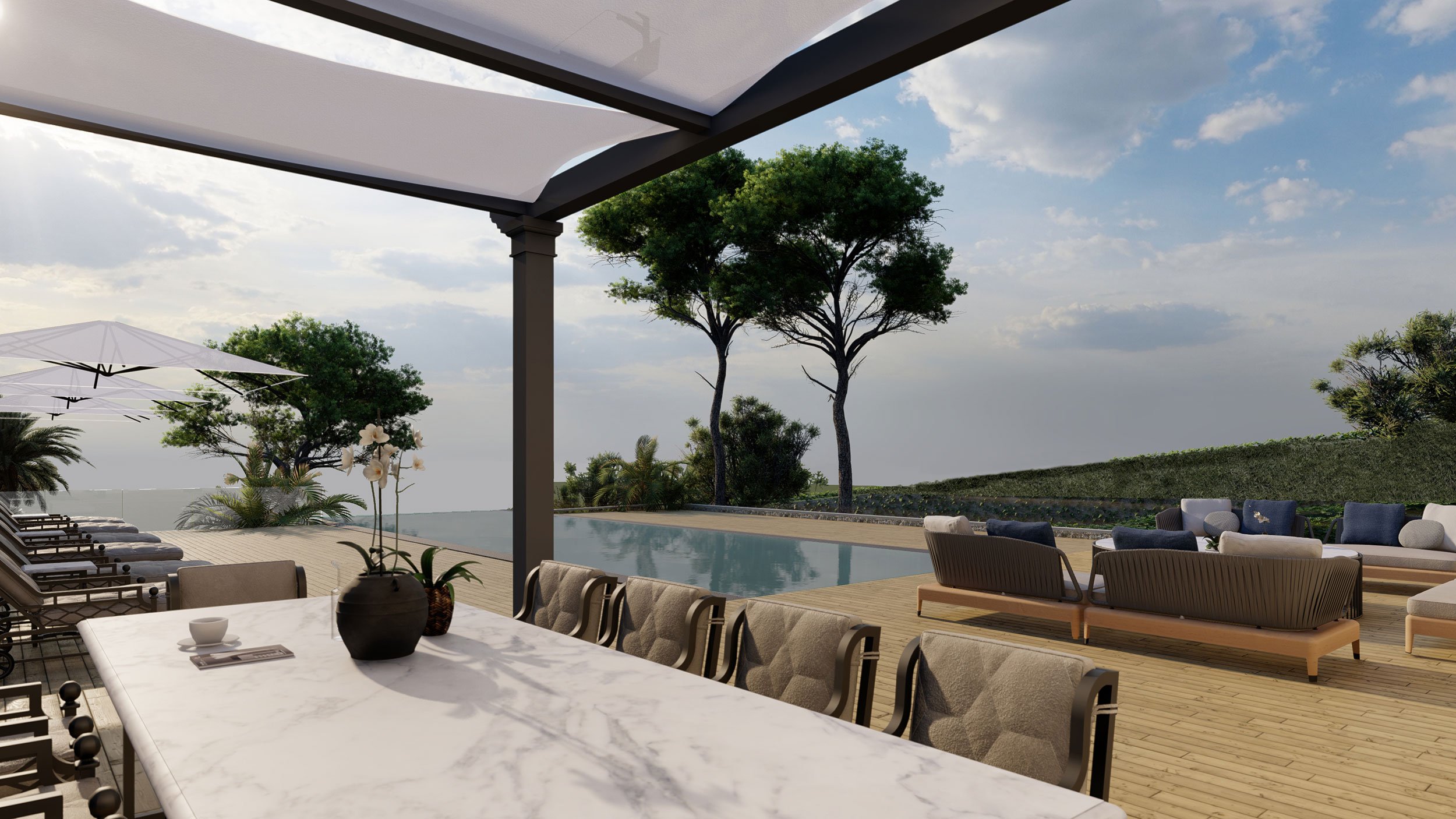
Pergolas, planters, and seating areas structure the rooftop terrace and create visual separation from neighboring properties.
At the edge of the pool, a slender corten steel diver sculpture stands as a symbolic gesture. Its form echoes the material of the façade and expresses the daring idea of diving into a glass pool suspended above the Mediterranean.
A Dialogue with Nature and Memory
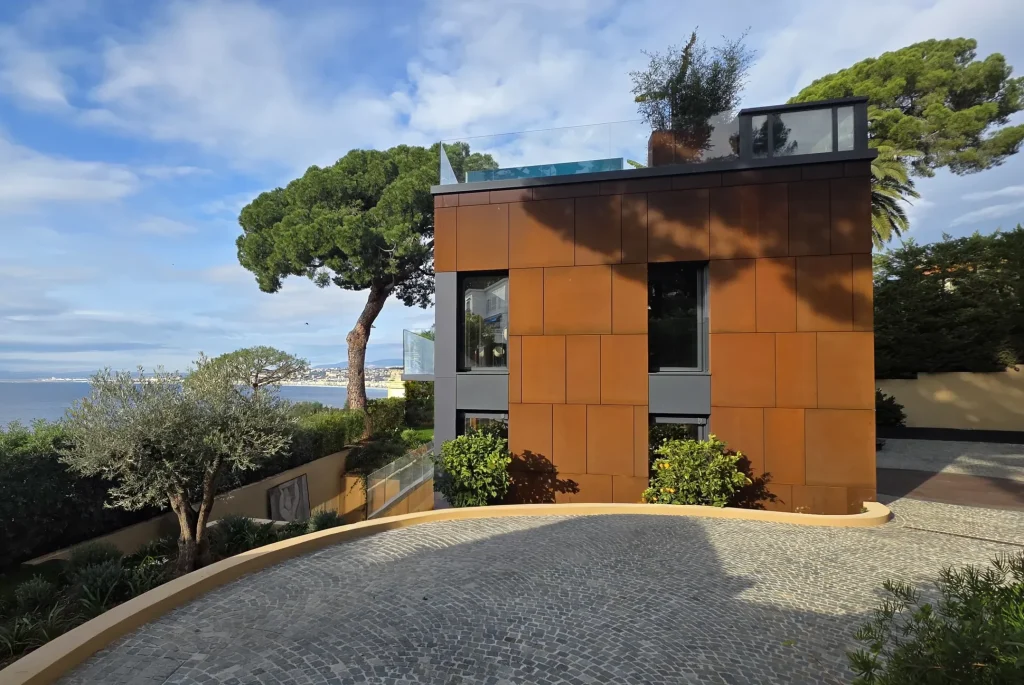
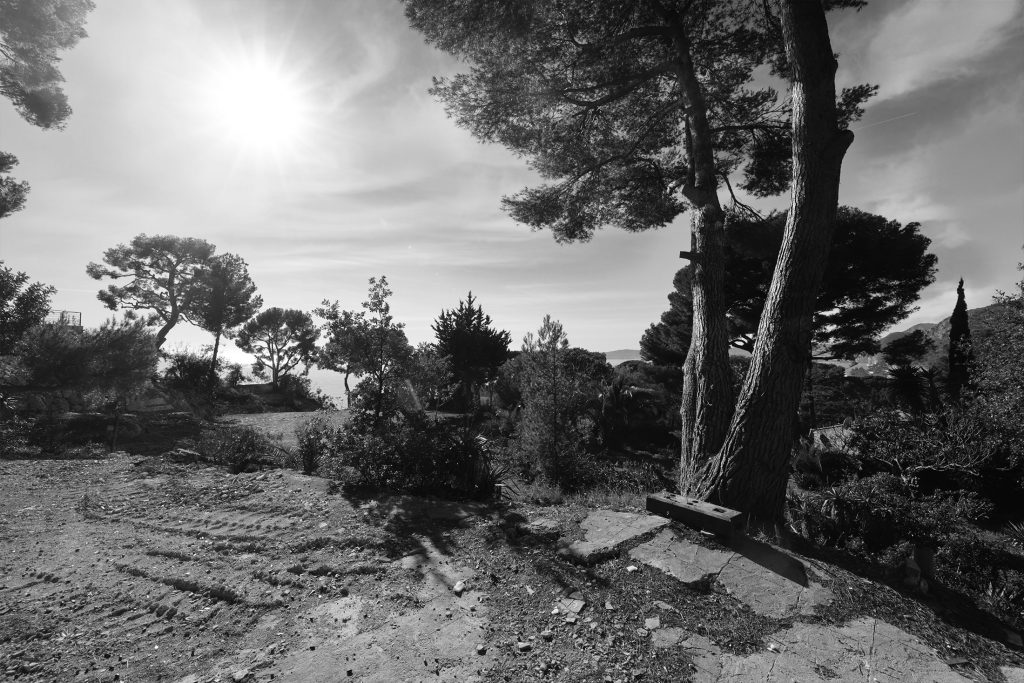
Two century-old pine trees and a small historic chapel were carefully preserved during the demolition and reconstruction of the site. These elements create a powerful dialogue between contemporary architecture and the memory of the landscape.
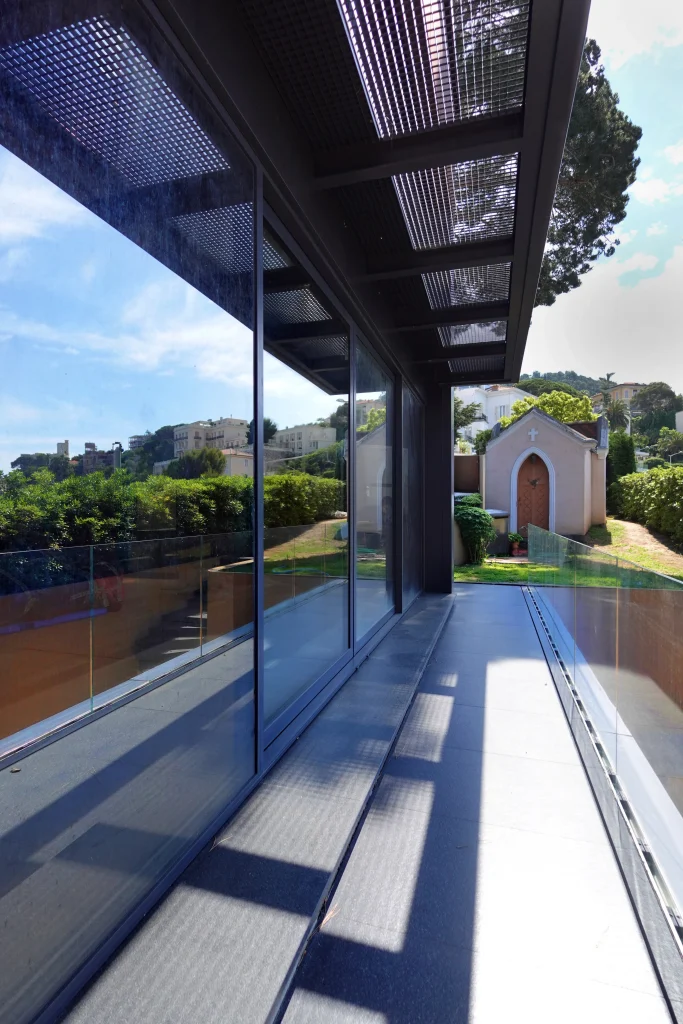
Terraced gardens weave around the house at multiple levels, softening the corten façade while filtering views toward the road and reinforcing the visual connection with the sea. The presence of these historic elements anchors the project within the site’s history while framing the contemporary architecture.
Through its evolving materials, adaptable spaces, and continuous dialogue with its surroundings, the project becomes a living architecture. The house changes with light, weather, and time, evolving alongside those who inhabit it.
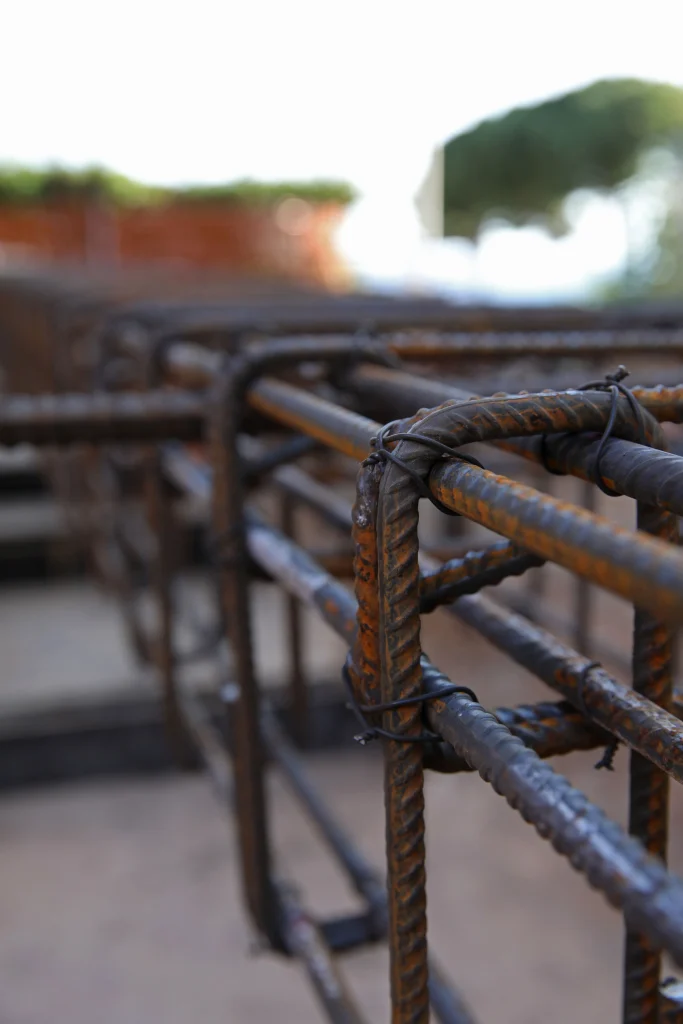
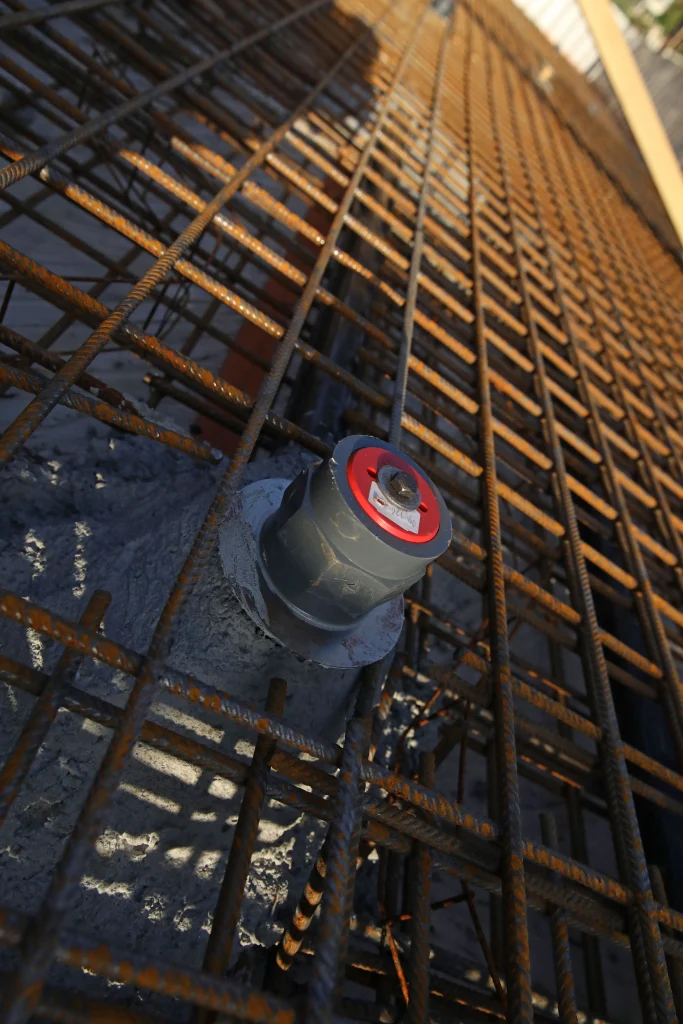
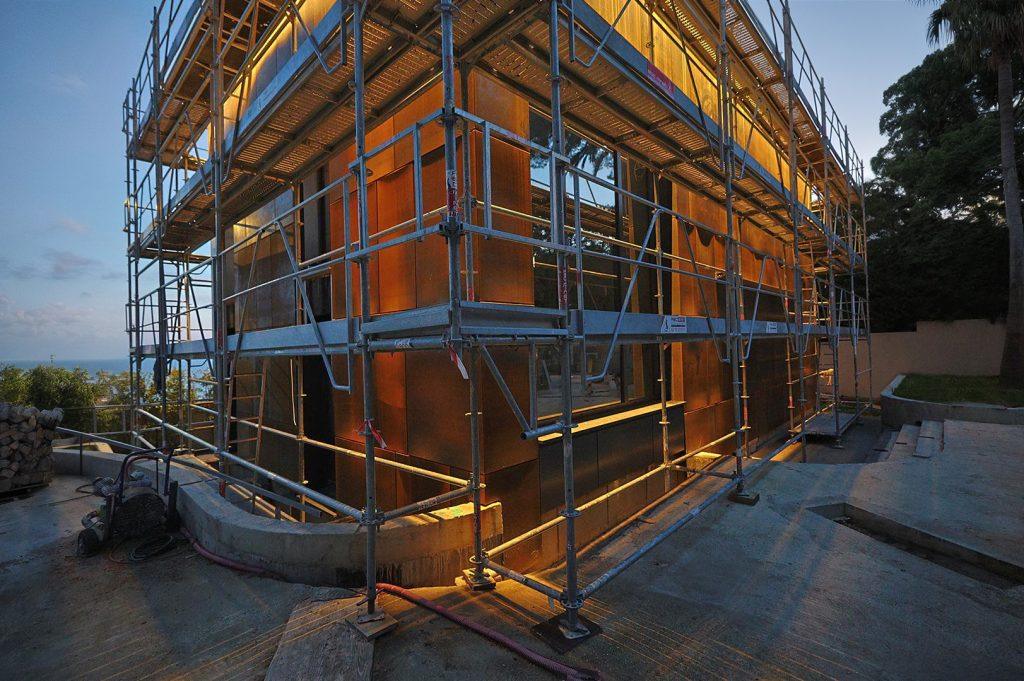
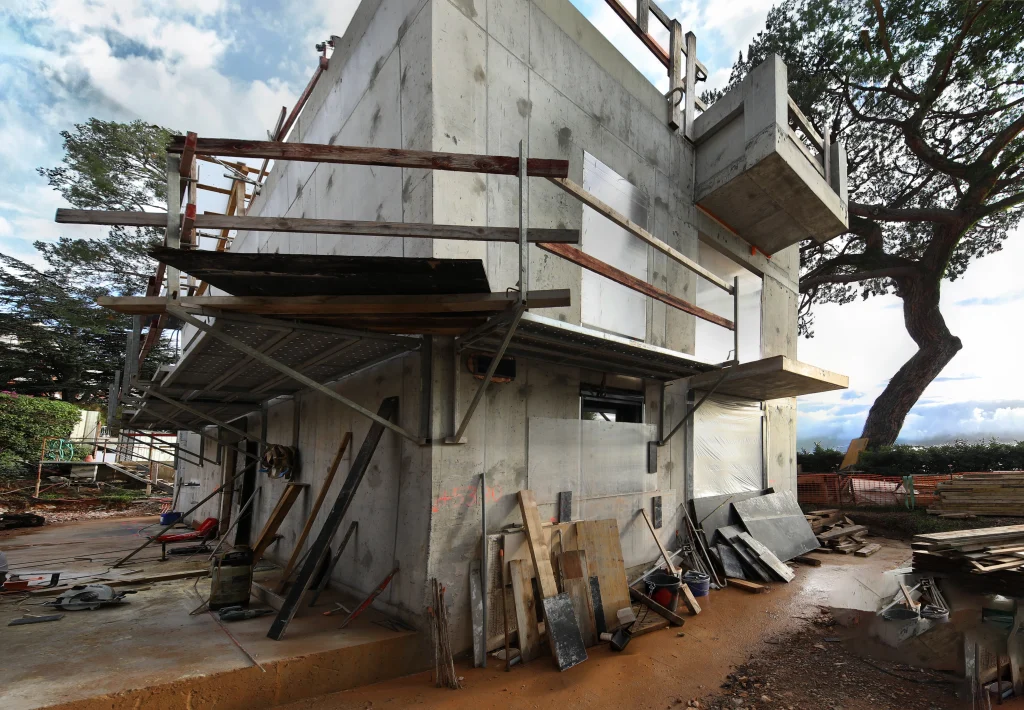
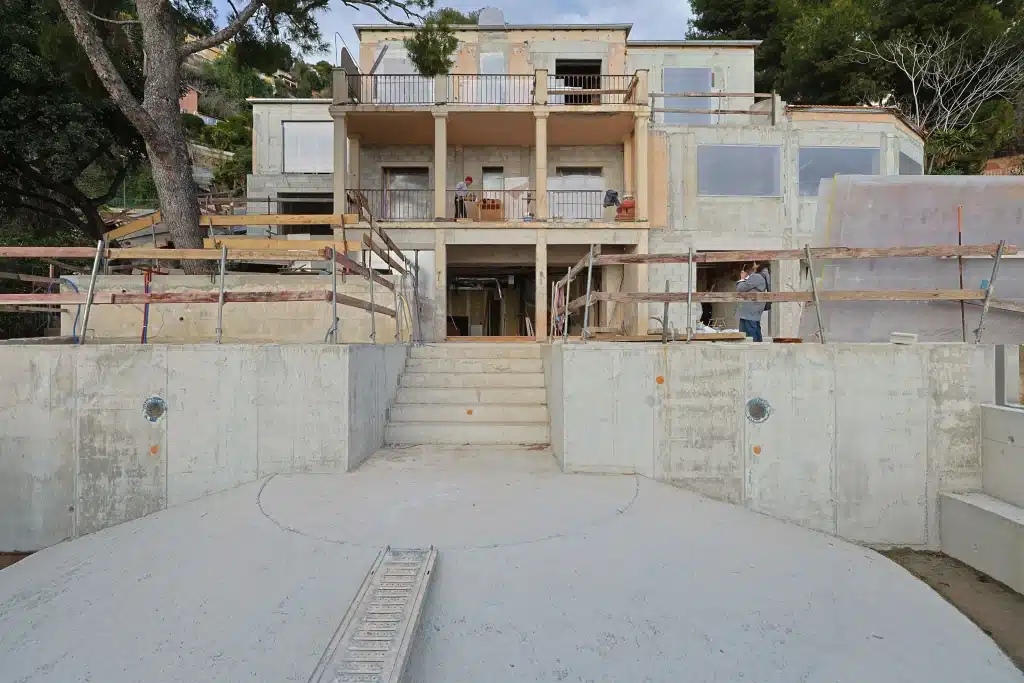
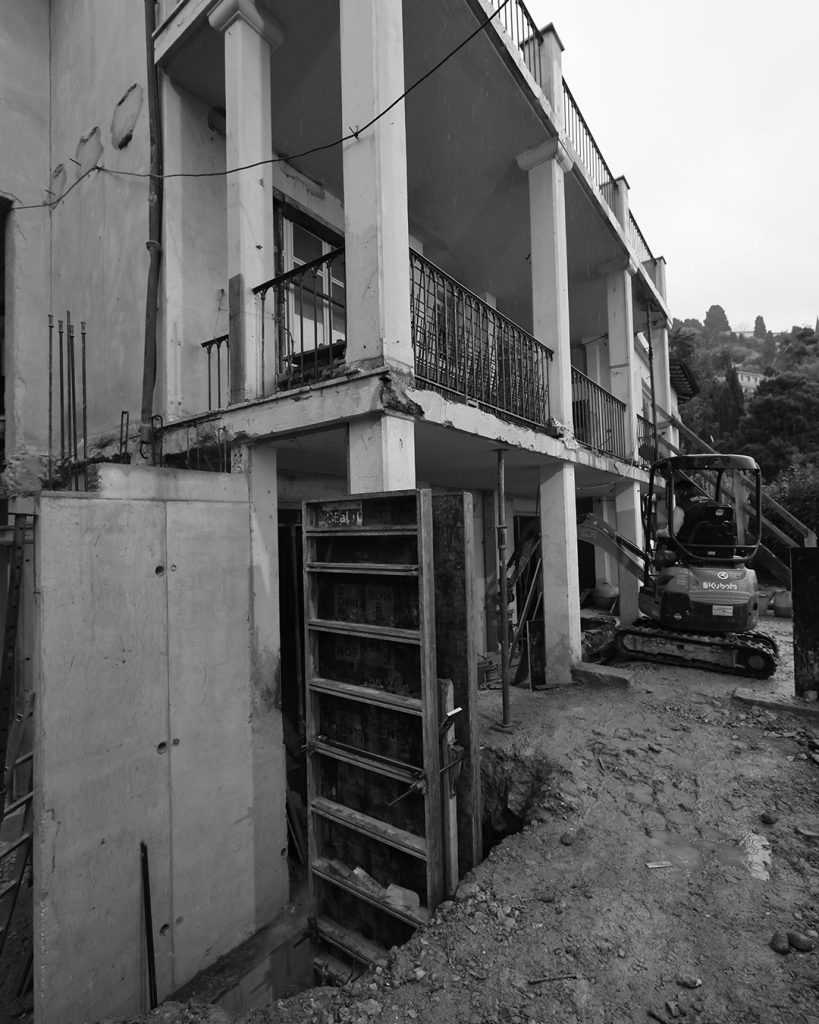
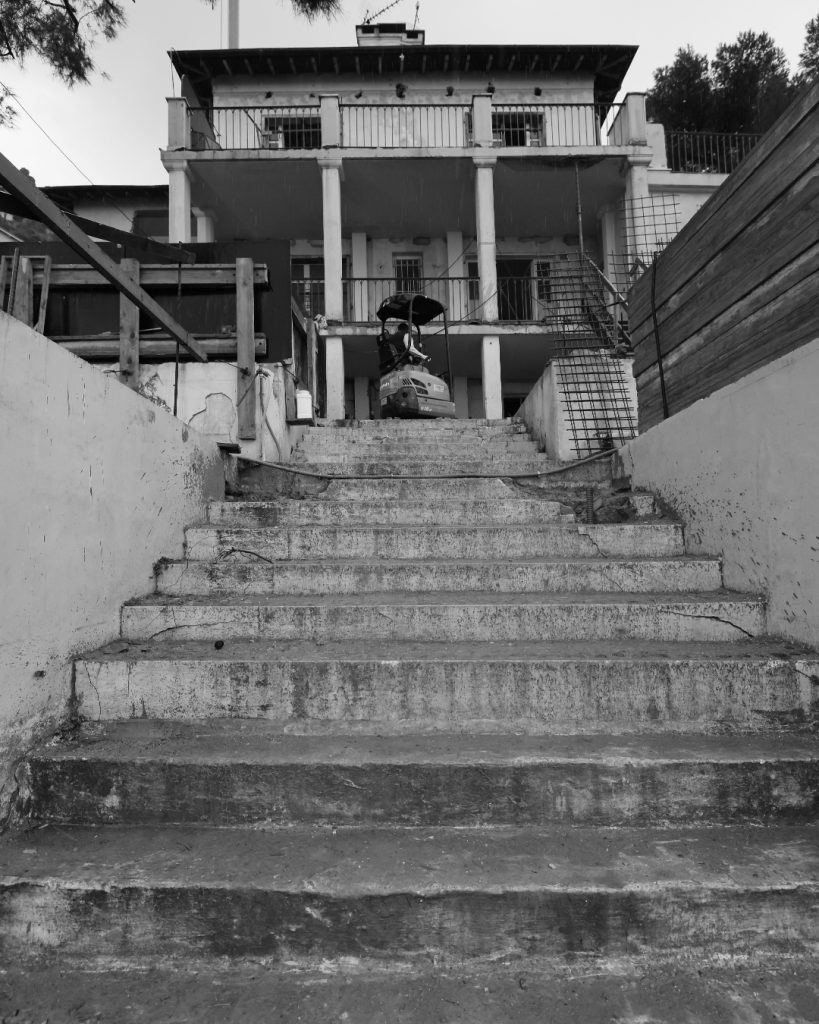
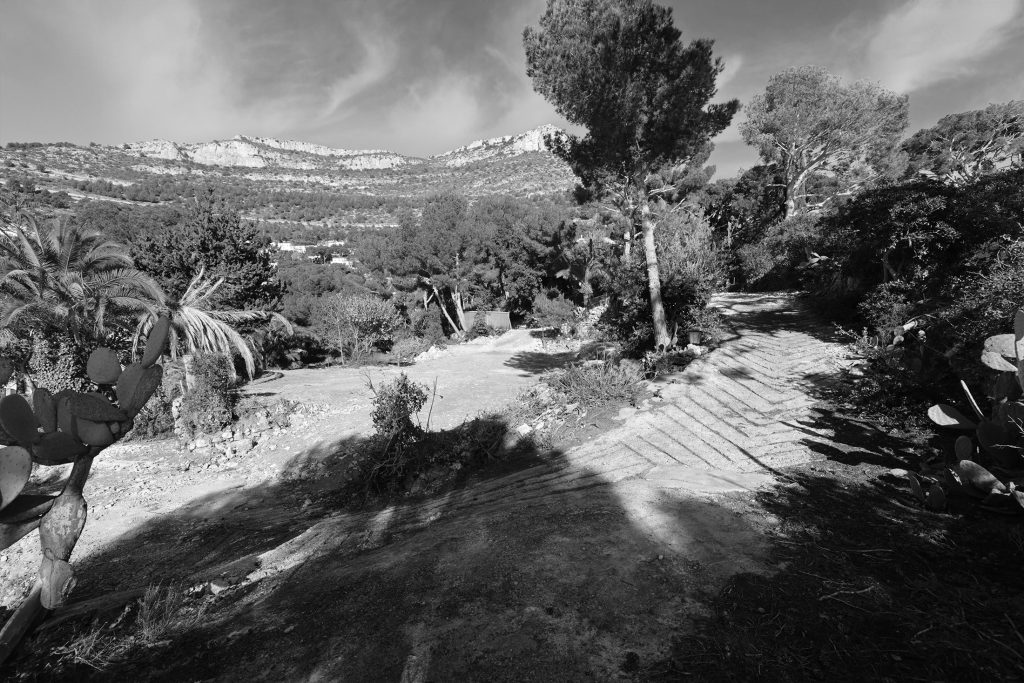
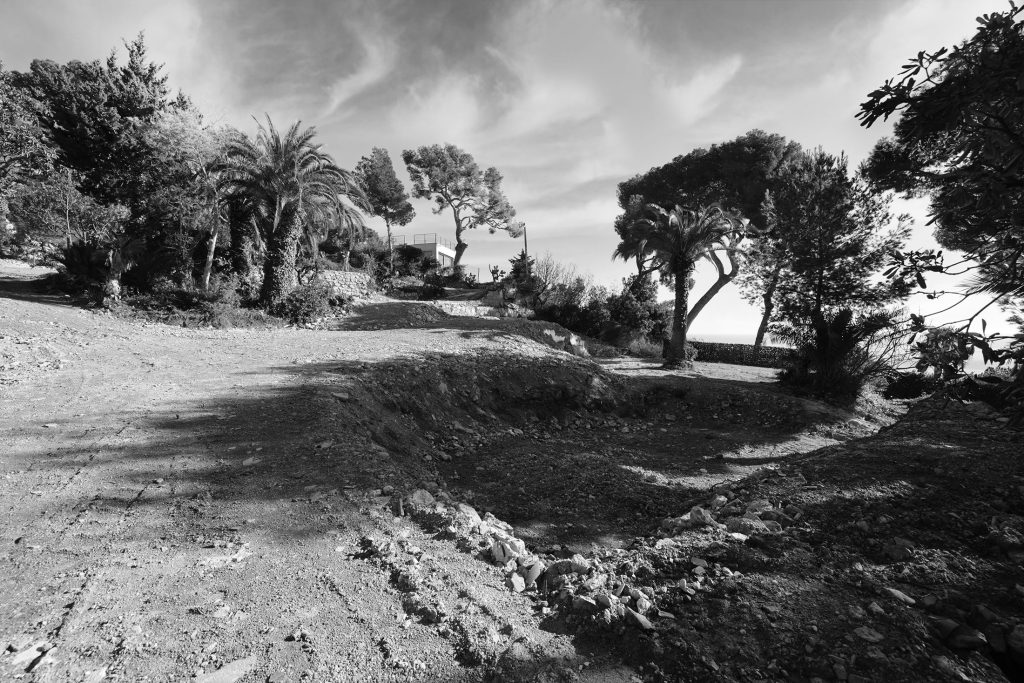
Moments from the construction phase: